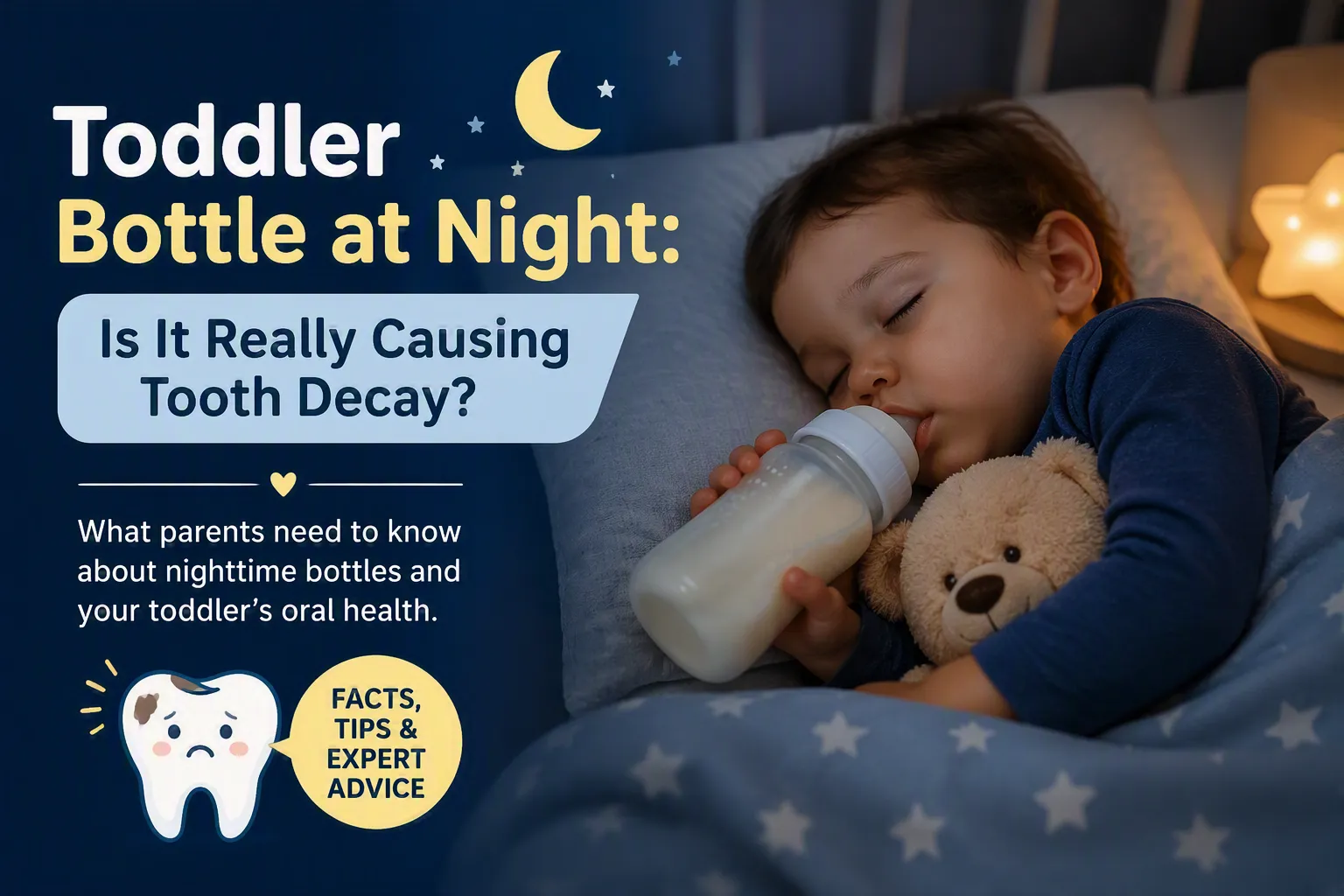
You’ve settled into a routine. Bath, pyjamas, bottle, bed. It’s the thing that finally gets your toddler to sleep, and honestly, some nights it’s the only thing standing between you and total exhaustion. So when someone mentions “baby bottle tooth decay” at a birthday party or your dentist raises an eyebrow, it’s natural to feel a flicker of worry, maybe even a bit defensive.
Let’s clear this up properly. Toddler bottle night tooth decay is a genuine, well-documented risk, but it’s not about shaming anyone’s bedtime routine. It’s about understanding exactly what’s happening in that little mouth overnight, and making a few small adjustments that protect those teeth without blowing up your evening routine.
Overview: What This Guide Covers
We’re breaking down why night bottle feeding cavities happen, what’s actually in the bottle that matters most, and how this differs from breastfeeding at night. You’ll learn the practical, evidence-based steps that protect your toddler’s teeth without forcing you to abandon bottles overnight. We’ll also cover what infant oral health checks look like and when your child should see a dentist for the first time.
In This Article, You’ll Discover…
Exactly why milk pooling in the mouth overnight causes decay
The difference between formula, cow’s milk, and breastfeeding risk
Which bottle contents are genuinely safe at night, and which aren’t
Simple, realistic swaps that don’t require an overnight habit overhaul
What early tooth decay actually looks like, so you catch it early
When to book your toddler’s first dental visit
Reassurance for parents who’ve been doing bedtime bottles for a while already
Why Bottle Feeding at Night Affects Teeth Differently
Here’s the core issue, and it’s pretty simple once you see it laid out. When your toddler falls asleep mid-feed, milk doesn’t get swallowed the way it does while they’re actively drinking. It pools around the teeth and gums instead, sitting there for hours.
Saliva usually helps wash sugars away and neutralise acid, but saliva production drops significantly overnight. Combine pooled milk with reduced saliva flow, and you’ve got the perfect setup for bacteria to feast and produce the acid that erodes enamel.
What Baby Bottle Tooth Decay Actually Looks Like
Baby bottle tooth decay typically shows up first on the upper front teeth, since that’s where liquid tends to collect during feeding. It can progress surprisingly fast in young children, sometimes appearing as white or brown spots near the gumline before turning into visible cavities.
Does It Matter What’s In the Bottle?
Yes, hugely. Not all liquids carry the same risk, and this is where a lot of parents get unnecessarily worried or, on the flip side, underestimate a real risk.
Highest risk contents for night bottle feeding cavities:
Fruit juice, cordial, or any sweetened drink
Formula left in the bottle for extended pooling time
Cow’s milk, which does contain natural sugars that feed bacteria
Lower risk, generally considered safe overnight:
Plain water, which carries essentially no decay risk
Fluoridated tap water, which offers some added protection
Sweetened liquids are the clearest red flag here. Health authorities are consistent on this point: never put juice, cordial, or soft drinks in a nighttime bottle, since the sugar sitting against teeth for hours overnight is a recipe for rapid decay.

What About Breastfeeding at Night?
This one gets confusing because the messaging around breastfeeding and bottle feeding often gets lumped together, and that’s not quite fair. Breastfeeding to sleep and overnight feeding is considered normal and hasn’t been shown to independently cause tooth decay.
The mechanics are genuinely different too. Breastmilk doesn’t pool in the mouth the same way bottled milk does, because it only flows while your baby is actively sucking, not passively resting with a bottle in their mouth. That said, some research does suggest prolonged night breastfeeding past 18 months, combined with other risk factors like sugary foods and inconsistent brushing, can still contribute to risk. The bigger, more consistent factor across most studies is what else is going into your toddler’s diet, and how consistently their teeth get cleaned.
Simple Swaps That Actually Work
Nobody’s suggesting you rip the bottle away tonight and deal with the fallout. These changes work best introduced gradually.
Finish feeds before sleep, not during. Try to have your toddler complete their bottle just before laying down, rather than mid-feed as they drift off.
Switch to water for comfort bottles. If your toddler wants something to suck on overnight, plain water carries essentially zero decay risk.
Wipe or brush teeth after the last feed. A soft cloth or toothbrush after the final bottle removes much of the residue before it sits overnight.
Dilute gradually if switching cold turkey feels too hard. Slowly water down the bottle’s contents over a couple of weeks if your toddler resists an abrupt change.
Transition to a cup around 12 months. Most guidance points to weaning off bottles entirely by 12 to 14 months, partly for exactly this reason.
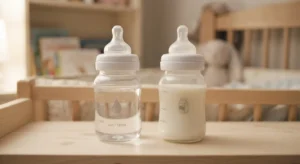
Swapping milk for water at bedtime significantly lowers baby bottle tooth decay risk.
When Should Your Toddler First See a Dentist?
Earlier than most parents assume, honestly. Guidance across Australian health authorities recommends a first dental visit by your child’s first birthday, well before you’d expect any decay to have set in.
This isn’t about catching problems late. It’s about setting up good habits, checking how teeth are erupting, and giving you a chance to ask questions about your specific bedtime routine without judgment. If your toddler’s already a bit older and this is the first you’re hearing of the one-year guideline, that’s completely okay — book a check-up now rather than waiting.
Signs Worth Getting Checked Sooner
White or chalky spots appearing near the gumline on front teeth
Brown or dark discolouration on any tooth surface
Visible pitting or rough texture on enamel
Your toddler wincing or pulling away during teeth brushing
Reluctance to eat cold or hard foods without an obvious reason

A quick wipe after night bottle feeding supports better infant oral health long term.
FAQ: Toddler Bottle Night Tooth Decay
Does giving my toddler a milk bottle at night definitely cause cavities?
Not definitely, but it does raise the risk, particularly if milk pools around the teeth for hours without any cleaning afterward. The bigger risk comes from sugary drinks like juice or cordial in the bottle, not plain milk alone.
Is water safe to give my toddler overnight instead of milk?
Yes, plain water carries essentially no risk of causing tooth decay, making it the safest bedtime bottle option. Fluoridated tap water offers a bit of extra protection too.
Does breastfeeding at night cause the same tooth decay risk as bottle feeding?
Research shows breastfeeding to sleep and overnight isn’t independently linked to tooth decay the way bottle feeding can be, since breastmilk doesn’t pool in the mouth the same way. Other factors like diet and hygiene tend to matter more.
When should my child have their first dental check-up?
Most health guidance recommends a first dental visit around your child’s first birthday, even before any teeth show signs of trouble. Early visits help establish good habits and catch anything early.
What does early baby bottle tooth decay actually look like?
It often starts as white or chalky spots near the gumline on the upper front teeth, sometimes progressing to visible brown spots or pitting. Catching it at this early stage makes treatment far simpler.
Wrapping It Up
Toddler bottle night tooth decay isn’t about blaming any parent’s bedtime routine — it’s simply about understanding that pooled milk and reduced overnight saliva create the perfect conditions for cavities to form. Small, gradual swaps like finishing feeds before sleep, switching to water, and cleaning teeth afterward make a real difference without upending your evenings. If it’s been a while since your toddler’s first dental check, there’s no better time than now.
Ready to get peace of mind about your toddler’s teeth? Book your appointment at Sunbury Dental Group today and we’ll help you build a routine that works for your whole family.
Book Your Toddler's First Check-Up