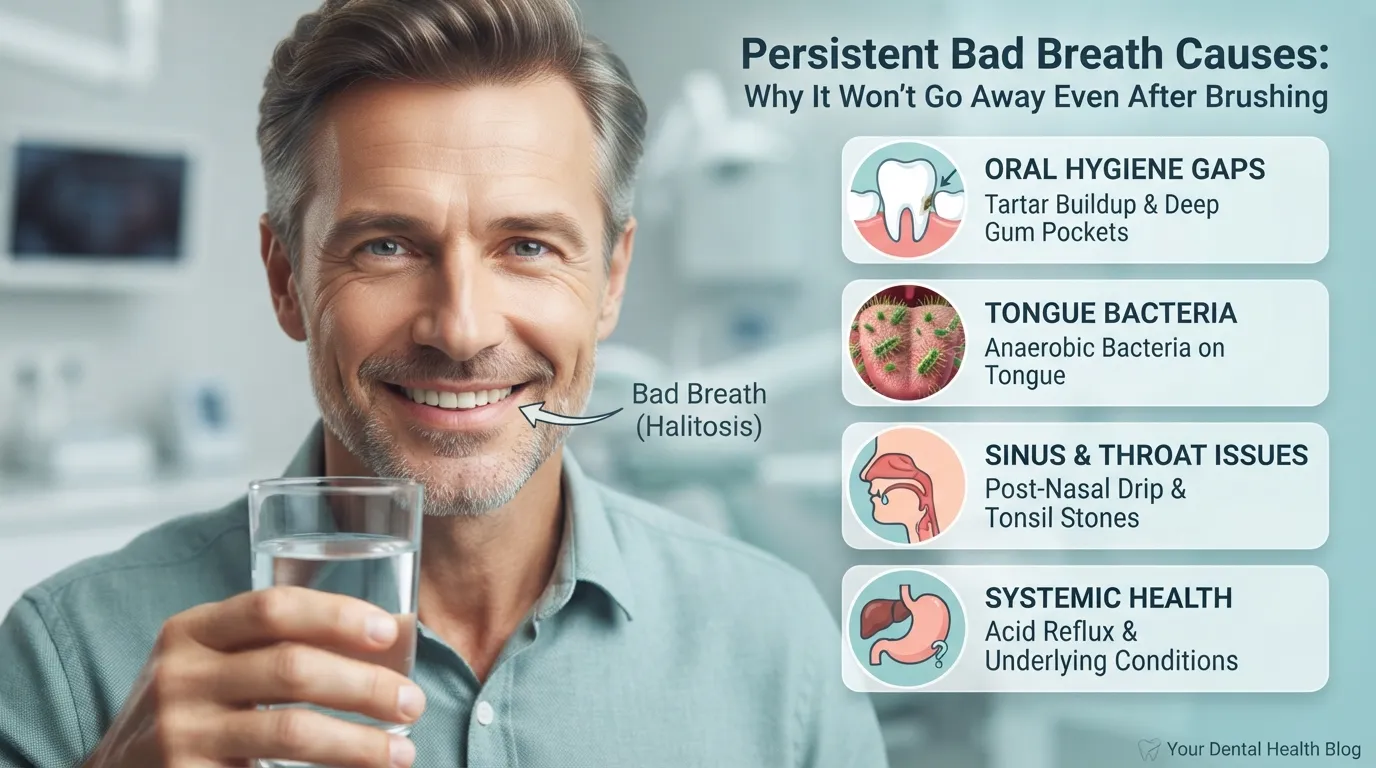
You brush twice a day. You floss, most nights anyway. You’ve tried mints, mouthwash, maybe even a tongue scraper you saw on TikTok. And yet, that stale, sour breath keeps creeping back within an hour of leaving the bathroom. If that’s you, we get it — it’s frustrating, a little embarrassing, and honestly kind of confusing when you’re doing “everything right.”
Here’s the thing: persistent bad breath causes usually aren’t about how well you brush. They’re about what’s happening below the surface, somewhere your toothbrush simply can’t reach. Let’s walk through what’s really going on.
Overview: What This Guide Covers
We’re breaking down why bad breath sometimes sticks around no matter how diligent your brushing routine is. You’ll learn about the hidden culprits like gum disease, tongue bacteria, and dry mouth, plus a few medical conditions that can show up as bad breath first. We’ll also cover what halitosis treatment actually looks like at a dental clinic, and when it’s time to stop masking the smell and start addressing the cause.
In This Article, You’ll Discover…
Why brushing alone often can’t fix chronic bad breath
The strong link between bad breath and gum disease
How your tongue might be the real source of the smell
Medical conditions that can cause persistent halitosis
What a chronic bad breath dentist visit actually involves
Simple daily habits that make a real difference
When it’s time to stop guessing and get it checked

Persistent bad breath causes often have little to do with how often you brush.
Why Brushing Alone Isn’t Always Enough
Here’s an uncomfortable truth: brushing only cleans the surfaces your brush can actually reach. Bacteria love hiding in spots your toothbrush skips entirely — deep in gum pockets, on the back of your tongue, between teeth where floss rarely goes.
Those bacteria break down leftover food particles and release sulfur compounds, and that’s where the smell comes from. Brush all you like, if the bacteria are living below your gumline, you’re not touching them.
Bad Breath and Gum Disease: The Connection Nobody Talks About
This one’s huge, and it’s probably the single biggest reason for chronic bad breath dentist visits. Gum disease, sometimes called “perio breath,” happens when plaque builds along and below the gumline, triggering inflammation and infection.
As gum disease progresses from gingivitis to periodontitis, pockets form between your teeth and gums. These pockets trap bacteria, food debris, and pus, essentially becoming little reservoirs of odour that no amount of mouthwash reaches.
How Bad Breath Gum Disease Actually Smells
Perio breath tends to have a distinct, sometimes metallic or sour quality that’s different from garlic breath or morning breath. It doesn’t fade after a mint. If your bad breath sticks around consistently rather than coming and going with meals, gum disease is worth ruling out first.
Your Tongue: The Overlooked Culprit
Here’s something a lot of people miss entirely. Your tongue, especially toward the back, is basically a shag carpet for bacteria. It traps food particles, dead cells, and mucus, and all of that breaks down into odour-causing compounds.
If your daily routine stops at brushing teeth and skips the tongue, you’re leaving a huge bacterial reservoir completely untouched. A gentle tongue scrape or brush, every single day, makes a noticeable difference for a lot of patients.
Dry Mouth: Saliva’s Quiet but Critical Job
Saliva isn’t just there to keep your mouth comfortable — it actively washes away food particles and neutralises the acids that feed odour-causing bacteria. When saliva flow drops, bacteria have a field day.
Common causes of dry mouth include:
Certain medications, particularly blood pressure and antihistamine drugs
Breathing through your mouth overnight
Dehydration, simply not drinking enough water
Smoking or vaping, which dries out oral tissue
If you consistently wake up with worse breath than you go to bed with, dry mouth overnight is a likely suspect.
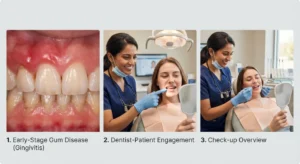
A proper dental assessment is the fastest way to identify what’s really causing chronic bad breath.
Medical Conditions Linked to Persistent Halitosis
Sometimes the cause isn’t in your mouth at all. Chronic bad breath can point to conditions elsewhere in your body, and this is exactly why a dentist visit matters, since we’re often the first to notice something that needs broader medical attention
Conditions that can contribute to persistent bad breath:
Sinus infections or post-nasal drip, which coat the back of the throat in odorous mucus
Tonsil stones, small hardened deposits that trap bacteria and food debris
Gastroesophageal reflux disease (GORD), which can bring stomach acid and odour up into the mouth
Diabetes, which increases gum disease risk and can occasionally cause a distinct fruity breath odour
Tooth decay or old, failing fillings that trap bacteria in hidden crevices
If you’ve addressed your oral hygiene thoroughly and the smell persists, it’s worth mentioning any of these possibilities to your GP alongside your dentist.
What Halitosis Treatment Actually Looks Like
Treatment really depends on the root cause, which is why a proper assessment matters more than another trip to the mouthwash aisle. Here’s generally what to expect at a dental visit for chronic bad breath.
Your dentist will check for gum disease signs, cavities, and any old restorations trapping bacteria. If gum disease is behind it, a professional clean, sometimes called scaling, removes the plaque and tartar buildup that’s driving the smell. For milder cases, they might simply recommend a specific antimicrobial rinse or review your brushing and flossing technique.
When You Might Need a Periodontist
If gum disease has progressed further, with pockets deeper than a standard clean can manage, you may be referred to a periodontist, a gum specialist, for more intensive treatment. This isn’t something to put off. Left untreated, gum disease can progress toward bone and tooth loss alongside the ongoing bad breath.
Daily Habits That Actually Help
While professional treatment addresses the underlying cause, these habits support things day to day:
Brush your tongue gently every time you brush your teeth, not just occasionally
Floss daily to clear plaque between teeth where your brush can’t reach
Drink water consistently throughout the day, not just when you’re thirsty
Limit tobacco and vaping, both of which dry out your mouth and worsen odour
Book regular dental check-ups and cleans, since early gum disease is far easier to treat
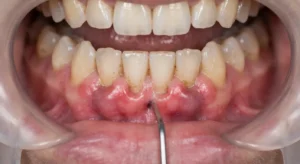
Gum disease is one of the leading causes of chronic, hard-to-shift bad breath.
FAQ: Persistent Bad Breath Causes
Why does my breath still smell bad even after brushing?
Brushing cleans tooth surfaces but often misses bacteria hiding below the gumline or on the back of the tongue. If those areas aren’t specifically addressed, the smell tends to return quickly.
Can gum disease really cause bad breath that won’t go away?
Yes, gum disease is one of the most common causes of chronic halitosis, since bacteria trapped in gum pockets release persistent odour. Treating the gum disease itself is usually necessary to resolve the breath issue.
Is bad breath always a dental problem?
Not always. While oral hygiene and gum disease are the most common causes, conditions like sinus infections, acid reflux, and diabetes can also contribute. That’s why a dental check is a good first step, even if the cause turns out to be medical.
How do I know if my bad breath is from my tongue or my gums?
A dentist can usually tell the difference during an exam, checking for gum pocket depth alongside tongue coating and plaque buildup. Self-diagnosing is tricky since both often overlap.
When should I see a dentist about chronic bad breath?
If bad breath persists despite consistent brushing, flossing, and hydration for more than a couple of weeks, it’s worth booking a proper assessment. Earlier evaluation makes treatment simpler, especially if gum disease is involved.
Wrapping It Up
Persistent bad breath almost never comes down to “not brushing enough.” More often, it’s gum disease, tongue bacteria, dry mouth, or occasionally something happening elsewhere in your body that needs a proper look. The good news is that once you identify the real cause, halitosis treatment tends to be genuinely effective, not just a temporary mask.
Ready to get to the bottom of it? Book your appointment at Sunbury Dental Group today and let’s find out what’s really going on.