OUR CONTACTS


Unit 5/92 Evans Street, Sunbury VIC 3429 , Australia

(+61) 3 9717 7311

Teeth Whitening in Sunbury, VIC

HomeServicesCosmetic Dentistry in Sunbury, VICTeeth Whitening in Sunbury, VIC
sleep teeth whitening sunbury

If you’ve noticed your teeth looking more yellow or stained over time, you’re not alone. Teeth whitening in Sunbury is one of the most commonly requested cosmetic dental treatments — and for good reason. It’s non-invasive, relatively straightforward, and may help improve the overall appearance of your smile when clinically appropriate.

At Sunbury Dental Group, we offer professional whitening options that are assessed and supervised by our dental team. Suitability is always reviewed individually before any treatment begins.

What Is Professional Teeth Whitening?

Professional teeth whitening involves the application of a clinically formulated bleaching agent — typically containing hydrogen peroxide or carbamide peroxide — to the surface of the teeth. The active ingredient works by penetrating the enamel and breaking down stain molecules within the tooth structure, which may help lighten the overall shade.

This is different from whitening toothpastes or over-the-counter strips, which use much lower concentrations of active ingredients and typically produce more limited results. Under Australian law, dental-grade whitening agents containing 6% hydrogen peroxide or above can only be applied or supplied by a registered dental practitioner — meaning professional supervision is not only recommended, it’s legally required for higher-concentration products.

What Causes Tooth Discolouration?

Tooth staining generally falls into two categories: extrinsic (surface staining) and intrinsic (deeper discolouration within the tooth structure).

Common causes of extrinsic staining include:

  • Regular consumption of coffee, tea, or red wine
  • Smoking or use of tobacco products
  • High intake of deeply pigmented foods such as berries or tomato-based sauces
  • Poor oral hygiene allowing surface deposits to build up

Intrinsic discolouration can result from:

  • Natural ageing, which thins enamel and reveals the yellower dentine layer beneath
  • Certain medications taken during tooth development (e.g. tetracycline)
  • Trauma to a tooth
  • Fluorosis (excess fluoride during development)

Whitening treatment is generally more effective on extrinsic staining. Intrinsic discolouration may require a different approach, which your dentist will discuss with you during your consultation.

teeth whitening sunbury

What Causes Tooth Discolouration?

Tooth staining generally falls into two categories: extrinsic (surface staining) and intrinsic (deeper discolouration within the tooth structure).

Common causes of extrinsic staining include:

  • Regular consumption of coffee, tea, or red wine
  • Smoking or use of tobacco products
  • High intake of deeply pigmented foods such as berries or tomato-based sauces
  • Poor oral hygiene allowing surface deposits to build up

Intrinsic discolouration can result from:

  • Natural ageing, which thins enamel and reveals the yellower dentine layer beneath
  • Certain medications taken during tooth development (e.g. tetracycline)
  • Trauma to a tooth
  • Fluorosis (excess fluoride during development)

Whitening treatment is generally more effective on extrinsic staining. Intrinsic discolouration may require a different approach, which your dentist will discuss with you during your consultation.

teeth whitening

Whitening Options Available at Sunbury Dental Group

We offer two professional whitening pathways. Your dentist will help you understand which may be more appropriate for your situation.

In-Chair Teeth Whitening

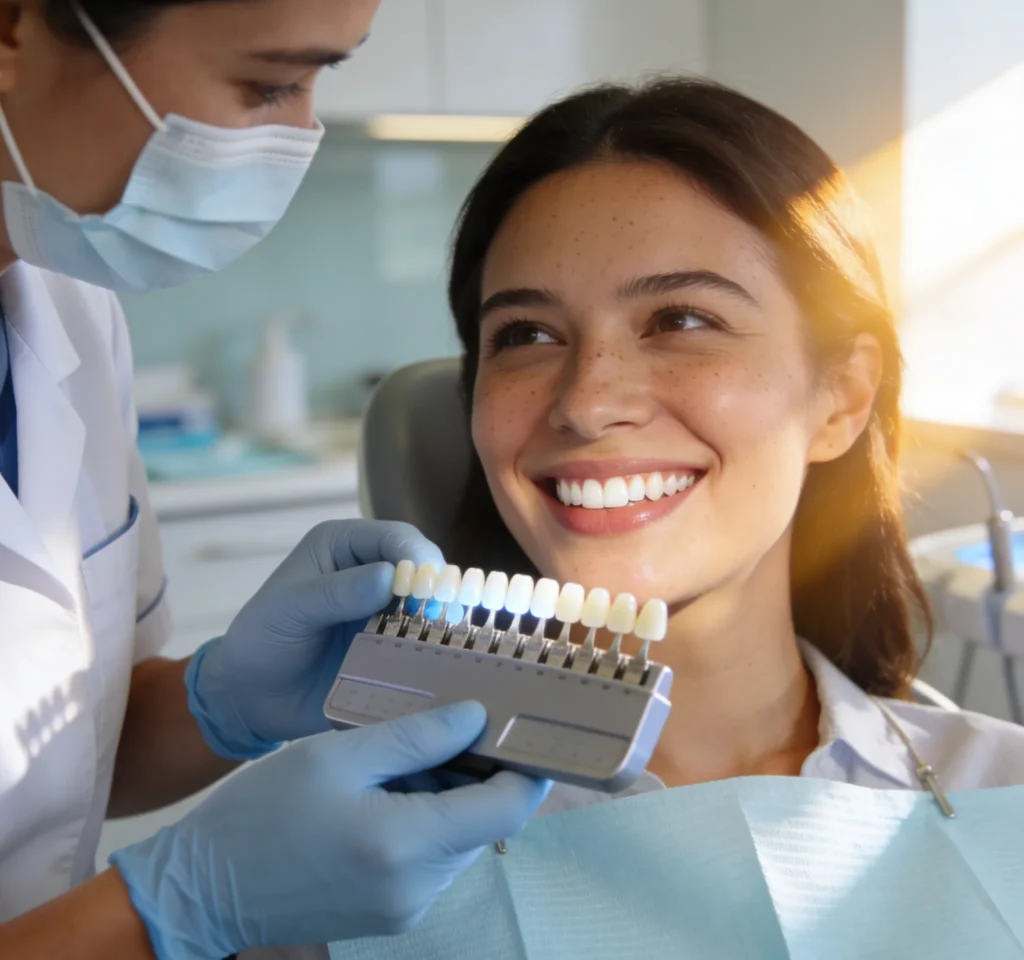
In-chair whitening is performed at our Sunbury clinic in a single appointment cost $399, typically lasting between 60 and 90 minutes. A higher-concentration whitening agent is applied directly to the teeth by your dentist, with protective barriers placed over the gums and soft tissue.This option may suit patients who prefer a faster process or who have an upcoming event such as a wedding, job interview, or formal occasion. Results vary between individuals depending on the nature and depth of staining.

Take-Home Whitening Kits

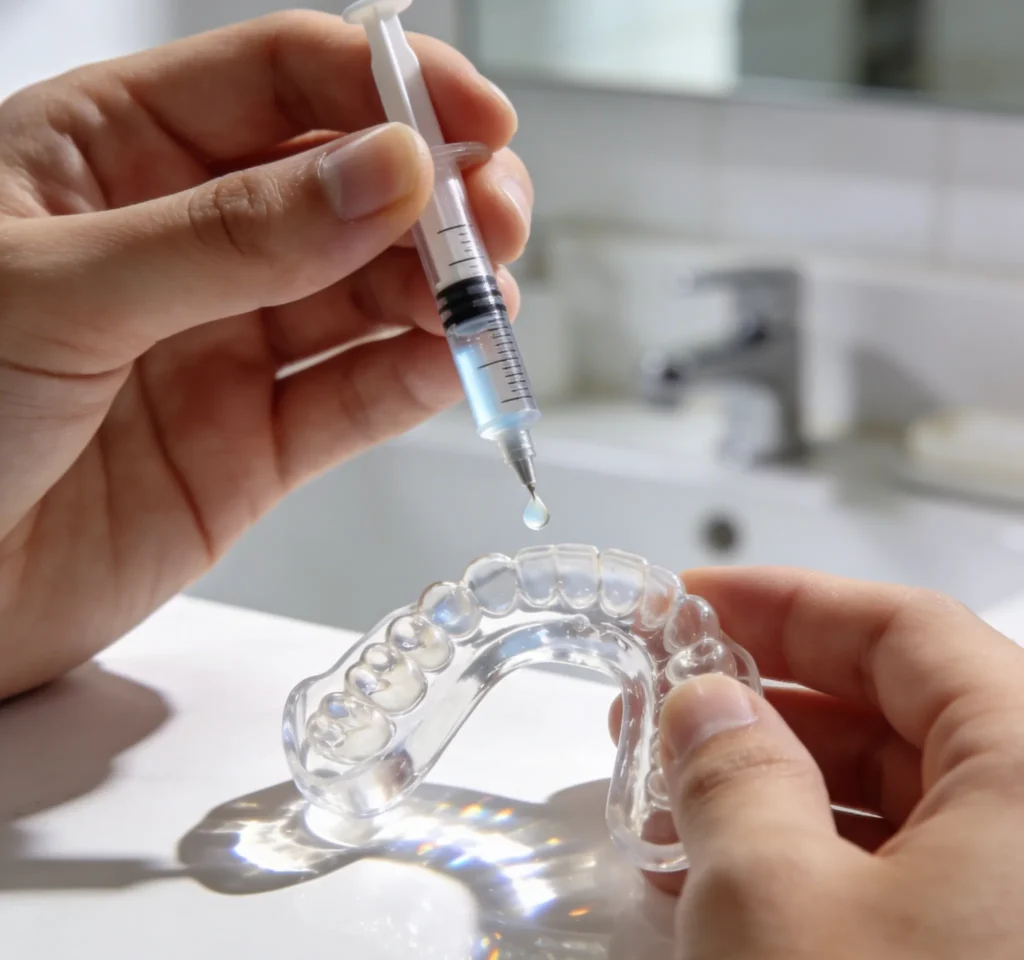
Take-home whitening involves custom-made dental trays fitted to your teeth, supplied alongside a professional-grade whitening gel cost $249. You wear the trays at home — typically for a prescribed period each day — over a course of one to three weeks.Because the trays are custom-fitted, the gel is held evenly against the tooth surfaces, which helps achieve more consistent coverage than generic strips or trays. This option allows you to whiten at your own pace and may be preferred by patients who experience sensitivity during in-chair sessions.

Is Teeth Whitening Safe?

When performed or supervised by a registered dental professional, teeth whitening is considered a safe and well-established procedure. As with any dental treatment, there are some considerations to be aware of:

  • Temporary tooth sensitivity is the most commonly reported side effect, particularly to hot and cold temperatures. This typically resolves within a few days of completing treatment.
  • Mild gum irritation may occur if whitening gel contacts soft tissue. This is minimised through professional application techniques and protective barriers.
  • Existing restorations — such as crowns, veneers, or composite fillings — do not respond to whitening agents. Your dentist will discuss this with you during your assessment, as colour matching may need to be considered.
  • Overuse of whitening products, particularly unsupervised, may contribute to enamel sensitivity over time.

A thorough dental assessment prior to treatment helps identify any factors that may affect your suitability or experience. We do not recommend proceeding with whitening if there is active decay, gum disease, or significant enamel wear — these conditions are typically addressed first.

sunbury teeth whitening

Is Teeth Whitening Safe?

When performed or supervised by a registered dental professional, teeth whitening is considered a safe and well-established procedure. As with any dental treatment, there are some considerations to be aware of:

  • Temporary tooth sensitivity is the most commonly reported side effect, particularly to hot and cold temperatures. This typically resolves within a few days of completing treatment.
  • Mild gum irritation may occur if whitening gel contacts soft tissue. This is minimised through professional application techniques and protective barriers.
  • Existing restorations — such as crowns, veneers, or composite fillings — do not respond to whitening agents. Your dentist will discuss this with you during your assessment, as colour matching may need to be considered.
  • Overuse of whitening products, particularly unsupervised, may contribute to enamel sensitivity over time.

A thorough dental assessment prior to treatment helps identify any factors that may affect your suitability or experience. We do not recommend proceeding with whitening if there is active decay, gum disease, or significant enamel wear — these conditions are typically addressed first.

teeth whitening treatment Sunbury

Who May Be Suitable for Teeth Whitening?

Teeth whitening may be worth exploring if you:

  • Have noticeable staining from food, beverages, or lifestyle factors
  • Have healthy teeth and gums with no active decay or disease
  • Are not pregnant or breastfeeding (whitening is generally not recommended during this period)
  • Have realistic expectations about outcomes
  • Are aged 18 or over (treatment is not recommended for patients under 18)

Suitability is assessed individually at your consultation. Not all patients will be clinically appropriate candidates, and your dentist will always provide honest guidance.

Maintaining Your Results

Whitening results are not permanent, and how long they last depends largely on your habits and oral care routine. To help maintain your smile after treatment, your dentist may recommend:

  • Reducing consumption of staining foods and drinks (coffee, tea, red wine)
  • Using a whitening-formulated toothpaste as a maintenance aid
  • Avoiding tobacco products
  • Attending regular dental hygiene appointments
  • Considering periodic top-up treatment as discussed with your dentist

Results vary between individuals. Some patients may find their results last longer; others may notice gradual re-staining more quickly, particularly if staining factors are not reduced.

teeth whitening dentist sunbury

Maintaining Your Results

Whitening results are not permanent, and how long they last depends largely on your habits and oral care routine. To help maintain your smile after treatment, your dentist may recommend:

  • Reducing consumption of staining foods and drinks (coffee, tea, red wine)
  • Using a whitening-formulated toothpaste as a maintenance aid
  • Avoiding tobacco products
  • Attending regular dental hygiene appointments
  • Considering periodic top-up treatment as discussed with your dentist

Results vary between individuals. Some patients may find their results last longer; others may notice gradual re-staining more quickly, particularly if staining factors are not reduced.

Book a Teeth Whitening Consultation in Sunbury

Sunbury Dental Group is located at Unit 5/92 Evans Street, Sunbury VIC 3429, with appointments available Monday to Friday 8am–6pm and Saturday to Sunday 9am–4pm.
We welcome patients from across the region including Diggers Rest, Bulla, Clarkefield, Riddells Creek, Gisborne, Mickleham, Tullamarine, Melton, Taylors Lakes, Keilor, Greenvale, Bonnie Brook, Aintree, and surrounding suburbs. If you're looking for a teeth whitening dentist near Sunbury, we offer flexible appointment times to suit busy schedules.

Frequently Asked Questions About Teeth Whitening

The cost of professional teeth whitening varies depending on the type of treatment (in-chair or take-home), the number of sessions required, and your individual clinical situation. At Sunbury Dental Group, a detailed cost estimate will be provided at your consultation — there are no hidden charges. We recommend not making a decision based on price alone, as the concentration and supervision level of professional whitening differs significantly from over-the-counter products

Over-the-counter products are widely available, but they are limited by Australian regulations to very low concentrations of whitening agent (generally 2% hydrogen peroxide or less). As a result, they typically produce more modest outcomes. Some OTC products also contain abrasive ingredients that, with overuse, may affect enamel. A professional assessment can help you determine whether a supervised whitening option may produce better results for your specific situation.

No. Whitening agents only work on natural tooth enamel and dentine — they do not change the colour of ceramic crowns, porcelain veneers, or composite resin fillings. If you have visible restorations in your smile, your dentist will discuss how this may affect the overall outcome and whether any additional steps are needed.

In-chair whitening is typically completed in a single 60–90 minute appointment. Take-home whitening involves daily tray use over approximately one to three weeks, depending on the product and the degree of whitening required. Your dentist will give you a clearer timeframe based on your individual circumstances.

Teeth whitening is generally not recommended during pregnancy or breastfeeding. This is a precautionary measure, as the effects of whitening agents in these circumstances have not been adequately studied. We recommend discussing timing with your dentist if this applies to you.

There is no universal rule, but whitening is not intended for continuous or frequent use. Repeated whitening without adequate intervals can contribute to sensitivity or enamel wear over time. Your dentist will advise on appropriate timing for any top-up treatment based on your individual oral health and whitening history.

Teeth whitening is typically classified as a cosmetic procedure and is not covered by most private health insurance funds in Australia. However, cover varies between funds and policy levels. We recommend contacting your health fund directly. Our team can provide you with the relevant item codes from your treatment plan to assist with your enquiry