Introduction
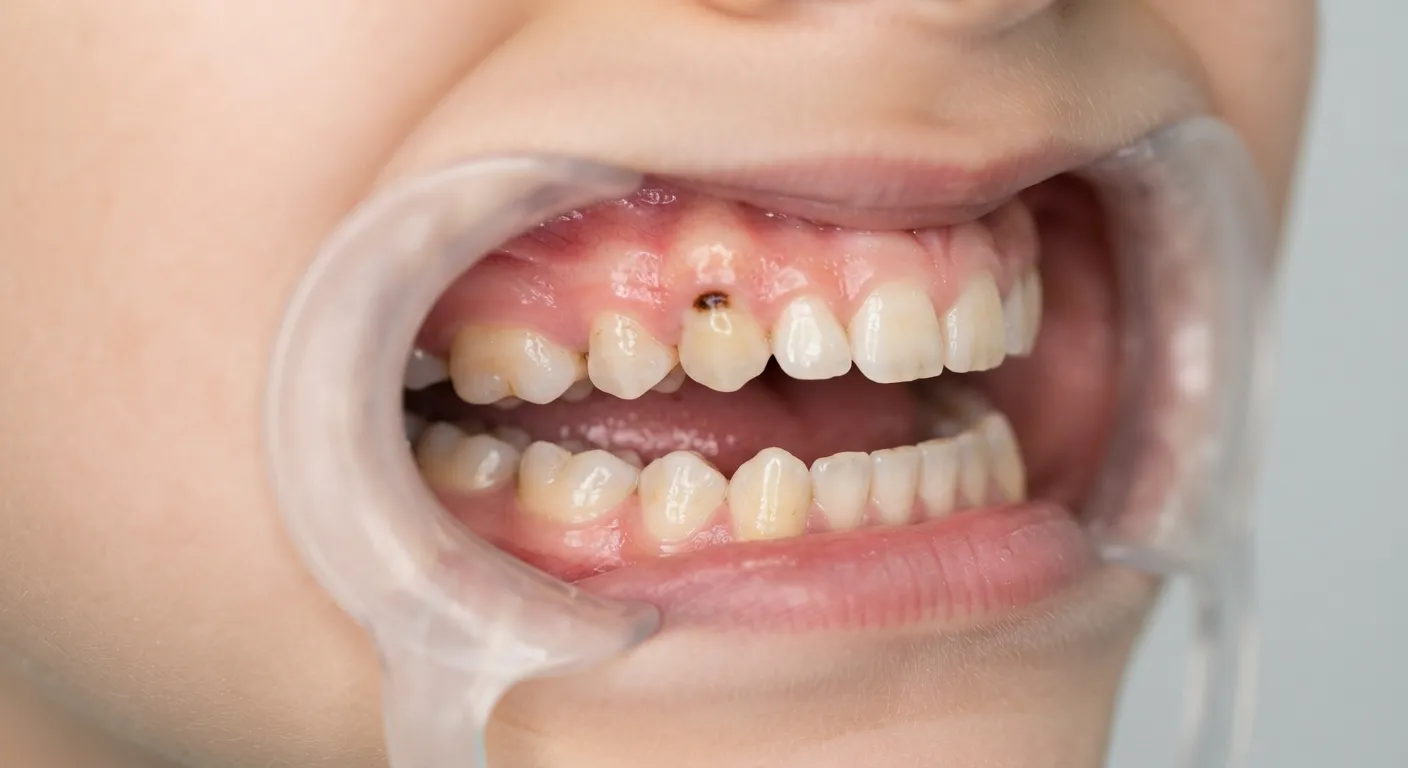
You’re brushing your three-year-old’s teeth before bed, and there it is — a small black spot on baby tooth sitting right on one of their front baby teeth. Your stomach drops a little, doesn’t it? That’s a completely normal reaction, and honestly, most parents in Sunbury who’ve messaged our clinic about a black spot on baby tooth have felt exactly the same jolt of worry.
Here’s the reassuring part: not every dark mark on a child’s tooth means cavity. Some spots are just staining, completely harmless, and won’t hurt your little one at all. Others genuinely are early baby tooth decay signs that need attention before they progress. The tricky bit is telling the two apart without a dental exam, which is exactly what we’ll walk through below.
Overview
This article breaks down what actually causes black spots on children’s teeth, from chromogenic bacteria to iron supplements to good old-fashioned tooth decay. You’ll learn the practical differences between tooth staining kids commonly experience and true early childhood cavities, plus what to look for at home before your next dental visit. We’ll also cover when a black spot needs urgent attention versus when it can simply be monitored. By the end, you’ll feel equipped to make the call on whether that spot needs a phone call to us or just a bit of extra brushing.
This article breaks down what actually causes black spots on children’s teeth, including a black spot on baby tooth. From chromogenic bacteria to iron supplements to good old-fashioned tooth decay, you’ll learn the practical differences between tooth staining kids commonly experience and true early childhood cavities, plus what to look for at home before your next dental visit. We’ll also cover when a black spot needs urgent attention versus when it can simply be monitored. By the end, you’ll feel equipped to make the call on whether that black spot on baby tooth needs a phone call to us or just a bit of extra brushing.
In This Article, You’ll Discover:
The real difference between a cavity and a harmless stain on baby teeth
Why some kids get black staining even with great oral hygiene
The five most common causes of dark spots on children’s teeth
Warning signs that mean a black spot needs urgent dental care
Simple habits that reduce staining and protect against decay
What actually happens during a paediatric dental check for a black spot
How to talk to your child about a dental visit without added stress
What Does a Black Spot on a Baby Tooth Actually Mean?
It’s crucial to understand what a black spot on baby tooth can mean in terms of dental health. Parents often worry, but recognizing whether it’s a harmless stain or a sign of decay is key to ensuring your child’s oral health.
Let’s get one thing straight first: a black spot doesn’t automatically mean disaster. Baby teeth have thinner enamel than adult teeth, which makes them more prone to both staining and decay, so dark marks show up more easily than you’d expect. That thinner enamel is also why little ones’ teeth can look drastically different within just a few weeks — decay in baby teeth tends to move faster than in adult teeth.
There are really two broad categories here, and they behave quite differently.
Category One: Harmless Staining
Extrinsic staining sits on the surface of the tooth and doesn’t damage the structure underneath at all. It’s superficial, cosmetic, and — this bit surprises most parents — sometimes even linked to a lower cavity risk.
Category Two: Early Decay
Decay starts inside the enamel and works its way in, often beginning as a chalky white patch before darkening to brown or black as it progresses. This is structural damage, not surface colour, and it won’t fix itself with a toothbrush.
The Most Common Causes of Black Spots on Kids’ Teeth
The most common causes of black spots on kids’ teeth include issues like a black spot on baby tooth due to dietary factors or poor oral hygiene. Our Sunbury practice frequently sees these types of conditions.
We see a handful of causes over and over in our Sunbury practice. Here’s the rundown, roughly in order of how often we encounter them.
Chromogenic (black stain) bacteria — Certain bacteria in the mouth produce pigments that bind to iron in saliva, forming a black line along the gumline, usually on molars or front teeth. It’s frustratingly persistent but genuinely not harmful.
Chromogenic (black spot on baby tooth) bacteria can lead to persistent stains. Understanding the role of these bacteria is essential for effective oral health management.
Early tooth decay — Bacteria feed on leftover sugars from milk, juice, or snacks, producing acid that eats into enamel and turns the site brown or black over time.
Early tooth decay is another factor contributing to a black spot on baby tooth. Recognizing this early can help prevent further dental complications.
Iron supplements — Liquid iron, often prescribed for anaemia, reacts with bacteria and saliva and can leave dark surface deposits.
Tooth trauma — A bump or fall can rupture blood vessels inside the tooth, and the tooth may darken to grey or black over the following weeks.
Tartar buildup — Hardened plaque that hasn’t been brushed away can calcify into a yellow-brown or dark deposit, especially near the gumline.
Diet plays a role too. Frequent exposure to berries, cordial, soy sauce, or dark juices can stain enamel, particularly if teeth aren’t rinsed or brushed soon after.[
Diet plays a role too. Frequent exposure to foods that can stain teeth, especially things leading to a black spot on baby tooth, should be monitored closely to encourage good dental habits.
Cavity or Stain? Key Differences to Look For
Since you can’t diagnose this from a photo on your phone, think of the following as clues rather than a diagnosis. We always recommend a proper check either way, but these signs help you gauge urgency.
Texture: Chromogenic stain often feels smooth to the fingernail, while decay tends to feel rough, sticky, or slightly soft.
Location: Black stain classically follows a garland-like pattern along the gumline across several teeth, whereas decay usually shows up as an isolated spot on one tooth.
Pattern of spread: Staining tends to stay put or just deepen in colour, while a cavity typically grows larger over weeks or months.
Associated symptoms: Sensitivity, bleeding gums, or your child wincing while eating point more toward decay than simple staining.
Removability: Tartar and stain don’t budge with brushing alone, but neither does decay — so this one’s honestly not that useful for telling them apart, and it’s a common myth we like to clear up.
A Quick Word on Fluorosis
Sometimes what looks like a black spot is actually mild fluorosis, caused by swallowing too much fluoride toothpaste during the early years of tooth development. This usually shows up as white streaks first, occasionally darkening later, and it’s a cosmetic concern rather than a decay risk.

Location and texture can hint at staining versus decay, but only a dental check confirms it.
When Should You Book a Dental Visit?
Whenever you notice a new black spot on baby tooth, book something. It costs you a short appointment, and it gives you peace of mind either way. But there are a few signs that push this from “worth checking” to “please call us this week”:
The spot is growing or spreading to nearby teeth
Your child complains their tooth hurts, especially with hot, cold, or sweet food
You notice bad breath that doesn’t improve with brushing
There’s swelling or redness in the gum near the spot
Your child avoids chewing on one side of their mouth
Left untreated, early decay in baby teeth can progress to infection, pain, and in some cases early tooth loss, which can affect speech development and how permanent teeth eventually come through. That’s not meant to scare you — it’s simply why we’d rather see your child sooner than later if any of these signs show up.
What Happens at a Dental Check for a Black Spot
If you bring your child in, the process is straightforward and gentle. Our dentist will visually examine the spot, check its texture with a small instrument, and look at the surrounding teeth and gums. Depending on what’s found, we might recommend a small X-ray to see beneath the surface, since some decay isn’t visible to the naked eye until it’s more advanced.
If it turns out to be simple chromogenic staining, we’ll usually just clean it professionally and talk you through home habits to manage it. If it’s decay, treatment depends on how deep it’s gone — sometimes it’s as simple as a small filling, other times more involved care is needed. Either way, we’ll walk you through every option before doing anything, and nothing happens without your say-so.
Everyday Habits That Help Prevent Both Staining and Decay
You can’t control everything — some kids are just more prone to chromogenic staining regardless of how well they brush. But there’s plenty within your control:
Brush twice daily with a fluoride toothpaste suited to your child’s age
Encourage a quick water rinse after dark juices, cordial, or berries
Ask your GP or our dentist about lower-staining iron supplement options if your child’s on one
Limit grazing on sugary snacks between meals, since constant sugar exposure feeds decay-causing bacteria
Book regular six-monthly checkups so we can catch anything early, before it becomes a bigger job

Simple daily habits go a long way in protecting little smiles.
Frequently Asked Questions
Is a black spot on my child’s baby tooth always a cavity?
No, not always. It could be chromogenic staining, tartar, an old injury, or even fluorosis, so a dental check is the only reliable way to know.
Can black stains on baby teeth be removed at home?
Chromogenic staining generally doesn’t respond to home brushing alone and needs a professional clean, though good daily brushing helps slow it down. Please don’t scrub aggressively at home, as this can irritate gums without shifting the stain.
Is a black spot on baby tooth always a cavity?
No, not always. It could be chromogenic staining, tartar, an old injury, or even fluorosis, so a dental check is the only reliable way to know.
Does a black spot mean my child needs a filling?
Only if it turns out to be decay that’s progressed past the enamel surface. Many black spots are managed with monitoring or a professional clean rather than a filling.
Will black staining go away when the baby tooth falls out?
Often, yes, since chromogenic staining is linked to the specific tooth surface and bacterial environment at the time. That said, some children develop it again on adult teeth, so ongoing hygiene habits still matter.
Does a black spot on baby tooth mean my child needs a filling?
Only if it turns out to be decay that’s progressed past the enamel surface. Many black spots are managed with monitoring or a professional clean rather than a filling.
Should I worry if the black spot is on a back molar my child can’t fully clean?
Yes, back molars are common decay sites because they’re harder to brush thoroughly and tend to trap food. It’s worth having these checked sooner rather than later given how quickly decay can progress in baby teeth.
Can iron supplements really turn my child’s teeth black?
Yes, liquid iron supplements are a well-documented cause of dark surface staining in kids, and it’s a cosmetic issue rather than a decay risk. Rinsing with water after each dose can help minimise it.
Final Thoughts
In summary, understanding the implications of a black spot on baby tooth is vital for effective dental care. Regular check-ups can help address any issues before they escalate.
A black spot on your child’s tooth isn’t something to panic over, but it’s also not something to quietly ignore for months. The safest path is always a professional look, since staining and decay can genuinely look identical to an untrained eye, and only a dental exam (sometimes with an X-ray) tells you which one you’re dealing with. Catching decay early usually means simpler, gentler treatment — and catching a harmless stain early just means peace of mind for you.
If you’ve spotted something on your child’s tooth and you’re not sure what it is, don’t wait it out. Book your appointment at Sunbury Dental Group today and we’ll take a proper look, explain exactly what we find, and talk you through the next steps together.
Book Your Child’s Dental Check →
This article is general information only and does not replace individualised advice from a registered dental practitioner. Always consult a qualified dentist for diagnosis and treatment specific to your child. Sunbury Dental Group complies with AHPRA advertising guidelines and Australian Consumer Law — no outcome, result, or treatment timeframe is guaranteed.