
Overview
With so many whitening options lining pharmacy shelves — strips, trays, LED kits, charcoal toothpastes — it’s easy to feel overwhelmed before you’ve even opened your wallet. This guide cuts through the noise. We compare professional teeth whitening with over-the-counter kits on the things that actually matter: results, safety, sensitivity, and suitability for your specific situation. We also cover who should get a dental assessment before whitening at all, so you don’t waste money or risk discomfort chasing a brighter smile the wrong way.
Key Highlights
In this article, you’ll discover:
- The real difference between professional and store-bought whitening — in plain terms
- Why in-chair whitening delivers faster, more predictable results for events and deadlines
- How take-home professional kits bridge the gap between speed and convenience
- What makes whitening risky for people with sensitive teeth — and how to manage it safely
- Who should not whiten without a proper dental check first
- Why Australian law restricts high-concentration whitening products to registered dentists
- What to expect at a professional whitening consultation at Sunbury Dental Group
Why People Are Searching “Professional Teeth Whitening Near Me” Right Now
People don’t usually think about their teeth until something’s coming up. A wedding. A job interview. An anniversary trip. A milestone birthday where someone’s definitely going to take photos.
That’s when the search starts — and the options feel endless.
You’ve got strips that promise “Hollywood white in 14 days,” charcoal powders that claim to lift years of staining, LED devices you hold in your mouth while watching Netflix, and then on the other side, professional in-chair treatment and dentist-supplied take-home kits. The price difference alone — anywhere from $20 to over $700 — is enough to make anyone pause.
So what actually works?
The Core Difference: Strength, Supervision, and Safety
The biggest gap between professional whitening and anything you buy off the shelf comes down to one thing: the concentration of the active whitening agent.
Under Australian law, only registered dental practitioners can use or supply teeth whitening products containing more than 6% hydrogen peroxide (or equivalent in carbamide peroxide). Over-the-counter products are capped at much lower concentrations — which is why their results tend to be modest and gradual, rather than dramatic and fast.
Professional whitening — whether in-chair or take-home via your dentist — uses significantly stronger formulations, applied safely under dental supervision. That’s the gap that matters.
In-Chair Whitening vs Take-Home Kits: How They Actually Compare
Both professional pathways work. The question is which one suits your timeline, your budget, and your teeth.
In-Chair Whitening (Professional, Clinic-Based)
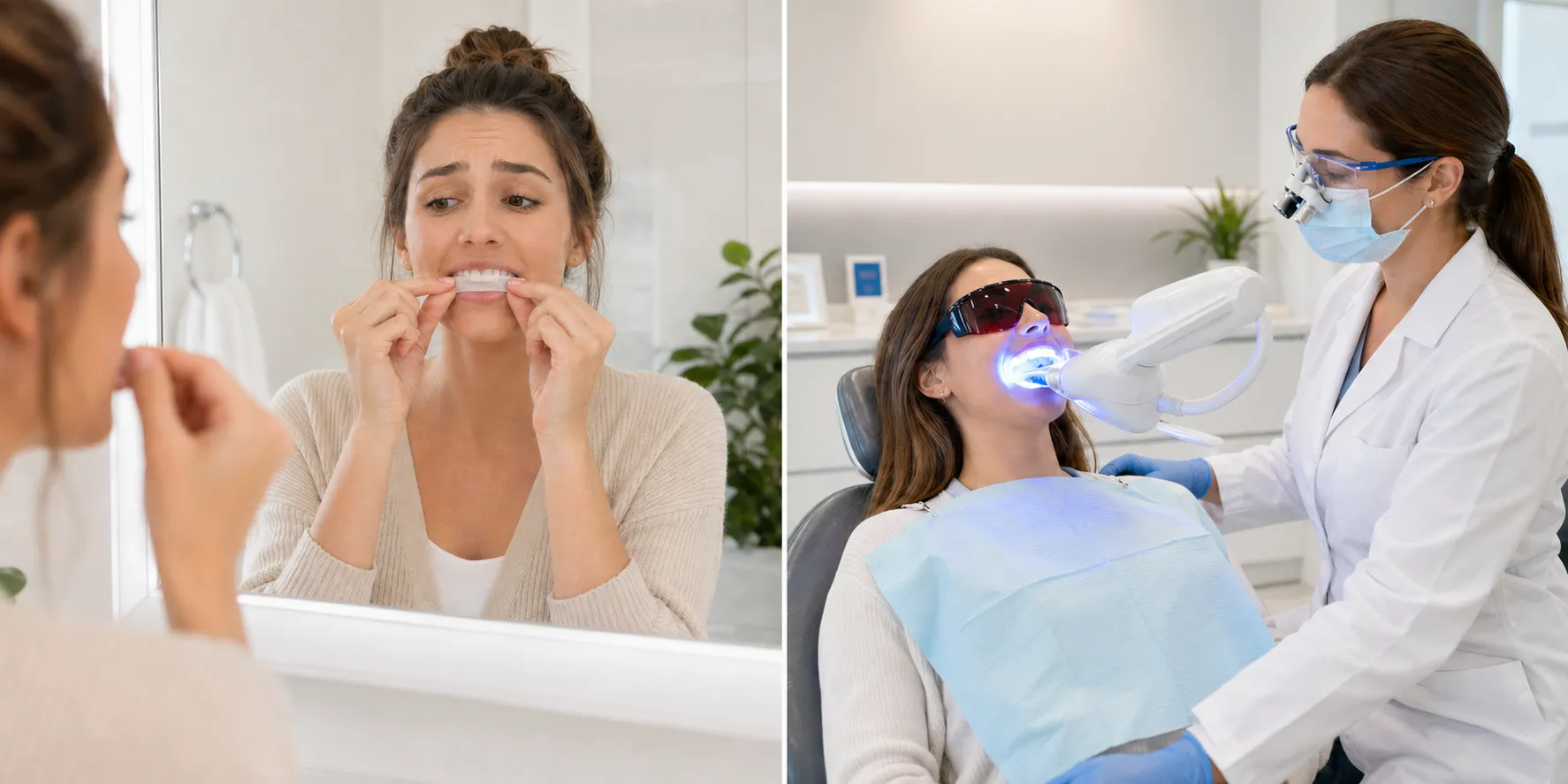
This is the fastest route to a noticeably brighter smile. In a single appointment, most patients can expect their teeth to lighten by several shades — results that are visible immediately after treatment. Your gums and soft tissues are carefully protected throughout, and your dentist monitors the process in real time, adjusting if any sensitivity comes up.
It’s the go-to option when you’ve got a specific event coming up — a wedding in two weeks, an interview on Friday, a school reunion you’ve been dreading for months. You walk in, the work gets done, and you leave with results you can see.
Dentist-Supplied Take-Home Kits
These aren’t the same as the kits you find at the chemist. Not even close.
Your dentist takes impressions of your teeth and creates custom-fitted trays — so the whitening gel sits evenly against every surface, rather than bunching, slipping, or missing patches the way generic strips do. The gel itself is a higher concentration than anything available over the counter, and you wear the trays for a set time each day over two to three weeks.
The results are excellent. The process is just more gradual, which actually suits some people — especially those with sensitivity who do better with a slower approach.
What About Pharmacy Kits?
They’re not useless. For someone with very mild surface staining and no underlying dental issues, a pharmacy whitening kit might deliver a subtle improvement. But the limitations are real:
- Strips don’t fit custom teeth shapes — uneven whitening is common
- Lower-concentration gels lighten by 1–3 shades at best, compared to several shades with professional treatment
- Generic trays can irritate gums when the gel leaks
- Without a dental check beforehand, you won’t know if you have decay, gum disease, or worn enamel — all of which whitening can aggravate
Here’s the honest truth: pharmacy kits are a gamble. Professional whitening is an investment with a predictable outcome.
Whitening for Sensitive Teeth: It’s Not Off the Table
One of the most common reasons people avoid whitening — professionally or otherwise — is sensitivity. If cold drinks already make you flinch, the idea of a whitening treatment can feel daunting.
But here’s what most people don’t realise: sensitivity doesn’t automatically disqualify you. It just means your approach needs to be tailored.
A dentist can assess the cause of your sensitivity — whether it’s enamel wear, gum recession, exposed dentine, or something else — and choose a whitening method and concentration that works around it. For many patients with sensitivity, a dentist-supplied take-home kit with a lower-concentration gel and a custom tray is actually the recommended path. It takes a little longer, but it gets you there without discomfort.
What helps when you have sensitive teeth:
- A proper dental assessment before any whitening treatment starts
- Desensitising toothpaste used for two weeks beforehand
- Custom trays that prevent gel from contacting gum tissue
- Lower-concentration gel with shorter daily wear times
- Spacing out treatments to allow your enamel to recover between sessions
Without professional guidance, sensitive teeth and DIY whitening are a risky combination. With it, a brighter smile is completely achievable.
Who Shouldn’t Whiten Without a Dental Assessment First?
This is the part most whitening ads skip over entirely.
There are certain situations where starting whitening — any whitening — without a professional check first can cause real harm. Your dentist needs to know if any of the following apply before you start:
- Active tooth decay — whitening product can penetrate through cavities and cause significant pain
- Gum disease — inflamed, receding, or infected gums react poorly to bleaching agents
- Heavily worn enamel — less enamel means more exposure of sensitive dentine underneath
- Crowns, veneers, or composite bonding — whitening doesn’t affect restorations, which means uneven colour matching after treatment
- Pregnancy or breastfeeding — whitening is generally not recommended during this period
- Recent dental work — fresh fillings or extractions need time to settle before whitening
None of these are permanent dealbreakers. They’re just things that need to be addressed or accounted for first. That’s exactly what a whitening consultation does — it makes sure your plan is right for your actual teeth, not just teeth in general.
What Happens at a Professional Whitening Consultation at Sunbury Dental Group?
If you’re based in Sunbury or the surrounding areas — Diggers Rest, Gisborne, Riddells Creek, Romsey, Macedon — and you’re thinking about whitening, here’s what to expect when you come in.
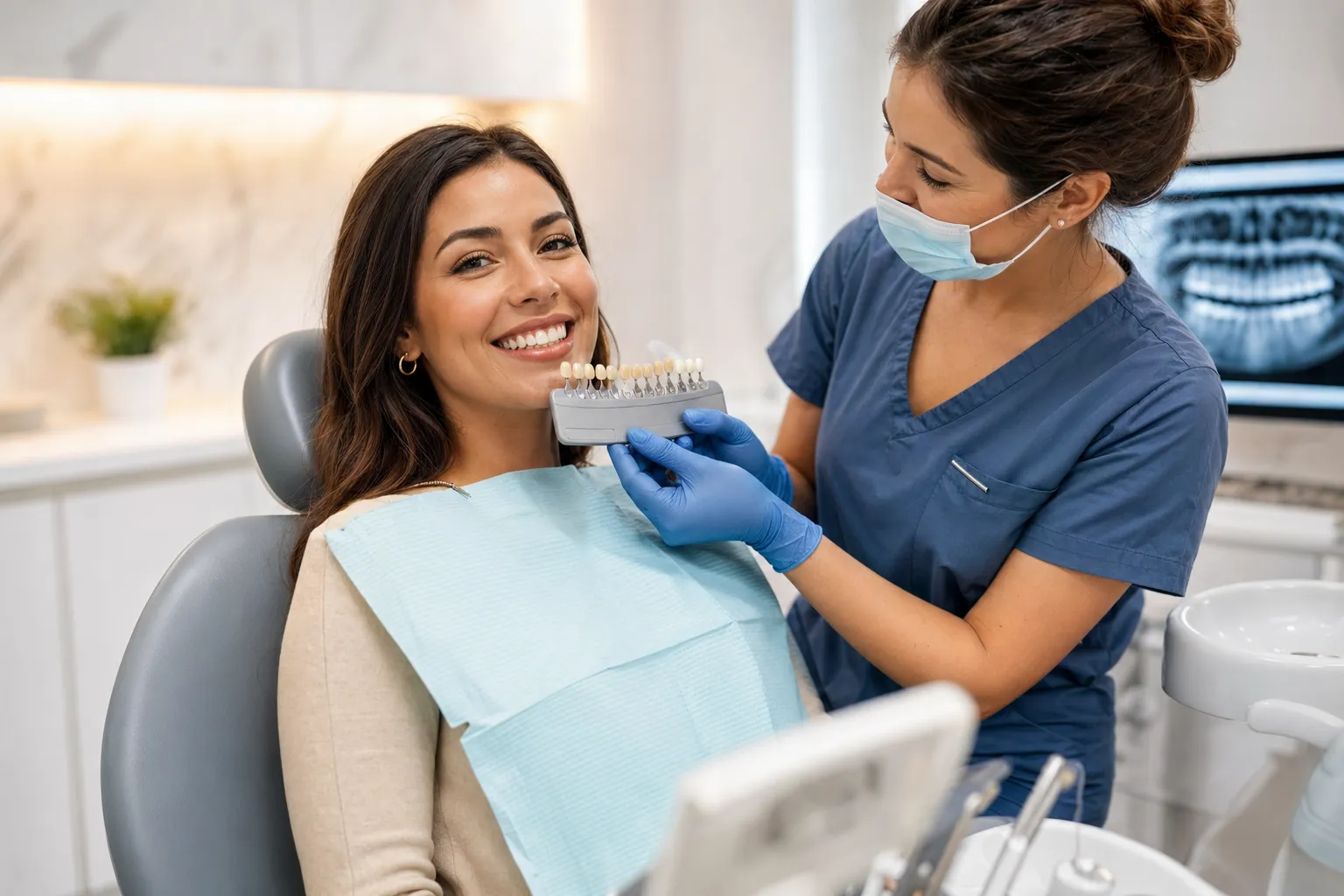
We start with a thorough assessment of your teeth and gums. We look at your current shade, check for any underlying issues, and talk through your goals — are you preparing for something specific? Do you have a timeline? Do you have sensitivity concerns? That conversation shapes everything.
From there, we’ll recommend the approach most suited to your situation — whether that’s in-chair whitening, a professional take-home kit, or a combination of both. Nothing is pushed. We give you the information and the options, and you decide.
It’s a straightforward, no-pressure conversation that takes the guesswork out of the whole process.
Ready to Stop Guessing and Actually Get Results?
Here’s the short version: store-bought kits can do a little, professional whitening does a lot — and the difference becomes very clear when you’re standing in front of a mirror the morning of your big day.
The two most important things to take away: get a dental assessment before you start any whitening treatment, and choose a pathway that’s matched to your teeth, your timeline, and your sensitivity level. That’s how you avoid wasted money, unnecessary discomfort, and disappointing results.
At Sunbury Dental Group, we offer professional whitening options for adults across Sunbury and the surrounding region — and we start every whitening journey with a proper consultation, not a sales pitch.
Frequently Asked Questions - Children's Dentistry
How long does professional teeth whitening last?
Results vary depending on lifestyle factors like coffee, tea, red wine, and smoking habits, but most professional whitening treatments maintain noticeable results for 12–24 months with good oral hygiene. Touch-up treatments — especially with a dentist-supplied take-home kit — can extend results significantly. Your dentist can advise on the best maintenance plan for your situation.
Is professional teeth whitening safe?
Yes — when performed or supervised by a registered dental professional, teeth whitening is considered safe in Australia. Your dentist assesses your teeth beforehand, protects your gums during treatment, and monitors for any sensitivity. Unsupervised use of high-concentration products carries higher risks of gum irritation and enamel damage, which is why Australian law restricts strong formulations to dental professionals only.
What's the difference between in-chair and take-home whitening?
In-chair whitening is done in a single clinic appointment and delivers immediate, visible results — ideal when you’re working to a deadline. Take-home kits supplied by your dentist use custom-fitted trays and a professional-grade gel you apply at home over two to three weeks. Both are effective; the choice comes down to your timeline, budget, and teeth.familydentalclinic
Can I whiten my teeth if I have sensitive teeth?
In most cases, yes — but it requires a tailored approach. A dentist can identify the cause of your sensitivity and select a whitening method and concentration that reduces discomfort. Many patients with sensitivity do well with professional take-home kits using lower-concentration gel and custom trays. Don’t rule whitening out — just make sure you get assessed first.
Are pharmacy whitening kits worth buying?
They can produce mild improvements on surface staining, but results are limited by the lower concentration of whitening agents allowed in over-the-counter products. They’re also more prone to uneven results and gum irritation from ill-fitting strips or trays. If you want a meaningful, lasting change — especially for an event — professional whitening is a considerably more reliable option.
Does teeth whitening work on crowns or veneers?
No — whitening products only affect natural tooth enamel, not dental restorations like crowns, veneers, or composite bonding. If you have visible restorations, it’s important to discuss this with your dentist before whitening, as your natural teeth may lighten while the restorations stay the same shade. A consultation helps you plan around this