
This guide is written specifically for parents in Sunbury and the surrounding areas of Victoria who are wondering when, why, and how to book their child’s first dental check-up with a childrens dentist near me. We cover the right age to start, what actually happens during that first appointment, and how to settle an anxious child. Additionally, we discuss what to bring along and the preventive care your childrens dentist near me may recommend. Whether your little one is a toddler just cutting their first teeth or a primary schooler who’s never seen a dentist, you’ll leave this page feeling confident and ready.
Key Highlights
In this article, you’ll discover:
- The exact age the Australian Dental Association recommends for a child’s first dental visit
- What to expect during your child’s first dental check-up — step by step
- Practical tips for preparing anxious or nervous kids before the appointment
- What documents and information to bring on the day
- Which preventive treatments (like fluoride and sealants) may be discussed and why
- How Sunbury Dental Group creates a calm, educational experience for young patients
- Why starting early makes a genuine difference to your child’s lifelong oral health
When Should You Actually Book That First Visit?
It’s important to define what to look for in a childrens dentist near me.
Finding a Childrens Dentist Near Me
Here’s something that surprises a lot of parents: the Australian Dental Association (ADA) recommends your child’s first dental visit should happen within six months of their first tooth appearing — and no later than their first birthday. That feels early. Most of us grew up thinking a dentist visit was something that happened around age three or four.
The truth is, baby teeth matter far more than people realize. They guide the development of your child’s jaw, help them chew and speak properly, and hold space for permanent teeth. Getting in early means any potential issues, like early signs of decay or bite development concerns, are caught before they become bigger problems.
If your child is already a toddler or school-aged and hasn’t visited a dentist yet, don’t stress. You’re not alone — and it’s never too late to start. Booking their first appointment now is the right move.
What Actually Happens at a Child’s First Dental Check-Up?
First visits are usually gentle, short, and very much about building trust. Here’s a realistic look at what you can expect:
A typical first visit includes:
- A warm welcome and gentle introduction to the dental chair, the tools, and the team
- A visual examination of your child’s teeth, gums, and jaw development
- A check for early signs of tooth decay or developmental concerns
- A gentle clean (if your child is comfortable and cooperative)
- A conversation with you about your child’s diet, oral hygiene habits, and home care routine
- Advice on fluoride use, brushing technique, and what to expect as more teeth come through
Learning about what to expect from a childrens dentist near me prepares your child for their visit.
- Guidance on when to return for their next check-up
Consulting with a childrens dentist near me on oral hygiene can set your child up for a lifetime of healthy teeth.
For very young children — especially toddlers under two — the visit may simply be a “knee-to-knee” exam where your child rests their head on the dentist’s lap while you hold their hands. It’s quick and designed to feel completely non-threatening.
The goal isn’t to do everything on day one. It’s to make your child feel safe.
How to Prepare a Nervous Child
Dental anxiety in children is genuinely common — and it almost always comes from the unknown. The less scary you make the idea beforehand, the better the appointment will go. Here are some practical things that work:
Here are some practical things that work:
- Read a story about visiting the dentist in the days leading up to the appointment. There are some great options at your local library.
- Play “dentist” at home — let your child count your teeth with a toothbrush. Familiarity helps.
- Use positive, simple language. Say “the dentist will look at your teeth and count them” rather than “it won’t hurt, I promise” — because that plants doubt.
- Avoid sharing your own dental anxiety, even casually. Kids pick up on parental energy fast.
- Bring a comfort item — a favourite toy or blanket is absolutely fine and welcomed.
At Sunbury Dental Group, our team takes a calm, educational approach with young patients. We explain what we’re doing in age-appropriate language and show kids the tools before anything touches their mouth. Letting them feel in control of the pace makes a real difference — especially for children who’ve heard older siblings or cousins talk about the dentist with dread.
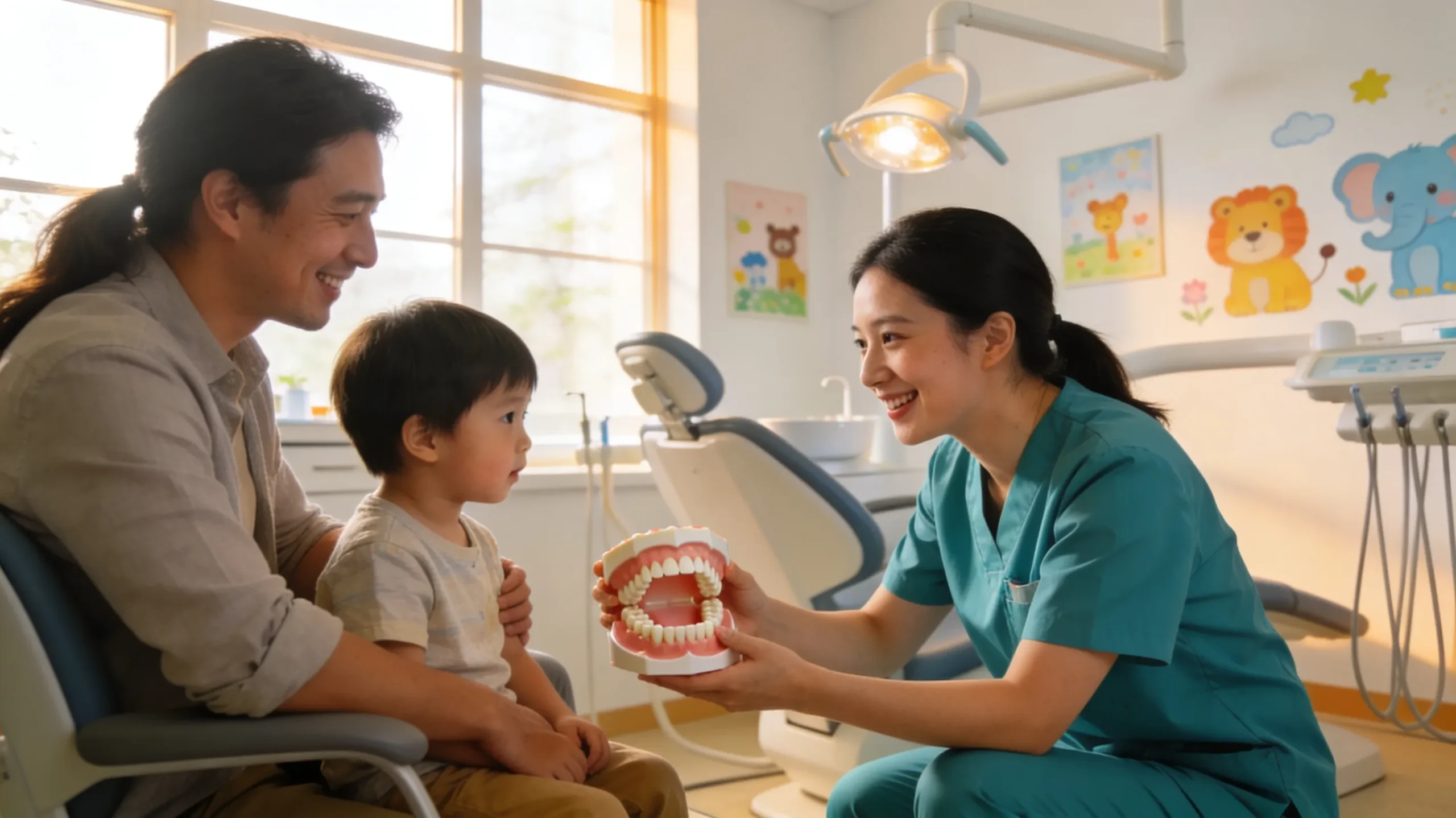
Finding the right childrens dentist near me ensures your child feels safe and supported during their visits.
What Should You Bring to the Appointment?
Being organised on the day makes everything smoother. Here’s what to have ready:
Have you considered what to bring to the appointment with your childrens dentist near me?
- Medicare card — children may be eligible for the Child Dental Benefits Schedule (CDBS), which provides up to $1,095 in basic dental services over two calendar years
Your childrens dentist near me can help explain the importance of dental health to your child.
- Private health insurance card (if applicable)
Discuss your child’s needs with a trusted childrens dentist near me to ensure comprehensive care.
- A list of any medications your child takes, including vitamins or supplements
Ask questions during your visit to your childrens dentist near me to stay informed about your child’s care.
- Any relevant medical history — conditions like heart defects, allergies, or bleeding disorders are important for us to know
Understanding your child’s dental history is crucial when choosing a childrens dentist near me.
- Your child’s health record booklet (the blue or red book from maternal child health), especially for toddlers
Your childrens dentist near me will guide you through the dental care process effectively.
- A snack for afterwards to reward and settle them after the visit
Preparing for the visit to a childrens dentist near me can alleviate anxiety for both you and your child.
Arrive five minutes early if you can. A rushed arrival feeds into a child’s anxiety, and a calm entry sets the tone for the whole appointment. Make the most of your appointment with your childrens dentist near me by being well-prepared.
Make the most of your appointment with your childrens dentist near me by being well-prepared.
One of the most valuable parts of a child’s dental check-up is the preventive conversation. This is where a lot of parents get genuinely useful, practical information they didn’t expect. A knowledgeable childrens dentist near me will provide the best advice for your child’s dental health.
One of the most valuable parts of a child’s dental check-up is the preventive conversation. This is where a lot of parents get genuinely useful, practical information they didn’t expect.
A knowledgeable childrens dentist near me will provide the best advice for your child’s dental health.
Fluoride is one of the most well-supported preventive tools in dentistry. Melbourne’s water supply is fluoridated, which gives your child some passive protection every day. Your dentist may also recommend a fluoride varnish application at the clinic — particularly for children who are at higher risk of decay. It’s quick, painless, and applied directly to the tooth surface.
Regular visits to a childrens dentist near me can prevent future dental issues.
Dental sealants are another option your dentist might discuss, particularly as your child’s permanent back molars start coming through (usually around age six and twelve). Sealants are thin, protective coatings applied to the grooves of the back teeth — the areas most vulnerable to decay because they’re hard to clean thoroughly with a brush alone. They’re non-invasive, take only minutes to apply, and can significantly reduce the risk of cavities in those teeth.
Advice from your childrens dentist near me can help avoid cavities and keep teeth healthy.
Both fluoride treatments and sealants are only recommended when clinically appropriate for your individual child — there’s no one-size-fits-all approach. Your dentist will assess your child’s specific risk factors and discuss options with you before anything is done. Visiting a childrens dentist near me will help establish a foundation for lifelong dental health.
Visiting a childrens dentist near me will help establish a foundation for lifelong dental health.
Building a Lifetime of Good Oral Health — Starting Here in Sunbury
Each appointment with a childrens dentist near me is an opportunity to reinforce good habits.
There’s something really meaningful about watching a child leave a dental appointment smiling — not just surviving it, but actually feeling okay about it. That’s what we’re aiming for every single time.
Remember, a good childrens dentist near me can make all the difference in your child’s dental journey.
Starting dental visits early helps your child build a relationship with their dentist before there’s ever a problem to fix. They learn that the dentist is a safe, familiar person. By the time they’re teenagers — when dental habits become critical — it’s just a normal part of life.
Make sure to choose a trusted childrens dentist near me who prioritizes children’s comfort.
Sunbury Dental Group serves families across Sunbury, Diggers Rest, Riddells Creek, Gisborne, Macedon, Romsey, and the broader 20km region. Our team understands the local community, and we genuinely love seeing kids grow up with healthy, confident smiles. Remember, a good childrens dentist near me can make all the difference in your child’s dental journey.

Wrapping Up: Your Child’s Smile Starts Here
Always be proactive about your child’s dental health by visiting a reliable childrens dentist near me.
Starting your child’s dental journey early is one of the best gifts you can give them — not just for their teeth, but for their confidence and their relationship with healthcare for life. The first visit sets the tone. A calm, educational experience at the right age means fewer problems later, less anxiety over time, and a child who actually doesn’t mind going to the dentist.
Finding a qualified childrens dentist near me is crucial for early dental care.
At Sunbury Dental Group, we take that first visit seriously. We go at your child’s pace, we explain everything in plain language, and we make sure both you and your little one leave feeling good about coming back.
FAQ Content for the Page
At what age should my child have their first dental visit?
The Australian Dental Association recommends your child’s first dental visit happen within six months of their first tooth appearing, and no later than their first birthday. This feels early to most parents, but baby teeth guide jaw development, support chewing and speech, and hold space for permanent teeth, so catching issues early prevents bigger problems down the track.
My child is already a toddler or school-aged and has never seen a dentist — is it too late?
No, it’s never too late to book that first appointment, and Sunbury Dental Group welcomes children at any age or stage. Booking now is the right move regardless of how many teeth have already come through.
What actually happens during a child’s first dental check-up?
A typical first visit includes a warm introduction to the chair and tools, a visual exam of teeth, gums, and jaw development, a check for early decay signs, a gentle clean if the child is comfortable, and a conversation about diet and home care. For toddlers under two, the visit may simply be a “knee-to-knee” exam where the child rests on the dentist’s lap while a parent holds their hands, keeping the whole experience quick and non-threatening.
How can I prepare my nervous or anxious child before their appointment?
Reading a story about visiting the dentist, playing “dentist” at home with a toothbrush, and using simple positive language like “the dentist will count your teeth” all help reduce fear of the unknown. Avoid sharing your own dental anxiety even casually, since kids pick up on parental energy quickly, and bringing a comfort item like a favourite toy is always welcomed.
What should I bring to my child’s first dental appointment?
Bring the Medicare card, private health insurance card if applicable, a list of any medications, relevant medical history, and the maternal child health record booklet for toddlers. It also helps to pack a snack for afterwards and arrive five minutes early, since a rushed arrival can feed into a child’s anxiety.
Does Medicare cover my child’s dental visit?
Yes, eligible children can access the Child Dental Benefits Schedule, which provides up to $1,095 in basic dental services over two calendar years. Bringing your Medicare card to the appointment lets the practice check eligibility and apply the benefit where relevant.
Will my child need fluoride treatment or sealants at their first visit?
Not necessarily — fluoride varnish and dental sealants are only recommended when clinically appropriate, based on your child’s individual risk factors, not applied as a one-size-fits-all approach. Sealants are typically discussed as permanent back molars come through around age six and twelve, since they protect the hard-to-clean grooves most vulnerable to decay.
How does Sunbury Dental Group make first visits easier for kids?
The team takes a calm, educational approach, explaining each step in age-appropriate language and showing children the tools before anything touches their mouth. Letting kids feel in control of the pace makes a real difference, especially for children who’ve heard older siblings talk about the dentist with dread.
Which areas around Sunbury does the practice serve for children’s dentistry?
Sunbury Dental Group serves families across Sunbury, Diggers Rest, Riddells Creek, Gisborne, Macedon, Romsey, and the broader 20km region. The practice is independently owned and operated, with no affiliation to corporate dental networks in the area.