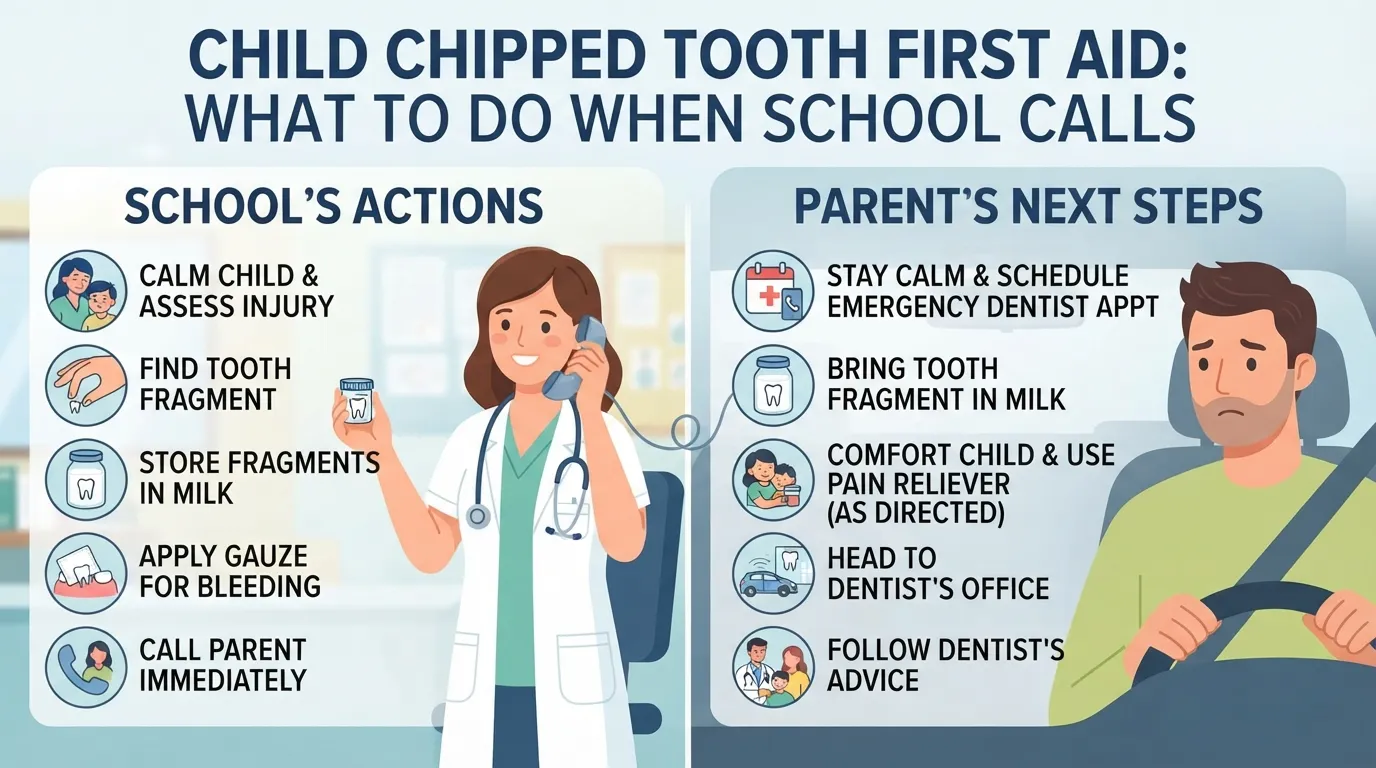
Your phone rings mid-afternoon, and it’s the school. Your child’s had a knock at the playground, and there’s a chip in their front tooth. Your stomach drops a little, right? That’s completely normal. Nobody feels calm hearing those words.
Take a breath. Most chipped teeth in kids look far worse than they actually are, and the right child chipped tooth first aid in those first few minutes makes a genuine difference to the outcome. Let’s walk through exactly what to do, step by step, so you’re not scrambling when it happens to you.
Overview: What This Guide Covers
We’re covering the practical first-aid steps for a chipped or broken front tooth in kids, from the moment it happens through to your dentist visit. You’ll learn how to handle bleeding, what to do with any broken tooth fragment, and how the approach differs slightly for baby teeth versus adult teeth. We’ll also touch on what typically happens at a paediatric emergency dentist visit, so you know what to expect once you arrive.
In This Article, You’ll Discover…
The exact first-aid steps to take in the first ten minutes after a chip or break
How to handle bleeding and swelling calmly at home or at school
What to do with a broken tooth fragment, and why it matters
The difference in urgency between baby teeth and permanent teeth
Warning signs that mean you need emergency care, not just a routine visit
What actually happens during a pediatric emergency dentist appointment
How to help your child stay calm through the whole process

Quick, calm child chipped tooth first aid in the first few minutes makes a real difference.
Stay Calm First — Your Child Is Watching You
Here’s something worth saying upfront: your reaction sets the tone. Kids pick up on panic fast, and a calm, steady voice from you does more to settle them than anything else in that first minute.
Take a breath, kneel down to their level if you can, and let them know you’ve got this handled. That reassurance matters just as much as the physical first aid that follows.
Child Chipped Tooth First Aid: The First 10 Minutes
Step 1: Check for Other Injuries First
Before you even look at the tooth, check for signs of a bigger problem — a bumped head, confusion, or trouble focusing their eyes. If there’s any concern about concussion, that takes priority over the tooth every time.
Step 2: Rinse Gently With Warm Water
Have your child rinse their mouth with warm water, or warm salt water if you’ve got it handy, to clear away blood and debris. Skip the alcohol-based mouthwash entirely — it stings and won’t help right now.
Step 3: Control Any Bleeding
Fold a clean gauze pad or a face washer and apply gentle, steady pressure to the area for around 10 to 15 minutes. Most bleeding from a school dental injury settles quickly with this simple approach.
Step 4: Find and Save the Broken Fragment
Look for the broken piece — on the ground, in a bag, sometimes still in your child’s hand. If you find it, don’t scrub it or clean it aggressively.
Pop it straight into a small container with milk, or have your child spit into the container so the fragment sits in saliva. Dry fragments are much harder for a dentist to reattach, so keeping it moist genuinely matters.
Step 5: Apply a Cold Compress
Hold a cold pack, wrapped in a cloth, against the outside of the cheek near the injury. This helps manage swelling and gives your child some comfort while you organise the dental visit.
Quick recap of what to bring with you:
The broken tooth fragment (stored in milk or saliva)
Any pain relief already given, so you can tell the dentist what and when
A clear timeline of how the injury happened, if your child can explain it
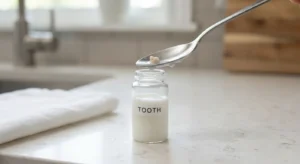
Storing a broken front tooth kid fragment in milk keeps it viable for possible reattachment.
Baby Tooth or Adult Tooth? Why It Changes Things
This distinction actually matters for how urgent things are and what treatment looks like.
For a broken baby tooth, you still want a dental review, but there’s usually a little more breathing room since baby teeth aren’t reattached the same way. For a broken permanent tooth, get to a dentist as soon as possible, ideally within the same day, since the pulp and nerve underneath can be exposed and reattachment options are genuinely time-sensitive.
If you’re unsure which type of tooth is affected, treat it as urgent and call your dentist straight away regardless.
When It’s a True Emergency: Call 000 or Go to Hospital
Most chipped teeth don’t need an ambulance, but a few signs mean you shouldn’t wait for a regular appointment:
Your child is having trouble breathing
They’re swallowing a significant amount of blood
Their tongue or throat looks very swollen
There’s a suspected head injury alongside the dental one
If any of these apply, call 000 or head to your nearest emergency department immediately. For a standard chipped or broken front tooth kid injury without these signs, an urgent dental appointment is the right call.[rch.org]
What Happens at the Pediatric Emergency Dentist Visit
Walking in without knowing what to expect can feel stressful, so here’s a general picture. Your dentist will examine the tooth, check for any exposed nerve or pulp, and take an X-ray if needed to assess the root and surrounding bone.
Depending on the severity, treatment might involve a simple smooth-and-polish for a small chip, a composite bonding repair to rebuild the tooth’s shape, or, for more significant fractures, a small splint to stabilise the tooth while it heals. If you brought the broken fragment, your dentist may even be able to reattach it directly.
Helping Your Child Through the Appointment
Kids pick up on dental anxiety fast, so keeping your own tone light and matter-of-fact helps enormously. Let them know the dentist is there to help fix things, not to hurt them, and that most repairs are quicker and simpler than they might imagine.
What Not to Do
A few common instincts actually make things worse, so it helps to know what to avoid:
Don’t try to reinsert a broken piece back onto the tooth yourself
Don’t scrub or clean the fragment with soap or chemicals
Don’t let your child chew on the injured side while waiting for treatment
Don’t give aspirin, since it can worsen bleeding — stick to age-appropriate paracetamol if needed
Don’t assume “no pain” means “no problem” — some fractures don’t hurt immediately but still need assessment
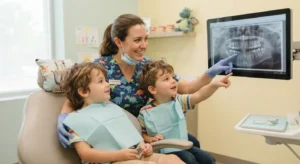
A pediatric emergency dentist visit is usually quicker and gentler than parents expect.
FAQ: Child Chipped Tooth First Aid
What should I do immediately if my child chips their front tooth?
Rinse their mouth gently with warm water, control any bleeding with clean gauze, and locate any broken fragment to store in milk. Then contact your dentist for an urgent appointment.
Does a chipped tooth in a child always need a dentist visit?
Yes, even small chips should be checked, since hidden cracks or exposed nerve tissue aren’t always obvious just by looking. A dentist can properly assess the extent of the damage.
Can a broken tooth fragment be reattached?
Sometimes, yes, particularly if the fragment is kept moist in milk or saliva and brought to the appointment quickly. Success depends on the size of the fragment and how the fracture occurred.
Is a chipped baby tooth as urgent as a chipped adult tooth?
It’s still worth a prompt dental review, but adult (permanent) tooth injuries are generally more time-sensitive due to nerve exposure risk. If you’re unsure which type of tooth is affected, treat it as urgent either way.
What if my child isn’t in pain — do I still need to see a dentist?
Yes, absence of pain doesn’t rule out deeper damage to the tooth or root. A same-day or next-day dental check gives peace of mind and catches anything that needs early treatment.
Wrapping It Up
A chipped tooth at school is scary in the moment, but calm, quick first aid genuinely changes the outcome. Rinse gently, control bleeding, save any fragment in milk, and get to a dentist promptly, especially for adult teeth. The sooner your child is seen, the more treatment options stay on the table.
Facing a school dental injury right now? Book your appointment at Sunbury Dental Group today and we’ll get your child sorted quickly and calmly.
Book Urgent Care for Your Child →