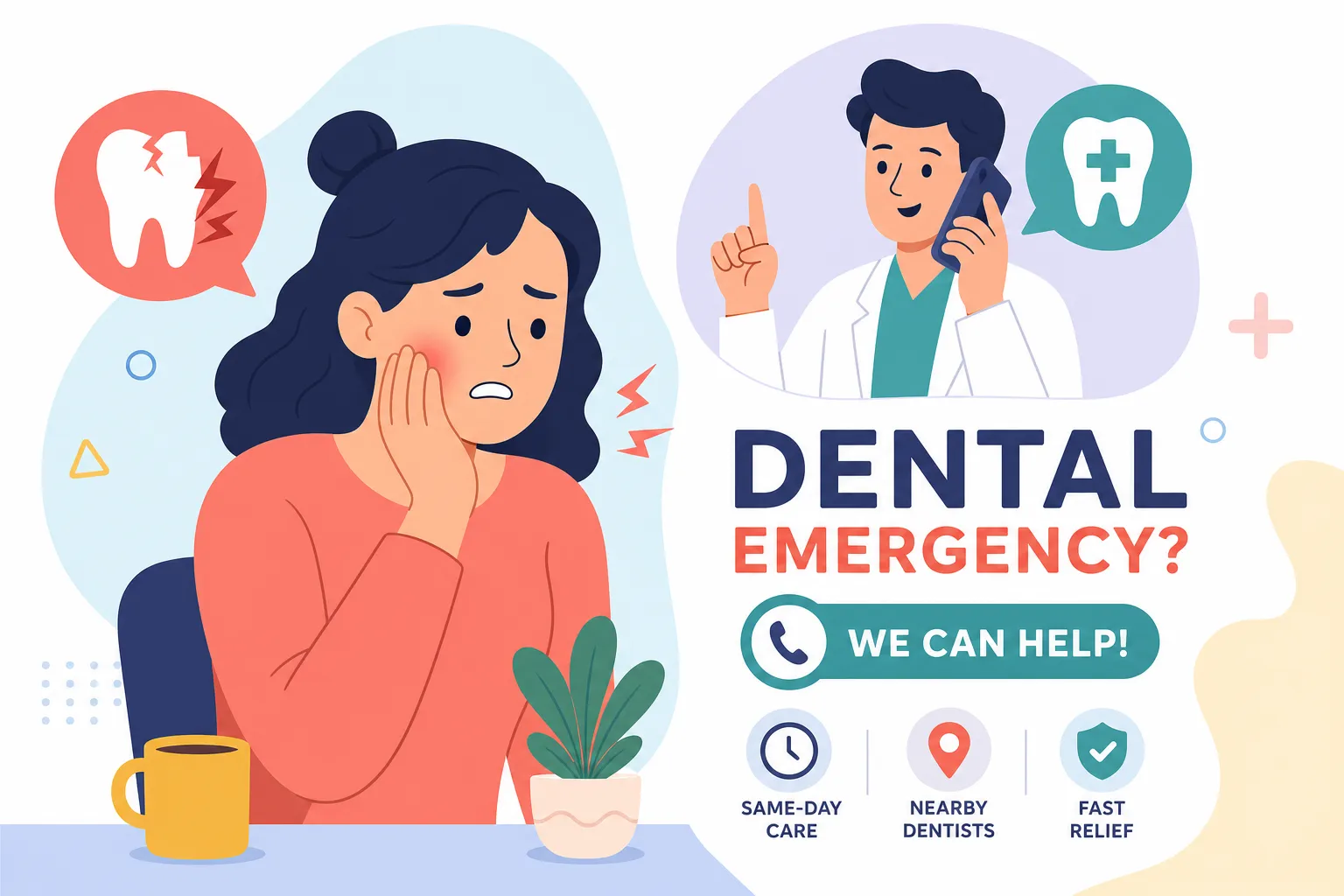
When you need an emergency dentist near me, or rather, near you, every minute counts. It’s Saturday morning and you bite into toast, only to feel a sharp crack. Or it’s 2am and a throbbing pain in your jaw has you sitting up in bed with your jaw swollen and your heart racing. Maybe your child took an elbow to the mouth at footy training and their tooth is dangling loosely. Whatever the situation, that surge of panic is completely normal, and knowing exactly what to do next makes all the difference between saving a tooth and losing one.
This guide walks you through the steps you need to take right now: how to assess whether your situation is a true emergency, what first aid to apply before you reach the clinic, when to skip the dentist entirely and go straight to hospital, and what to expect when you arrive for urgent care. For residents of Sunbury, Diggers Rest, Riddells Creek, and surrounding suburbs, Sunbury Dental Group aims to provide same-day urgent appointments where possible, so you spend as little time as possible waiting in pain.
What actually counts as a dental emergency
The word “emergency” gets used loosely, so before you do anything else, take 60 seconds to assess your situation honestly. This will help you decide how quickly you need to act and whether you need urgent dental care today or can wait for a regular appointment.
Signs that need same-day urgent attention
Certain situations require same-day care from an emergency dentist because the problem gets worse by the hour, not just more uncomfortable. Severe or unrelenting tooth pain, a knocked-out or displaced tooth, and a dental abscess with visible swelling are all genuine emergencies. A cracked tooth with sharp edges cutting into soft tissue, a lost crown or filling causing significant pain, or bleeding from the mouth that won’t stop after 15 to 30 minutes of steady pressure also fall into this category.
The common thread is progression: infections spread, displaced teeth lose blood supply and die, and uncontrolled bleeding means something needs addressing now. If you’re experiencing any of these, contact an emergency dental clinic immediately rather than waiting to see how things develop.
What can wait until your regular appointment
Not every dental problem demands an urgent same-day visit. A mildly sensitive tooth with no swelling, a small chip that causes no pain, or a slightly loose filling with no exposed nerve are all uncomfortable situations, but they are not emergencies. These can typically wait a few days for a scheduled appointment without making the situation significantly worse.
Knowing this distinction saves you unnecessary stress and cost. If you’re unsure, call a dental clinic, describe your symptoms, and have your pain level and any swelling details ready; the team can help you decide over the phone whether to come in that day.
First-aid steps before you reach the dentist
Whatever the emergency, there are things you can do in the next few minutes that genuinely improve the outcome. These steps are not substitutes for professional care; they are bridges to get you there in better shape.
A knocked-out tooth: the 60-minute window
Time is the single most important factor here. A knocked-out adult tooth has the best chance of successful re-implantation when an emergency dentist sees it within 30 to 60 minutes. The moment you locate the tooth, pick it up by the crown (the white chewing surface), never by the root. Touching the root damages the living cells the dentist needs to reattach the tooth to the socket.
If the tooth is dirty, rinse it briefly, around 10 seconds, with cold milk or saliva. Milk, saliva, or saline are the preferred rinsing media; if none of these are available, a very brief cool tap-water rinse is better than nothing, but do not scrub the tooth or use soap. If you can manage it, gently place the tooth back into the socket with the root end facing down into the socket, then bite down softly on gauze or a damp paper towel to hold it in place.
If reinsertion isn’t possible, store the tooth submerged in cold milk or in a small container of the patient’s own saliva. Do not wrap it in tissue or let it dry out. Head straight to an emergency dentist or hospital while keeping the tooth in its storage solution. One important note: baby teeth should never be reinserted, as doing so can damage the developing adult tooth beneath.
Severe toothache, abscess, or facial swelling
For a severe toothache, gently rinse your mouth with warm water to clear any debris, then apply a cold compress to the outside of your cheek. Take over-the-counter pain relief such as ibuprofen as directed on the packaging, and contact a same-day emergency dentist for an appointment. Do not place aspirin or painkillers directly against the gum, as this can cause a chemical burn to the soft tissue.
If you have an abscess or noticeable facial swelling, apply a cold compress to the outside of your face to manage discomfort and reduce swelling. Do not attempt to drain or squeeze the abscess yourself, as this risks spreading the infection. Seek urgent dental care that day without delay. If the swelling spreads quickly, you develop a high fever, or you have any difficulty breathing or swallowing, that changes the situation entirely, see the next section.
Broken tooth, lost filling, or dislodged crown
Rinse your mouth gently with warm water and avoid eating anything hard, hot, or crunchy on the affected side. If a filling has come out and the tooth is sensitive, some people use a temporary dental repair kit (available from pharmacies) or sugar-free gum pressed into the cavity as a short-term measure, confirm suitability with a pharmacist or your dentist first. If your crown has come off, keep it safe in a small container or zip-lock bag and bring it to the appointment.
These measures are temporary only. Even if the pain is manageable, the exposed tooth is vulnerable to fracture and infection, so aim for same-day or next-morning care from an emergency dentist rather than leaving it for a week.

When to skip the dentist and go straight to hospital
Most dental emergencies belong in the dental chair, not the emergency department. But there are specific situations where the hospital is the right call, and recognising them quickly can be life-saving.
Life-threatening signs that mean call 000 or go to the ED
Go directly to your nearest hospital emergency department, or call 000, if you experience any of the following:
- Difficulty breathing or swallowing due to swelling in the mouth or throat
- Uncontrolled bleeding that persists after 15 to 30 minutes of firm, steady pressure
- A broken or dislocated jaw
- Severe facial trauma with deep lacerations
- Spreading infection with a fever above 38.5°C, confusion, swelling extending below the jawline, or swelling closing around the eye
Dental infections that escape the jaw and enter the soft tissue spaces of the neck can obstruct the airway within hours. If you’re unsure, err on the side of the ED. These are medical emergencies, not dental ones, and a dental clinic cannot manage an airway or deliver intravenous antibiotics.
What hospitals can and can’t do for dental pain
Hospital emergency departments are built for medical stabilisation. They can manage a spreading infection with IV antibiotics, control serious bleeding, treat fractures, and prescribe strong pain relief. What they cannot do is fill a tooth, perform a root canal, re-implant a knocked-out tooth, or provide any of the restorative work that resolves the underlying dental problem.
This is why an emergency dentist is still the right destination for the vast majority of dental crises. The ED buys time in life-threatening situations; a dentist actually fixes the problem. Acting quickly with the right provider gives you the best outcome on both fronts.
What to expect at an emergency dental appointment
Walking into an urgent dental appointment when you’re already in pain is stressful. Knowing what happens when you arrive helps considerably, particularly for anyone who finds dental visits anxiety-inducing.
How the dentist assesses and treats you
When you arrive, a brief triage conversation covers your symptoms, when they started, and any relevant medical history or medications. The dentist then performs a clinical examination, followed by digital X-rays if needed to assess the extent of the problem below the surface. Before any treatment begins, the dentist will explain their findings clearly and walk you through the available options, including costs.
Emergency treatment focuses on two things: relieving pain and stabilising the problem. Depending on what’s found, that might mean a temporary or permanent filling, draining and treating an abscess, an extraction, or re-cementing a crown. Many clinics report that urgent visits for straightforward cases typically run 30 to 60 minutes, though more complex situations can extend to 90 minutes or so. Local anaesthetic is used routinely, so treatment itself is generally much more comfortable than the pain that prompted the visit.
What to bring to make your appointment faster
A little preparation at the door saves time and reduces stress at the front desk. Bring your private health fund card and Medicare card, a list of any current medications or medical conditions, and any details of previous dental work if you can recall them. Note down when the pain started and what makes it better or worse; this history helps the dentist form an accurate picture faster.
If a crown or filling has come out, bring the piece with you. Even if it cannot be reused, it gives the dentist useful information about fit and material for any replacement.
Emergency dental costs and private health cover in Australia
Cost is a genuine concern for many people deciding whether to seek urgent dental care, particularly outside business hours. Here’s what to expect so there are no surprises.
What after-hours and same-day dental care typically costs
Emergency dental consultations at private clinics in Victoria vary widely, consultation fees typically range from around $90 to $340 or more depending on the clinic, complexity, and time of day, and after-hours or weekend totals (including treatment) can reach $200 to $600 or higher. After-hours and weekend appointments carry a surcharge, typically adding $50 to $200 on top of the base consultation fee. Treatment costs vary further: a temporary filling runs approximately $120 to $260, a simple extraction $180 to $450, and more complex procedures such as root canal treatment considerably more. Always ask the clinic for a fee estimate before proceeding, as prices vary between practices and individual circumstances differ.
Public dental emergency services are available in Victoria through the Royal Dental Hospital of Melbourne on (03) 9341 1000, which operates on weekends for emergencies, though these services are primarily for eligible concession card holders. The national Healthdirect helpline on 1800 022 222 can also direct you to the nearest available service based on your postcode and time of day.
Does your extras cover help with emergency dental?
Private health funds with Extras (general dental) cover may rebate a portion of eligible emergency consultation and treatment items, the actual amount depends on your fund, policy tier, and any waiting periods that apply. Whether after-hours surcharges are covered depends on your specific policy, as not all funds include extended-hours attendance items. Medicare does not cover adult dental treatment, including emergency department visits for dental pain, so your private fund card is the relevant one to bring.
Before agreeing to treatment, ask the clinic for the relevant item numbers and contact your fund to check your benefit. This takes a few minutes and removes uncertainty about out-of-pocket costs entirely. Most clinics are experienced at helping patients navigate this quickly.
Find an emergency dentist near me in Sunbury
If you’re in Sunbury, Diggers Rest, Riddells Creek, Bulla, or Lancefield and you need urgent dental care, you don’t have to travel to Melbourne or sit in an emergency department waiting room for hours over a dental issue. Finding a reliable emergency dentist near you, one who knows your community, makes a real difference when you’re in pain.
Same-day appointments at Sunbury Dental Group
Sunbury Dental Group provides same-day urgent appointments for patients in pain, where availability allows. The clinic is equipped with digital X-ray technology for fast, accurate diagnosis, and the team has experience helping anxious patients feel calm and in control before any treatment begins. Transparent pricing means you’ll know what things cost before any work proceeds, with flexible payment options available to make care more accessible when you need it most.
The practice has deep roots in the Sunbury community and treats patients of all ages, from children who’ve taken a knock to the mouth at sport to adults dealing with a painful abscess or a lost crown. Being locally owned and operated means you’re speaking with a team that genuinely knows the people it treats, not a corporate call centre booking you into a clinic across town.
How to book urgent care right now
Call Sunbury Dental Group directly and mention that it’s an emergency when you call. This allows the team to prioritise your appointment and prepare for what you need before you arrive. The clinic is located at 5/92 Evans Street, Sunbury VIC 3429. Even if you’re planning to walk in, a quick call ahead reduces your wait time and ensures someone is ready to see you promptly.
Don’t wait to see if the pain settles on its own. Dental emergencies consistently become more complex and more expensive the longer they’re left untreated, and most issues are very manageable when addressed quickly.
Act fast, get the right help
When a dental crisis hits, the steps are clear: apply first aid immediately, assess whether you need an emergency dentist or a hospital emergency department, and seek out-of-hours dental care or same-day treatment without delay. Common emergencies, knocked-out adult teeth, abscesses, lost fillings, and cracked teeth, are very treatable when addressed promptly. Outcomes are better, recovery is faster, and costs are lower when care happens quickly rather than after days of managing pain at home.
For the Sunbury community and surrounding suburbs, Sunbury Dental Group is your local emergency dental clinic, ready to help when you need it. Call us, mention it’s urgent, and our team will do everything they can to get you seen the same day. Your local team is just a phone call away, reach out now and let’s get you sorted.
FAQ – Identifying a True Dental Emergency
What actually counts as a dental emergency?
Severe or unrelenting tooth pain, a knocked-out or displaced tooth, and a dental abscess with visible swelling are all genuine emergencies requiring same-day care. A cracked tooth with sharp edges cutting into soft tissue, a lost crown or filling causing significant pain, or bleeding that won’t stop after 15 to 30 minutes of steady pressure also fall into this urgent category, since these problems worsen by the hour rather than simply staying uncomfortable.
What dental problems can wait for a regular appointment?
A mildly sensitive tooth with no swelling, a small chip causing no pain, or a slightly loose filling with no exposed nerve are uncomfortable but not emergencies, and can typically wait a few days. If you’re unsure, call the clinic, describe your symptoms including pain level and any swelling, and the team can help you decide over the phone whether same-day care is needed.
First Aid for a Knocked-Out Tooth
What should I do immediately if a tooth gets knocked out?
A knocked-out adult tooth has the best chance of successful re-implantation when an emergency dentist sees it within 30 to 60 minutes, so time is the single most important factor. Pick the tooth up by the crown, the white chewing surface, never by the root, since touching the root damages the living cells the dentist needs to reattach it to the socket.
How should I store a knocked-out tooth before reaching the dentist?
If reinsertion into the socket isn’t possible, store the tooth submerged in cold milk or in a small container of the patient’s own saliva, and never let it dry out or wrap it in tissue. If the tooth is dirty, rinse it briefly, around 10 seconds, with cold milk or saliva rather than tap water, and never use soap or scrub it.
Should a knocked-out baby tooth be reinserted?
No, baby teeth should never be reinserted, as doing so can damage the developing adult tooth beneath. This is a key distinction from adult teeth, where reinsertion is actively encouraged as a first-aid step if the patient can manage it.
Managing Pain and Swelling at Home
What should I do for severe toothache before I can see a dentist?
Gently rinse your mouth with warm water to clear debris, apply a cold compress to the outside of your cheek, and take over-the-counter pain relief such as ibuprofen as directed on the packaging. Never place aspirin or painkillers directly against the gum, as this can cause a chemical burn to the soft tissue.
Is it safe to drain a dental abscess myself?
No, you should never attempt to drain or squeeze an abscess yourself, as this risks spreading the infection. Apply a cold compress to the outside of your face to manage discomfort and seek urgent dental care that day without delay.
What should I do if I lose a filling or crown?
Rinse your mouth gently with warm water and avoid eating anything hard, hot, or crunchy on the affected side. If a crown has come off, keep it safe in a small container or zip-lock bag and bring it to your appointment, since even an unusable crown gives the dentist useful information about fit and material for a replacement.
When to Go to Hospital Instead
When should I go to the emergency department instead of a dentist?
Go directly to your nearest hospital ED or call 000 if you have difficulty breathing or swallowing due to mouth or throat swelling, uncontrolled bleeding after 15 to 30 minutes of firm pressure, a broken or dislocated jaw, or severe facial trauma with deep lacerations. Spreading infection with a fever above 38.5°C, confusion, swelling extending below the jawline, or swelling closing around the eye are also medical emergencies since these infections can obstruct the airway within hours.
What can a hospital ED do for dental pain that a dentist can’t, and vice versa?
Hospital EDs can manage spreading infection with IV antibiotics, control serious bleeding, treat fractures, and prescribe strong pain relief, but they cannot fill a tooth, perform a root canal, re-implant a knocked-out tooth, or do any restorative dental work. This is why an emergency dentist remains the right destination for the vast majority of dental crises — the ED buys time in life-threatening situations, while a dentist actually fixes the underlying problem.
What to Expect at an Emergency Appointment
What happens when I arrive at an emergency dental appointment?
A brief triage conversation covers your symptoms, when they started, and relevant medical history, followed by a clinical examination and digital X-rays if needed to assess the problem below the surface. Emergency treatment focuses on relieving pain and stabilising the problem, which might mean a temporary or permanent filling, draining an abscess, an extraction, or re-cementing a crown, with straightforward visits typically running 30 to 60 minutes.
What should I bring to an emergency dental appointment?
Bring your private health fund card and Medicare card, a list of current medications or medical conditions, and any details of previous dental work you can recall. Note when the pain started and what makes it better or worse, and bring any lost crown or filling piece with you, as this history and material helps the dentist form an accurate picture faster.
Cost and Insurance
How much does an emergency dental visit cost in Victoria?
Emergency dental consultation fees typically range from around $90 to $340 or more, and after-hours or weekend totals including treatment can reach $200 to $600 or higher. Treatment costs vary further — a temporary filling runs approximately $120 to $260 and a simple extraction $180 to $450, with after-hours surcharges typically adding $50 to $200 on top of the base consultation fee.
Does private health insurance or Medicare cover emergency dental treatment?
Private health funds with Extras (general dental) cover may rebate a portion of eligible emergency consultation and treatment items, though the amount depends on your fund, policy tier, and waiting periods. Medicare does not cover adult dental treatment at all, including emergency department visits for dental pain, so your private fund card is the relevant one to bring.
Are there public emergency dental services in Victoria?
Yes, the Royal Dental Hospital of Melbourne operates public dental emergency services on weekends, reachable on (03) 9341 1000, though these are primarily for eligible concession card holders. The national Healthdirect helpline on 1800 022 222 can also direct callers to the nearest available service based on postcode and time of day.
Getting Help in Sunbury
Does Sunbury Dental Group offer same-day emergency appointments?
Yes, Sunbury Dental Group provides same-day urgent appointments where availability allows, for patients across Sunbury, Diggers Rest, Riddells Creek, Bulla, and Lancefield. The clinic uses digital X-ray technology for fast diagnosis and offers transparent pricing with flexible payment options, so patients know costs before treatment proceeds.
How do I book an emergency appointment with Sunbury Dental Group?
Call the clinic directly and mention that it’s an emergency, which allows the team to prioritise your appointment and prepare before you arrive. The clinic is located at 5/92 Evans Street, Sunbury VIC 3429, and even walk-in patients benefit from calling ahead to reduce wait time