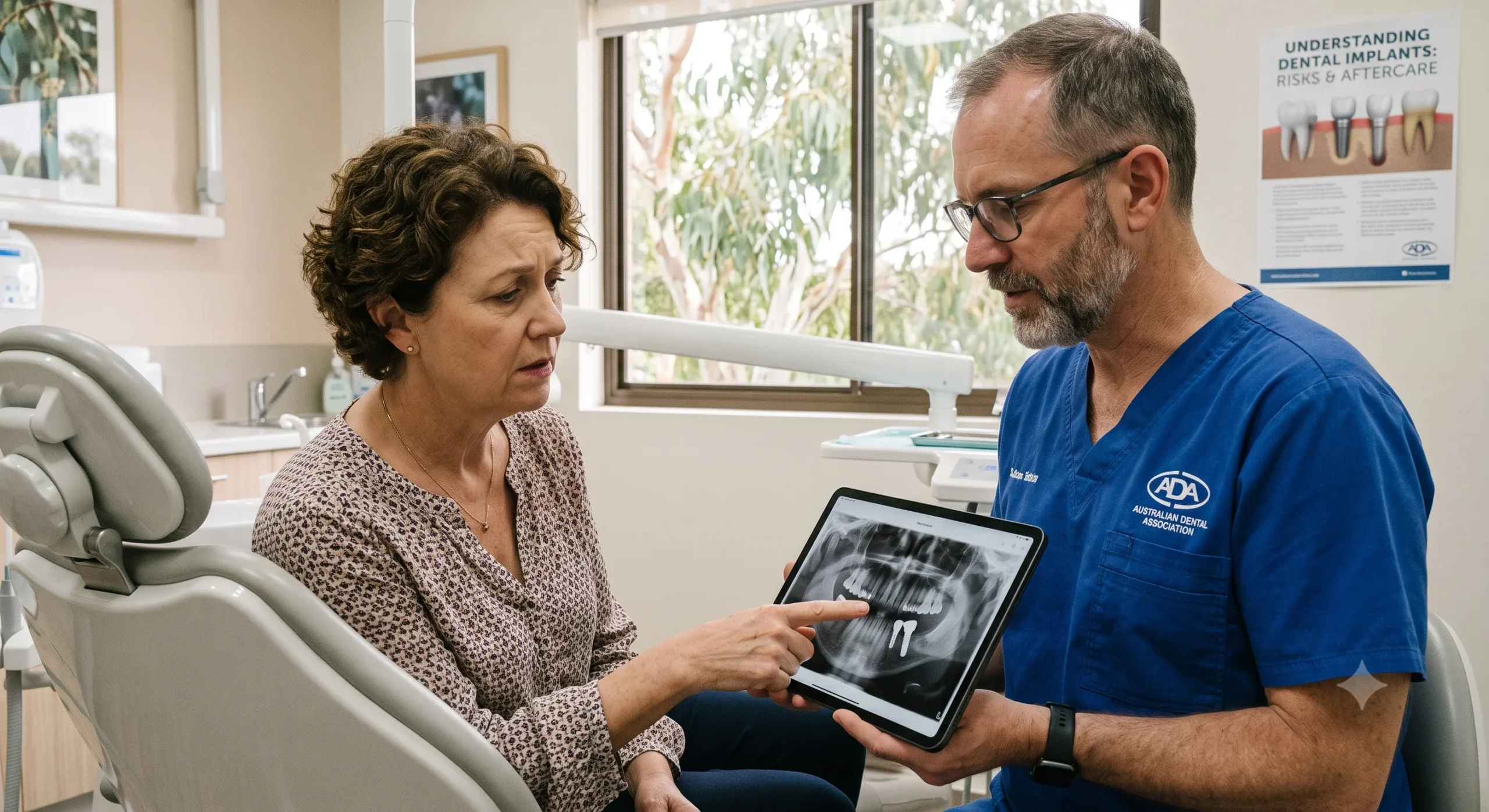
Overseas Dental Implants: What the Savings Don’t Tell You
We’re not here to guilt-trip anyone for considering treatment overseas. Dental costs in Australia genuinely add up, and when you see implant packages advertised for a fraction of the local price, it’s completely natural to look into it. But before you book those flights, we think you deserve the full picture, not just the glossy brochure version.
We’re Sunbury Dental Group, and we’ve seen firsthand what happens when overseas dental implants don’t go to plan, because we’re often the ones patients from Sunbury, Diggers Rest, Bulla, and across the wider Hume region come to when they need it fixed. This article walks through the real overseas dental implants risks based on documented research and patient outcomes, not scare tactics.
Overview: What This Article Covers
We’re going to unpack why dental tourism implants problems happen so often, using real data from Australian dental research rather than vague warnings. You’ll learn what the compressed treatment timelines actually mean for your bone healing, why cheap implants abroad risk comes down to more than just price, and what it genuinely costs to fix things when they go wrong. We’ll also cover what protections you lose the moment you step outside Australian healthcare regulation.
In This Article, You’ll Discover…
The real statistics on how often overseas dental implants need corrective work
Why rushed treatment timelines increase implant failure risk
What happens to your legal protections once you’re treated outside Australia
The hidden costs of fixing overseas implant issues back home
Why unbranded implant systems can cause long-term problems here
Infection control and hygiene standard differences worth knowing about
What questions to ask if you’re still considering treatment abroad
Why Overseas Dental Implants Look So Appealing
Let’s be honest about the appeal, because pretending it doesn’t exist helps nobody. Overseas implant packages often advertise savings of 50 to 70 percent compared to Australian pricing, sometimes bundled with a holiday on top. When you’re staring down a quote for several thousand dollars locally, that kind of saving is genuinely tempting.
The Australian Dental Association has estimated that around 10,000 Australians travel abroad for cheap dental implants each year, and that number keeps climbing. The problem isn’t that everyone who does this has a bad experience. It’s that the odds of complications are measurably higher, and the consequences of those complications land squarely on your shoulders once you’re back on Australian soil.
The Numbers That Actually Matter
Here’s the statistic that should genuinely give you pause. A retrospective study published in the Australian Dental Journal found that 47 percent of Australians who received implant treatment overseas needed corrective work within five years, at an average additional cost of $4,800 per patient. Read that again — almost half. That’s not a rare, unlucky outcome. That’s closer to a coin toss.
Dental Tourism Implants Problems: What Actually Goes Wrong
We’re not talking about minor cosmetic quibbles here. The complications Australian dentists commonly see in returning patients are genuinely serious.
The Most Common Issues Reported
Peri-implantitis: infection around the implant that causes bone loss and can eventually lead to implant failure[
Implant malposition: incorrect angle or depth that affects both function and appearance
Mismatched components: abutments or crowns that don’t fit precisely, causing mechanical failure over time
Nerve damage: particularly in the lower jaw, sometimes causing lasting numbness or tingling
Sinus complications: from upper jaw implants placed without a proper bone assessment beforehand
An ABC News report from 2026 detailed a case where a maxillofacial surgeon described a patient’s overseas implant treatment as a “failure” involving incorrect placement, ineffective bone grafting, and a poorly designed prosthesis. That’s not a one-off horror story either — it reflects a pattern documented across multiple Australian clinics and case studies.
Cheap Implants Abroad Risk: Why the Price Difference Exists
There’s a reason overseas implants cost so much less, and it’s rarely just cheaper rent or wages. It often comes down to what’s being cut to hit that price point.
Rushed Treatment Timelines
Dental implants need three to six months of healing time for proper osseointegration — the process where the implant actually fuses with your jawbone. Overseas dental tourism packages frequently compress this into one or two weeks to fit within a single holiday, loading the implant before that fusion is complete. That’s not a minor shortcut. It’s arguably the single biggest reason overseas implants fail more often than locally placed ones.
Implant Quality and Component Availability
Reputable Australian clinics generally use implant systems with decades of published clinical research behind them, backed by manufacturer warranties and readily available replacement parts. Some overseas clinics use unbranded or generic implant systems with no long-term published data at all. If a component fails once you’re back home, your Australian dentist may simply have no way to source a compatible replacement part.
Lower-cost, unbranded implant systems with limited or no long-term research
Compressed treatment schedules that skip proper healing windows
Variable sterilisation and infection control standards between clinics and countries
Less rigorous pre-treatment bone assessment and planning
Little to no post-operative monitoring once you’ve flown home

Compressed treatment schedules often skip the healing time implants genuinely need.
What You Lose Beyond the Chair
This is the part that doesn’t get talked about enough, and it’s arguably more important than the clinical risks themselves.
Your Legal Protections Disappear
Once you’re treated outside Australia, Australian consumer protection laws simply don’t apply to that overseas provider. If something goes wrong, pursuing a complaint, seeking compensation, or even obtaining your own treatment records from another country can range from difficult to genuinely impossible. Compare that to treatment here, where you’re protected by clear consumer rights and a formal complaints process through bodies like AHPRA and your state health complaints commission.
No Follow-Up Care When It Matters Most
Implant treatment needs ongoing monitoring, especially during that critical first year. Post-operative complications like infection, poor healing, or bite misalignment need timely intervention — and when your treating dentist is thousands of kilometres away, that follow-up becomes effectively unavailable. You’re essentially on your own the moment you land back home.
Australian Health Insurance Won’t Cover It
Most Australian health insurers don’t cover dental tourism treatments at all. That means you’re paying out of pocket for the original treatment, and if it needs fixing, you’re often paying out of pocket again for the correction here in Australia.

Corrective treatment for overseas implant complications often costs more than the original savings.
Fixing Overseas Implant Issues: What It Actually Costs
Here’s where the “savings” argument tends to fall apart pretty quickly once you look at real numbers.
A Realistic Cost Breakdown
One detailed case analysis of failed overseas implant work outlined typical corrective costs as follows:
Implant removal: roughly $500 to $1,500
Bone graft, if needed to rebuild the site: roughly $800 to $2,500
New implant placement: roughly $3,500 to $6,500
New crown: roughly $1,500 to $2,400
Total corrective cost range: approximately $6,300 to $12,900
When you factor in the original overseas treatment cost, flights, accommodation, and then this corrective bill on top, the total often ends up higher than simply having quality treatment done properly in Australia from the start. That 47 percent corrective work statistic we mentioned earlier carried an average additional cost of $4,800 per patient — and that’s before factoring in lost time, discomfort, and the stress of managing it all.
A Local Note for Sunbury Families
We understand the financial pressure that pushes people to look overseas, and we genuinely don’t judge anyone for exploring their options. What we’d rather see is Sunbury families making that decision with full information, not just a slick advertisement and a holiday photo. If you’ve had implant work done overseas and something feels off — pain that isn’t settling, a loose crown, ongoing discomfort — please don’t wait it out hoping it resolves on its own.
Questions Worth Asking Before Considering Overseas Treatment
What implant brand is being used, and is it available for repairs in Australia?
What’s the actual healing timeline being offered, and does it match recognised clinical standards?
What happens if I need follow-up care once I’m back home?
What are the clinic’s infection control and sterilisation protocols?
What legal recourse would I realistically have if something went wrong?
Frequently Asked Questions
Are overseas dental implants actually cheaper in the long run?
Not always — research shows 47 percent of Australians treated overseas needed corrective work within five years, at an average additional cost of $4,800. Once you factor in potential corrective treatment, the total cost can end up higher than quality local care.
What are the biggest risks of getting dental implants overseas?
Common risks include peri-implantitis, implant malposition, nerve damage, and mismatched components that can’t be repaired in Australia. Rushed treatment timelines that skip proper healing time are a major contributing factor to these complications.
Can an Australian dentist fix a failed overseas dental implant?
Yes, in most cases, though it often involves removal, bone grafting, and placing a new implant, which adds significant cost and time. The specific approach depends on how the original implant was placed and what components were used.
Do I have legal protection if my overseas dental treatment goes wrong?
Generally, no — Australian consumer protection laws don’t apply to providers based outside Australia, making complaints or compensation difficult to pursue. This is one of the most overlooked risks of dental tourism.
Why do overseas dental implants fail more often than local ones?
A major factor is compressed treatment timelines that don’t allow proper osseointegration, the healing process where the implant fuses with the jawbone. Variable infection control standards and unbranded implant components also contribute to higher failure rates.
Does Australian health insurance cover dental treatment done overseas?
Generally, no — most Australian health insurers don’t cover dental tourism treatments. This means both the original treatment and any later corrective work are typically paid entirely out of pocket.
Bringing It All Together
The research paints a pretty clear picture: overseas dental implants risks are real, well-documented, and often far more expensive to resolve than the original savings suggested. Rushed healing timelines, unbranded components, and the loss of Australian consumer protections all combine to make this a genuinely higher-risk path than most advertising lets on.
If you’re weighing up implant options and want an honest conversation about cost, quality, and what’s actually realistic for your budget here in Australia, we’re happy to talk it through properly. Book your appointment at Sunbury Dental Group today for a transparent implant consultation: