
The good news is that sensitivity doesn’t have to be a dealbreaker. The safest whitening options for sensitive teeth depend on understanding why your teeth react the way they do, then matching that profile to the right method and concentration. This guide breaks down every whitening option by its sensitivity risk, explains which desensitising strategies actually work, and helps you decide what suits your situation.
Why sensitive teeth react differently to whitening- best teeth whitening options for sensitive teeth
How peroxide reaches the nerve
Whitening gels work by releasing hydrogen peroxide, a small molecule that diffuses through enamel and into the dentinal tubules beneath. Those tubules are microscopic channels that lead directly to the tooth’s nerve centre. When they’re exposed or when enamel is worn thin, the peroxide reaches nerve endings faster and with less resistance, which is what triggers that familiar sharp sensation.
Higher-concentration products make this worse. In-chair treatments commonly use 25 to 40% hydrogen peroxide. In Australia, over-the-counter consumer products are capped at 6% hydrogen peroxide (or 18% carbamide peroxide) under the Poisons Standard, well below the concentrations used in some overseas markets. The higher the concentration, the faster the peroxide penetrates and the more intense the nerve response. Whitening also temporarily dehydrates the tooth, which amplifies sensitivity until the enamel rehydrates over the following 24 to 72 hours.
The link between existing sensitivity and whitening risk
Not all sensitive teeth carry the same risk. Someone with occasional mild sensitivity to cold drinks is in a very different position to someone with gum recession, enamel erosion, or pre-existing dentinal hypersensitivity. Exposed root surfaces have no enamel protection at all, meaning peroxide reaches the nerve with almost nothing in the way.
This is why a one-size-fits-all approach fails so many people. The right whitening method for mild sensitivity is completely different from the right approach for moderate or severe sensitivity. Identifying the cause of your sensitivity first is what makes the rest of the decision straightforward.
Best whitening options for sensitive teeth: OTC choices
Low-peroxide strips and what to look for
Whitening strips designed for sensitive teeth typically use around 5.25% hydrogen peroxide rather than the higher concentrations found in regular strips. That lower concentration means slower penetration and a reduced shock to the nerve. Carbamide peroxide formulations at 10% are another gentler choice because they release hydrogen peroxide more slowly over time, producing a steadier, milder effect rather than an immediate surge.
These products are widely available at Australian pharmacies including Chemist Warehouse and Priceline, and typically retail for around $30 to $80, though prices vary. Under Australian regulations (the Poisons Standard), OTC products are capped at 6% hydrogen peroxide or 18% carbamide peroxide. This is actually reassuring for people with sensitivity: the concentrations legally available to consumers without a dentist are already on the lower, gentler end of the scale. Always check the label for a clear percentage and avoid unregulated kits sold through social media or unlicensed online retailers, which may contain illegally high concentrations.
Whitening toothpastes: gradual results, lowest risk
Whitening toothpastes sit at the lowest end of both the efficacy and sensitivity risk spectrum. Products like Sensodyne Pronamel Gentle Whitening and Colgate Optic White Advanced (which contains 2% hydrogen peroxide) work primarily on surface stains rather than chemically altering tooth colour at depth. Results are gradual, typically modest shade changes over several weeks to months, and the sensitivity risk is minimal compared to gel-based methods.
Toothpastes containing potassium nitrate serve a dual purpose worth noting. The potassium nitrate acts as a desensitiser that helps calm nerve activity over time, while abrasive or low-level peroxide ingredients produce gradual surface stain removal. For someone with significant sensitivity who still wants to make some progress, starting with a potassium nitrate whitening toothpaste is a sensible first step before moving to stronger options.
How desensitising agents reduce whitening discomfort
Potassium nitrate: the most effective pre-treatment
Potassium nitrate at 5% is the gold standard for managing whitening-related sensitivity. It works by depolarising the nerve fibres within dentinal tubules, essentially blocking pain signals before they register. Clinical evidence, including multiple systematic reviews, suggests this approach can reduce sensitivity incidence by up to 58% compared to standard fluoride alone, and reported effectiveness rates exceed 90% when the protocol is followed correctly. It’s the active ingredient in Sensodyne and similar desensitising formulations.
The critical detail that many people miss is timing. A single application immediately before whitening does very little. The nerve-blocking effect builds up over weeks of consistent use, which is why pre-treatment needs to start well before your whitening begins.
The protocol that actually makes a difference
Start brushing twice daily with a 5% potassium nitrate and fluoride toothpaste two to four weeks before beginning any whitening treatment, then continue throughout the process. After brushing, spit out the excess but don’t rinse immediately, keeping the active ingredient in contact with the teeth for longer enhances its effectiveness significantly.
For patients using custom trays, placing a desensitising gel into the tray for 30 to 60 minutes before applying the whitening gel adds a second layer of protection. Clinical data indicates this step can reduce sensitivity incidence from around 78% down to 41% in higher-risk patients. It takes a little extra time, but the difference in comfort is meaningful.
Fluoride and ACP as supporting agents
Fluoride varnish applied by a dentist one day before whitening helps occlude dentinal tubules and strengthen enamel before it encounters peroxide. Amorphous calcium phosphate (ACP) is another effective supporting option. It releases calcium and phosphate ions that help seal tubules and support remineralisation. These agents work best alongside potassium nitrate pre-treatment rather than as replacements for it, and they’re particularly useful for patients managing moderate to severe sensitivity.
What is the best teeth whitening option for people with sensitive teeth: professional trays vs in-chair
Take-home custom trays with lower-concentration gel
Dentist-supervised take-home trays use 10 to 16% carbamide peroxide, a significantly lower concentration than in-chair treatments. The slow-release chemistry of carbamide peroxide means the gel works gently over a longer contact period, producing comparable final whitening results with substantially less acute sensitivity. In Australia, a custom tray kit from a dentist typically costs between $300 and $600, which includes the trays and an initial supply of professional-strength gel.
The key advantage for sensitive patients is control. You can reduce your wear time, skip a session if discomfort builds, or pause and resume the following day. That flexibility makes a real difference when managing sensitivity is as important as achieving results. Clinical research suggests sensitivity incidence with 10% carbamide peroxide at-home can be as low as 15%, compared to 50 to 75% with in-chair treatments.
In-chair whitening and how enamel protection changes the picture
In-chair whitening uses the highest peroxide concentrations (25 to 40% hydrogen peroxide) and delivers the fastest visible results, but it also carries the highest sensitivity risk. Sensitivity peaks within the first 48 hours and typically resolves within one to three days. In Australia, a single in-chair session generally costs between $500 and $1,200, with premium light-activated systems at some clinics reaching $1,500 or more.
Modern in-chair protocols do include enamel-protective agents and desensitising treatments applied before and after the whitening gel. For patients with mild sensitivity who have completed a proper potassium nitrate pre-treatment phase, in-chair whitening with a well-structured protocol can still be appropriate. The decision depends on the degree of sensitivity, not just budget or speed preferences.
What the clinical evidence shows
Multiple clinical trials and systematic reviews confirm that both methods produce comparable final whitening outcomes when protocols are followed consistently. The meaningful difference is in sensitivity intensity: in-chair treatments produce more acute, intense discomfort, particularly in the first 48 hours, while take-home trays produce milder, more manageable sensitivity spread over a longer treatment period. For most people with sensitive teeth, take-home trays or low-peroxide whitening strips represent the lower-risk pathway without sacrificing results worth having.
Why a personalised consultation changes everything for sensitive patients
What a sensitivity-first whitening assessment covers
A proper consultation before whitening isn’t simply about choosing a product from a menu. It involves assessing the cause and degree of sensitivity, checking for exposed roots or enamel erosion, and reviewing existing restorations. That information then guides which whitening concentration is appropriate for that specific patient. This assessment changes the treatment plan significantly. Someone with mild sensitivity might be an excellent candidate for a take-home kit paired with a four-week potassium nitrate pre-treatment programme. Someone with severe sensitivity might benefit from a desensitising-only phase before any whitening begins at all.
Skipping this step is where most self-directed whitening attempts go wrong. The products themselves aren’t the problem, using the wrong one for the wrong sensitivity profile is.
Getting a tailored plan at Sunbury Dental Group
At Sunbury Dental Group, patients with sensitive teeth who want to whiten don’t need to guess which option is safe for them. Dr. Nita Kumari and the team assess each patient individually to design a whitening plan that balances visible results with genuine comfort. Whether that means lower-concentration custom trays with a structured desensitising programme, or a carefully managed in-chair treatment with enamel protection, the plan is built around each patient’s sensitivity profile rather than a standard clinic template.
For Sunbury residents and patients from surrounding areas including Diggers Rest, Riddells Creek, Gisborne, and Lancefield, this level of personalised guidance is available locally. There’s no need to travel into Melbourne for a consultation that takes your specific situation seriously.
Sensitive teeth can still get whiter
Sensitive teeth don’t have to mean no whitening. Ultimately, what is the best teeth whitening option for people with sensitive teeth depends on the cause and degree of their sensitivity, not simply which product promises the fastest result. For many people, a two-to-four-week potassium nitrate pre-treatment phase combined with a lower-concentration professional take-home kit delivers results that are both comfortable and genuinely lasting.
If you’re unsure where to start, the most useful first step is a conversation rather than a product. Book a whitening consultation at Sunbury Dental Group and get a clear, honest plan built around your teeth. You can reach the team at our Evans Street practice or book online at your convenience.
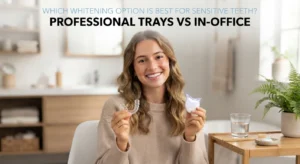
In conclusion, achieving a brighter smile is possible even for those with sensitive teeth. By exploring the various whitening options discussed, including professional treatments, at-home kits, and natural remedies, individuals can find suitable solutions that cater to their unique needs. It is essential to choose products specifically designed for sensitivity to ensure a comfortable and effective whitening experience. We encourage you to take the next step towards a radiant smile by purchasing one of the recommended products or services today. Your journey to confidence and oral health starts now.
FAQ – Best Teeth Whitening Options for Sensitive Teeth
What is the best teeth whitening option for sensitive teeth?
The best option depends on the cause and severity of your sensitivity, but for most people, a lower-concentration take-home custom tray (10–16% carbamide peroxide) combined with a two-to-four-week potassium nitrate pre-treatment phase delivers strong results with minimal discomfort. This approach has a sensitivity incidence as low as 15%, compared to 50–75% for in-chair treatments.
Can I whiten my teeth if I have sensitive teeth?
Yes, sensitivity doesn’t rule out whitening; it simply means the method and concentration need to match your specific sensitivity profile. A dentist-guided assessment identifies whether your sensitivity comes from enamel erosion, gum recession, or mild reactivity, which then determines the safest approach.
Why do sensitive teeth hurt more during whitening?
Whitening gels release hydrogen peroxide that diffuses through enamel into dentinal tubules leading to the tooth’s nerve; when enamel is thin or tubules are exposed, peroxide reaches the nerve faster and triggers sharp pain. Higher-concentration products, like the 25–40% hydrogen peroxide used in-chair, intensify this effect compared to lower-strength options.
Product and Method Comparisons
Are whitening strips safe for sensitive teeth?
Low-peroxide whitening strips formulated for sensitivity, typically around 5.25% hydrogen peroxide or 10% carbamide peroxide, are generally safe and produce a gentler, slower-releasing effect on the nerve. These are available at Australian pharmacies for roughly $30 to $80, and Australian regulations already cap OTC products at 6% hydrogen peroxide or 18% carbamide peroxide for safety.
Do whitening toothpastes work for sensitive teeth?
Whitening toothpastes carry the lowest sensitivity risk but also the mildest results, working mainly on surface stains rather than deep tooth colour. Formulas containing potassium nitrate, such as Sensodyne Pronamel Gentle Whitening, offer a dual benefit by desensitising nerves while gradually lifting surface stains.
Which is better for sensitive teeth: in-chair or take-home whitening trays?
Take-home custom trays are generally the safer choice for sensitive teeth because they use lower concentrations (10–16% carbamide peroxide) and let you control wear time or pause sessions if discomfort arises. In-chair whitening delivers faster results but uses 25–40% hydrogen peroxide, carrying a much higher sensitivity risk that peaks in the first 48 hours.
Managing Discomfort
How can I prevent sensitivity before whitening my teeth?
Start brushing twice daily with a 5% potassium nitrate and fluoride toothpaste two to four weeks before whitening begins, and continue this routine throughout treatment. After brushing, spit without rinsing immediately so the active ingredient stays in contact with teeth longer, which enhances its desensitising effect.
Does potassium nitrate actually reduce whitening sensitivity?
Yes, potassium nitrate at 5% is considered the gold standard pre-treatment, working by depolarising nerve fibres in dentinal tubules to block pain signals. Clinical evidence shows it can reduce sensitivity incidence by up to 58% compared to fluoride alone, with effectiveness rates exceeding 90% when used correctly.
How long does whitening sensitivity last?
Sensitivity typically peaks within the first 48 hours after in-chair treatment and resolves within one to three days as the tooth rehydrates. Take-home tray methods generally produce milder, more spread-out sensitivity rather than an intense short-term spike.
Professional Guidance
Do I need a dental consultation before whitening sensitive teeth?
A consultation is strongly recommended because it assesses the cause and degree of your sensitivity, checks for exposed roots or enamel erosion, and reviews existing restorations before recommending a concentration. Skipping this step is the most common reason self-directed whitening attempts cause unnecessary discomfort.
Where can I get a sensitivity-friendly teeth whitening consultation near Sunbury?
Sunbury Dental Group, located on Evans Street, offers individualised whitening assessments led by Dr. Nita Kumari for patients in Sunbury and nearby areas including Diggers Rest, Riddells Creek, Gisborne, and Lancefield. Plans are built around each patient’s specific sensitivity profile rather than a one-size-fits-all clinic template.