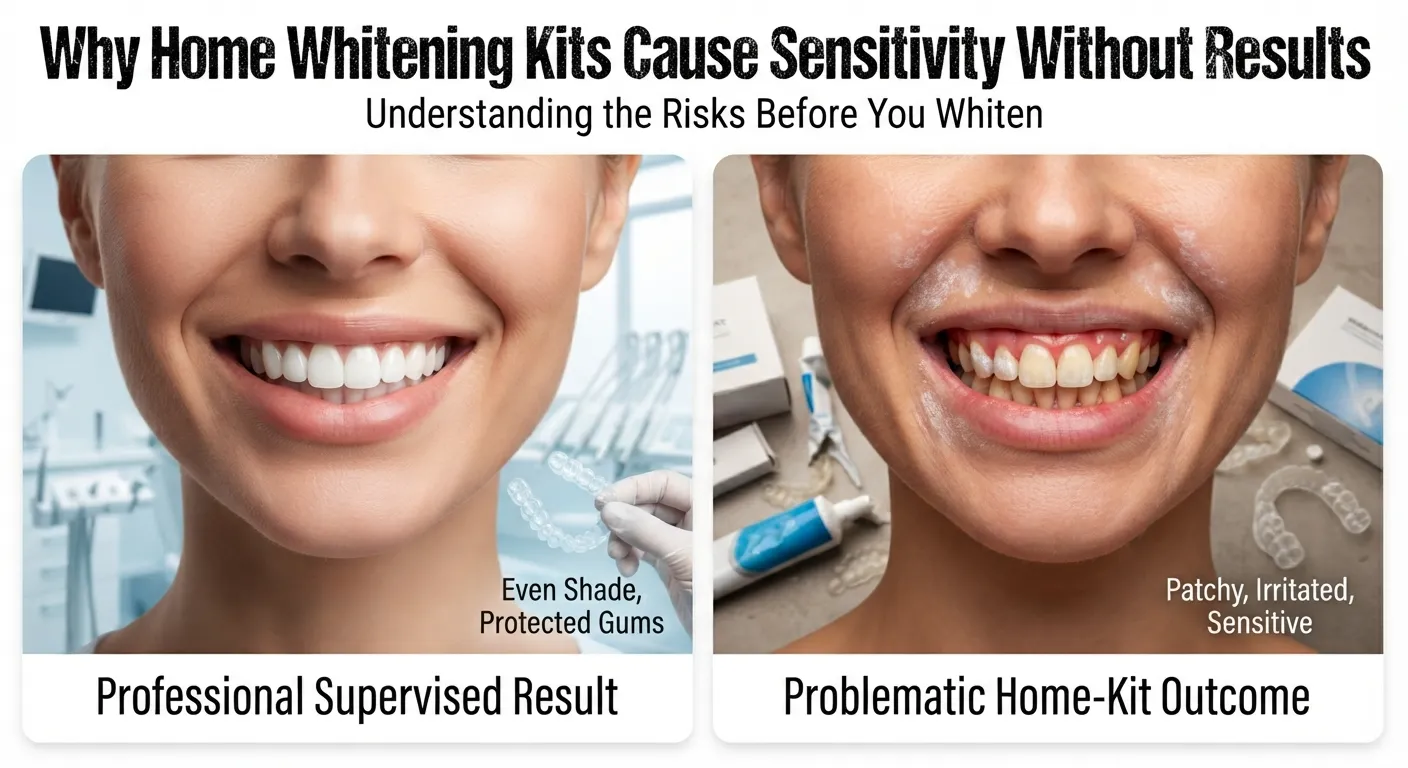
You bought the kit, followed the instructions to the letter, and two weeks later your teeth are zinging every time you drink something cold. Worse, when you check your smile in the mirror? Barely a shade lighter. It’s genuinely one of the most frustrating experiences in cosmetic dentistry, and no, it’s not just you.
Many users experience home whitening kit sensitivity, and it can be disheartening when the results don’t match the effort put in.
We hear this complaint constantly, and honestly, it’s rarely a case of user error. It’s usually a mismatch between what pharmacy kits are legally allowed to contain and what your teeth actually need to whiten properly. Let’s unpack exactly why this happens, so your next attempt doesn’t end the same way.
Understanding home whitening kit sensitivity is crucial for a successful whitening journey.
What This Article Covers
We’re explaining exactly why home whitening kit sensitivity shows up so often without the results you were hoping for. You’ll learn the real teeth whitening side effects worth knowing about, how professional whitening vs home kits actually differ in strength and safety, and what to do if you’re already dealing with sensitive teeth after whitening. We’ll also cover what a genuinely effective whitening plan looks like for your specific smile.
Addressing home whitening kit sensitivity first can lead to a more successful outcome.
In This Article, You’ll Discover:
How home whitening kit sensitivity affects your experience is vital to know.
Why pharmacy whitening kits are legally limited in strength
The connection between pharmacy kits and home whitening kit sensitivity is often overlooked.
The real reason sensitivity happens even when you follow instructions
There’s a significant link between how you experience home whitening kit sensitivity and the products used.
How ill-fitting trays quietly sabotage both comfort and results
Many consumers are unaware of the impacts of home whitening kit sensitivity when using generic trays.
What professional whitening does differently to avoid this trade-off
How to manage sensitivity if you’re already experiencing it
Recognizing home whitening kit sensitivity can help you manage discomfort effectively.
Whether over-the-counter kits are ever worth using
Many ask if home whitening kit sensitivity is worth enduring for the results.
What genuinely effective, comfortable whitening actually requires

Sensitivity without results is more common than most people realise.
The Legal Strength Gap Nobody Mentions on the Packaging
Here’s something the marketing on a whitening kit box conveniently leaves out. In Australia, products containing more than 6% hydrogen peroxide, or more than 18% carbamide peroxide, can only be supplied by a registered dental professional. Everything sold at a pharmacy or supermarket sits below that threshold by law.
Professional in-chair treatments and dentist-supervised take-home trays use concentrations ranging from 6% up to 35%, depending on the method. That’s not a small gap — it’s often several times stronger than anything you can legally buy off a shelf.
This creates a strange, frustrating situation. You’re applying a genuinely active whitening product, it’s just working at a fraction of the strength needed to noticeably lift tooth colour within a normal timeframe.
Why Sensitivity Still Happens Even at Lower Strength
You’d think a weaker product would mean fewer side effects, but that’s not quite how it plays out. Whitening agents work by temporarily opening tiny pores in your enamel to reach stain molecules underneath, and that process itself can trigger sensitivity to hot, cold, or sweet stimuli, regardless of concentration.
Many people report home whitening kit sensitivity, regardless of the product used.
Layer on a generic, one-size-fits-all tray that doesn’t actually fit your teeth, and you’ve got a second problem entirely separate from the whitening gel itself.
This discomfort speaks volumes about home whitening kit sensitivity and its causes.
How Ill-Fitting Trays Cause Both Problems at Once
This is genuinely the biggest hidden culprit behind the “sensitive but not whiter” complaint. Store-bought trays are built to a generic shape, not your specific dental arches.
When a tray doesn’t seal properly against your teeth, a few things go wrong simultaneously:
It’s important to consider how home whitening kit sensitivity can affect your overall experience.
Whitening gel leaks out and makes contact with your gums, which can cause irritation, redness, and discomfort that has nothing to do with your teeth at all
Users often overlook how home whitening kit sensitivity can indicate improper use.
Gel pools unevenly across your teeth, meaning some areas get more exposure than others, leading to patchy, inconsistent whitening
Understanding home whitening kit sensitivity can prevent further complications.
Because gel escapes rather than staying against enamel the full duration, less product actually does its job, extending how long you’d need to keep using it
Repeated gum exposure over multiple sessions compounds irritation, sometimes worse than the tooth sensitivity itself
So you end up with genuine discomfort and underwhelming results, both coming from the same root cause: a tray that was never actually shaped for your mouth.
A proper assessment addresses sensitivity before treatment even starts
Professional Whitening vs Home Kits: What Actually Changes
The difference isn’t just about concentration. Professional whitening addresses the exact two problems home kits struggle with.
Home whitening kit sensitivity is a common issue that many wish to avoid.
None of this means home kits are a scam. It means they’re built for maintaining an already-achieved result or making mild improvements, not solving significant staining.
Home whitening kit sensitivity isn’t a scam; it reflects the product’s limitations.
What To Do If You’re Already Experiencing Sensitivity
If you’re mid-way through a whitening kit and dealing with sore teeth, a few genuinely helpful steps can ease things while you decide your next move.
Pause use for a few days rather than pushing through discomfort
Switch to a sensitive toothpaste, which can help calm nerve response in the short term
Avoid very hot or cold food and drinks until sensitivity settles
Check your tray for visible gaps or looseness against your gum line
Book a check-up if sensitivity persists beyond a few days, or if you notice gum redness or soreness
Most sensitivity from whitening genuinely does settle within a few days, but persistent discomfort deserves a proper look rather than continued guessing.
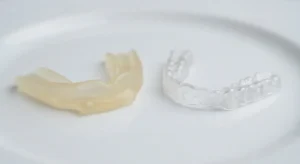
A proper fit changes both comfort and results.
Frequently Asked Questions
Why do my teeth hurt after using a whitening kit but haven’t gotten whiter?
This usually comes down to a mismatch between a generic tray that doesn’t fit properly and a whitening gel that’s legally limited in strength. The combination causes discomfort without delivering strong enough results to notice a real shade change.
Is tooth sensitivity after whitening always temporary?
In most cases, yes, sensitivity typically eases within a few hours to a few days after use. If it persists longer than that or worsens, it’s worth having a dentist take a look rather than assuming it will resolve on its own.
Are professional whitening treatments safer than home kits?
Professional treatments are performed under supervision with custom-fitted trays, which significantly reduces the risk of gel contacting your gums. This makes them generally safer and more predictable than generic store-bought kits.
Can whitening kits damage crowns, veneers, or fillings?
Whitening products only affect natural tooth enamel, meaning any crowns, veneers, or fillings won’t change colour along with the rest of your teeth. This can create an uneven appearance if you have visible restorations at the front of your smile.
Are over-the-counter whitening strips a complete waste of money?
Not entirely — they can offer mild, gradual improvement for minor surface staining or help maintain results after professional whitening. They’re simply not designed to tackle deeper, more stubborn staining on their own.
Bringing It All Together
Home whitening kit sensitivity without visible results usually comes down to two compounding factors: legally limited gel strength and generic trays that don’t actually fit your teeth. Professional whitening addresses both issues directly, which is why it tends to deliver a more comfortable experience alongside genuinely noticeable change.
Ultimately, addressing home whitening kit sensitivity improves the whole experience.
If your home whitening attempts have left you with sore teeth and little to show for it, our Dentist Sunbury team can talk you through a whitening approach that’s actually built around your smile.
Book your appointment at Sunbury Dental Group today
Book Your Whitening Consultation