This is the updated paragraph. Dental sealants for children play a crucial role in preventing cavities.
Dental Sealants for Children: An Essential Part of Preventive Care
We get this question a lot at our practice, and honestly, it’s a good one to ask. Sealants aren’t flashy or expensive, but they quietly do a lot of heavy lifting when it comes to cavity prevention kids need in those tricky back teeth. Let’s walk through what they actually are, what they cost, and whether they’re genuinely worth adding to your child’s dental care plan.
Understanding dental sealants for children can greatly enhance your child’s dental health.
What This Article Covers
We’re going to break down exactly what dental sealants are and how they work on your child’s molars. You’ll get a realistic picture of molar sealant cost in Australia, including how government schemes might help. We’ll also cover who’s a good candidate, how long sealants last, and the honest pros and cons — no exaggerated claims, just the facts your family needs to make an informed choice.
We will also discuss the importance of dental sealants for children in maintaining oral hygiene.
In This Article, You’ll Discover:
What dental sealants actually are and why molars need them most
Dental sealants for children are essential for preventing cavities.
How the sealant procedure works (it’s quicker than you’d think)
Realistic molar sealant cost figures for Australian families
Many parents wonder about the effectiveness of dental sealants for children in protecting teeth.
Whether CDBS can help cover the cost for your child
The real pros and cons of children’s preventive dentistry sealants
Understanding the pros and cons of dental sealants for children is vital for informed decisions.
How long sealants typically last and what affects their lifespan
Warning signs that a sealant needs checking or reapplying
Routine checks are important for assessing the durability of dental sealants for children.

Protecting little smiles starts with the right preventive care.
Why Molars Are Such Easy Targets for Decay
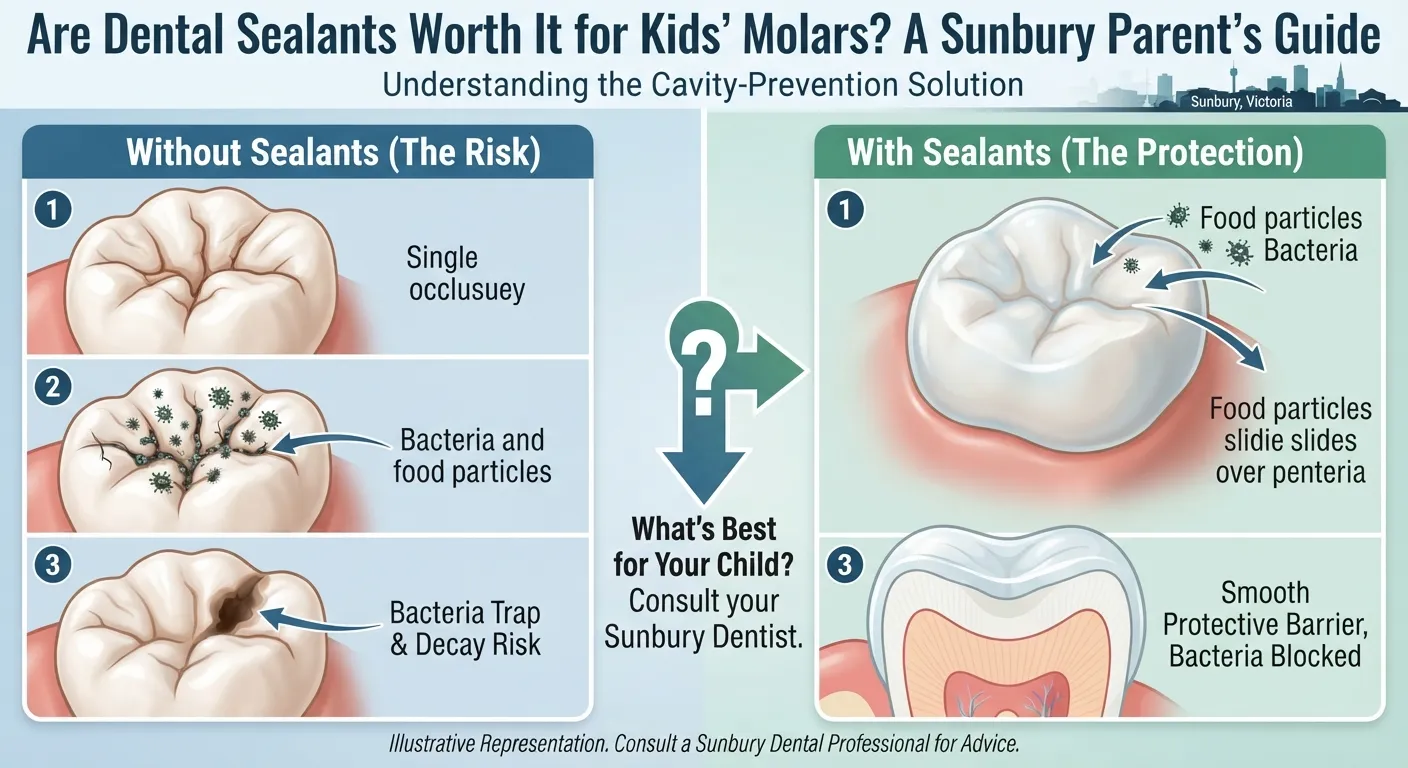
Take a close look at your child’s back teeth sometime — not the easiest task with a wriggly kid, we know. You’ll notice the chewing surfaces aren’t smooth. They’re covered in tiny grooves and pits called fissures.
Dental sealants for children help protect those grooves from bacteria.
Those fissures are brilliant for grinding food. They’re also terrible at self-cleaning. Food particles and bacteria settle into these narrow crevices, and a toothbrush bristle often can’t reach the bottom of them. Add a child’s still-developing brushing technique into the mix, and you’ve got the perfect storm for tooth decay.
This is precisely why molars and premolars account for the vast majority of childhood cavities. Kids don’t lack willpower or hygiene — their back teeth are just structurally harder to keep clean than the smoother front teeth.
By applying dental sealants for children, you can significantly reduce the risk of cavities.
What Are Dental Sealants, Exactly?
A dental sealant is a thin, protective coating applied to the chewing surface of a molar. Think of it like a raincoat for your child’s tooth — it fills in those deep grooves and creates a smooth barrier that food and bacteria can’t easily hide in.
A dental sealant specifically for children can act as a barrier against food particles.
The material is usually a tooth-coloured resin. It’s painted on in liquid form, then hardened using a special light. No drilling, no needles, no numbing required in most cases.
How Long Does the Procedure Take?
Parents often ask how long dental sealants for children last before reapplication is needed.
Here’s the part parents love: a single sealant appointment often takes less time than reading a bedtime story.
The tooth is cleaned and dried thoroughly.
Applying dental sealants for children can be done efficiently in just one visit.
A mild solution is applied to help the sealant bond properly.
The sealant liquid is painted onto the grooves of the molar.
The application process of dental sealants for children is quick and painless.
A curing light hardens the material in seconds.
Your dentist checks the bite to make sure everything feels comfortable.
After applying dental sealants for children, ensure to monitor their effectiveness.
Most kids find it painless and slightly boring — which, frankly, is exactly what you want from a dental visit.
Molar Sealant Cost in Australia: What to Expect
Discussing the costs associated with dental sealants for children is essential for budgeting.
Let’s talk numbers, because we know cost matters when you’re weighing up preventive treatments. Sealant pricing varies a little between practices, but nationally, sealants typically run somewhere between $45 and $90 per tooth, with $61 sitting around the average.
If your child needs all four first molars sealed, you’re generally looking at somewhere in the range of $180 to $360 in total, not including any exam or clean fees on the day.
For families, understanding the financial aspect of dental sealants for children can ease concerns.
The sealant application takes just minutes per tooth.
Can the Child Dental Benefits Schedule (CDBS) Help?
For many Sunbury families, this is where the cost conversation gets a lot more comfortable. If your child is aged 2 to 17 and you receive certain government payments, they may be eligible for the CDBS, which can cover up to $1,052 in basic dental services — including fissure sealants — over two calendar years.
The CDBS can significantly help with the costs of dental sealants for children.
That means some families end up paying little to nothing out of pocket for sealants. It’s worth checking your eligibility before assuming sealants are out of budget, because the answer might surprise you.
Encouraging the use of dental sealants for children can lead to better dental outcomes.
Are Sealants Actually Worth It? The Honest Pros and Cons
We won’t pretend sealants are a magic shield that guarantees a cavity-free childhood. They’re not. But the evidence for their preventive value is genuinely strong, and it’s worth weighing up both sides honestly.
Many families have benefited from using dental sealants for children to prevent future issues.
The upsides:
They reduce the risk of decay in those hard-to-clean fissures
Using dental sealants for children is a proactive way to maintain dental health.
The procedure is quick, comfortable and non-invasive
They can last several years with proper care
Regular application of dental sealants for children ensures long-term protection.
They’re often far cheaper than treating a cavity later on
They support good habits without requiring extra effort from your child
Parents should consider the benefits of dental sealants for children as part of their dental care.
The limitations to know about:
Sealants don’t protect the sides of teeth or between teeth — flossing still matters
Children with a history of cavities may particularly benefit from dental sealants for children.
They can wear down over time and may need reapplication
They work best when placed soon after the adult molars erupt
Regular check-ups help determine the need for dental sealants for children as they grow.
Regular check-ups are still needed to make sure the seal stays intact
Every child’s mouth is different, and a dentist can assess whether sealants genuinely suit your child’s teeth rather than assuming they’re right for everyone
Consulting a dentist about dental sealants for children can provide personalized recommendations.
How Long Do Dental Sealants Last?
This one varies from child to child. Some sealants hold strong for five years or more, while others might need a touch-up sooner depending on diet, grinding habits, and how well they’re cared for.
Understanding how dental sealants for children work is vital for effective preventive care.
Regular dental visits let your dentist keep an eye on the sealant’s condition. If it chips or wears thin, reapplying is usually simple and quick — nowhere near as involved as treating an actual cavity would be.
(see the generated image above)
Dental sealants for children are a simple preventive measure that should not be overlooked.
Signs Your Child Might Benefit from Sealants
Not sure if it’s time to book that conversation with your dentist? A few signs can point you in the right direction.
Signs that your child might benefit from dental sealants for children include visible grooves.
Deep grooves visible on their back molars
A family history of frequent cavities
Given the right circumstances, dental sealants for children can dramatically reduce cavity rates.
Difficulty reaching back teeth properly when brushing
Adult molars that have recently come through
Identifying adult molars early can help determine the need for dental sealants for children.
If any of these sound familiar, it’s a good time to bring it up at your next visit rather than waiting for a problem to show up on an X-ray.

Sealants work best paired with great daily habits.
Frequently Asked Questions
Inquiring about dental sealants for children during dental visits can lead to timely interventions.
At what age should kids get dental sealants?
Most dentists suggest sealants shortly after the first permanent molars erupt, typically around age 6, and again when the second molars come through around age 12. Your dentist can confirm the right timing based on your child’s individual dental development.
Do dental sealants hurt to apply?
No, the process is painless and doesn’t usually require any anaesthetic. Kids generally sit through it comfortably, and most describe it as feeling like nothing more than having their tooth painted.
Understanding the application process for dental sealants for children is crucial for parents.
Are baby teeth ever sealed too?
Sometimes, yes — particularly if a child has deep grooves or a higher cavity risk in their primary molars. Your dentist will assess whether it’s appropriate for your child’s specific situation.
Will sealants replace the need for good brushing habits?
Not at all. Sealants are one layer of protection, but daily brushing, flossing, and a balanced diet remain essential for overall preventive dentistry.
Maintaining good dental hygiene alongside dental sealants for children is key for overall health.
Does private health insurance cover sealant costs?
Many extras policies include some cover for preventive treatments like sealants, though the amount varies by provider and plan. It’s best to check directly with your fund for specifics.
How can I tell if my child’s sealant has worn away?
Your dentist checks sealant condition at routine check-ups, but a rough or discoloured patch on the molar surface can sometimes be a visual clue. It’s not something to try diagnosing at home.
Regular assessments can indicate when dental sealants for children need to be reapplied.
Bringing It All Together
Dental sealants aren’t a cure-all, but for many kids, they offer a simple, low-cost way to protect the molars that are hardest to keep clean. Combined with regular check-ups and good brushing habits, they can meaningfully lower the chances of a painful cavity down the track — and potentially save your family money compared to future fillings.
Dental sealants for children can provide peace of mind for parents regarding their child’s dental health.
If you’re weighing up whether sealants suit your child, chatting with a trusted Dentist Sunbury family is the easiest next step. Our team can assess your child’s teeth and talk you through honest, evidence-based recommendations tailored to their needs.
Book your appointment at Sunbury Dental Group today:
Book Your Child’s Check-Up Now