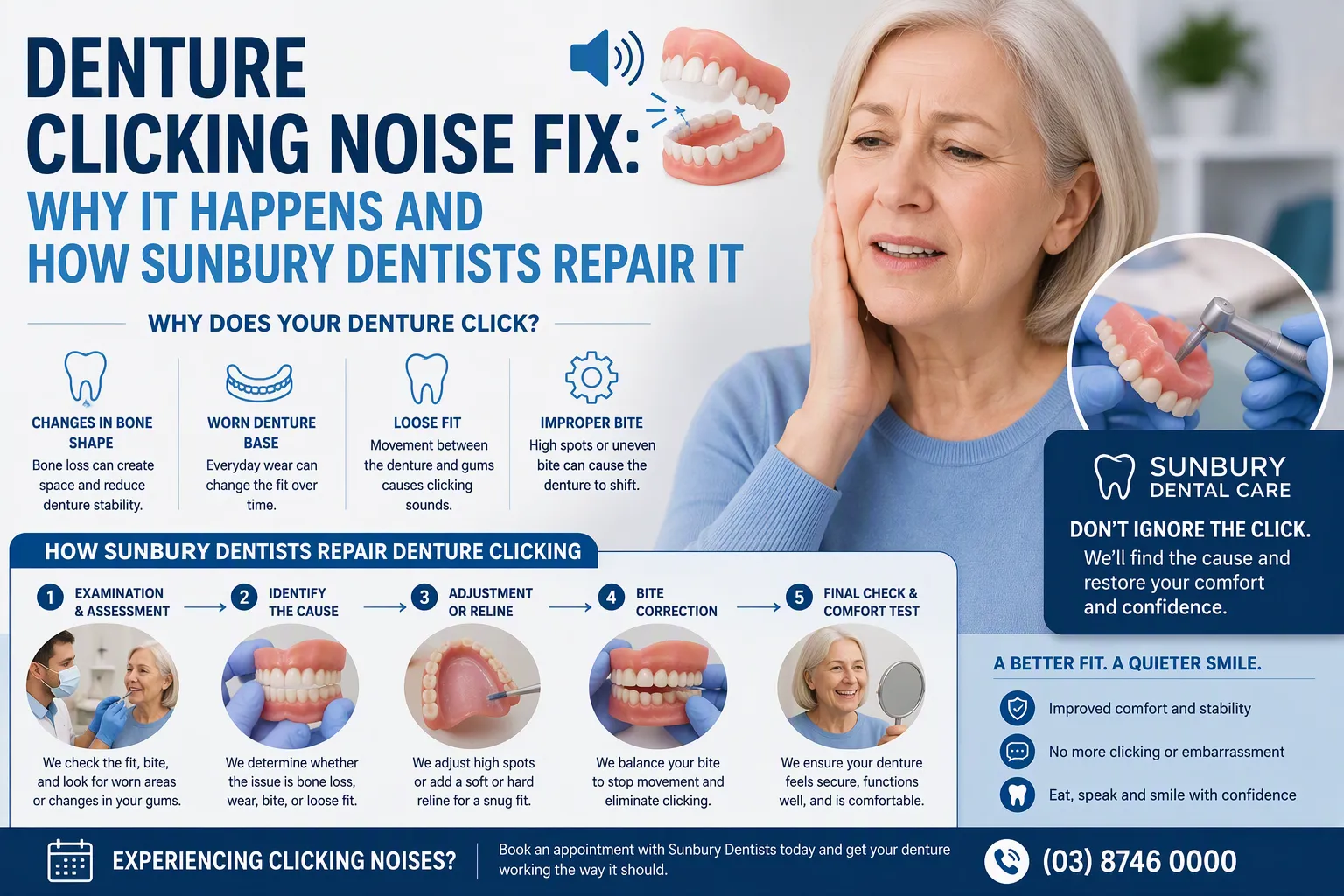
You’re mid-sentence at a family barbecue, and there it is again — that soft click every time your jaw moves. Maybe you laugh it off. Maybe you stop talking altogether, hoping no one noticed. If you’re searching for a denture clicking noise fix, you’re definitely not alone, and you’re in the right place.
Clicking dentures are one of the most common complaints we hear from patients across Sunbury, Bulla, Melton and the surrounding suburbs. It’s uncomfortable, it can knock your confidence, and it usually means something structural needs attention rather than just “getting used to it”. The good news? In almost every case, there’s a clear cause and a straightforward fix.
Overview: What This Guide Covers
This guide walks you through exactly why dentures click when you talk, from loose fit and worn teeth to bite misalignment and dry mouth. You’ll learn the difference between temporary home fixes and proper clinical solutions like relines, rebases and adjustments. We’ll also cover when it’s time to stop DIY-ing it and book in with a dentist, plus what that appointment typically looks like here in Sunbury.
In This Article, You’ll Discover
The five most common reasons dentures click when you talk or eat
Why a denture that fit perfectly a year ago can suddenly feel loose
The real difference between a denture reline, rebase and full replacement
Simple things you can try at home while you wait for an appointment
How Sunbury’s climate and lifestyle factors can affect denture fit
When clicking is a minor tweak versus a sign of a bigger problem
What to expect from a denture repair visit at Sunbury Dental Group
Why Do Dentures Click When You Talk?
Let’s get straight to it. Denture clicking happens when your dentures move — even slightly — inside your mouth while you’re speaking, chewing or laughing. That tiny shift causes the plastic or acrylic to tap against your gums, your natural teeth, or the opposing denture, and that tap is what you’re hearing as a click.
It sounds simple, and honestly, the mechanics are. But the reasons behind that movement can vary quite a bit from person to person.
Loose or Ill-Fitting Dentures
This is far and away the most common culprit. Your gums and jawbone aren’t static — they change shape over months and years, a process dentists call resorption. Dentures that fit snugly when you first got them can gradually become too loose to stay put, and that’s when clicking, slipping and discomfort start creeping in.
Loose denture problems tend to sneak up on people. You might not notice the fit changing day to day, but six months later you realise you’re clenching your jaw just to keep things in place.
Worn or Damaged Denture Teeth
Over years of chewing, denture teeth flatten out, much like the tread on a car tyre. Once that happens, your bite doesn’t close the way it used to, and your dentures can start meeting at odd angles — which often produces that unmistakable click, especially on certain words or sounds.
Bite Misalignment
Sometimes the issue isn’t wear at all — it’s how the denture was set up in the first place, or how your bite has shifted since. If your upper and lower teeth (or your denture and remaining natural teeth) don’t meet evenly, certain movements while talking can cause a cusp or edge to knock against the opposing surface.
Dry Mouth
Saliva does more than help you swallow — it acts as a cushioning layer between your denture and your gums. When your mouth is dry, from medication, dehydration, or simply age-related changes, that natural buffer disappears, and clicking or even a squeaking sound can follow.
Poor Cleaning or Debris Build-Up
It sounds minor, but leftover food particles or plaque can genuinely change how a denture sits. An uneven surface from build-up creates tiny high spots that catch and click as your jaw moves.
Quick Home Checks Before You Book In
While you’re waiting for an appointment, there are a few sensible things worth trying. None of these replace a proper fitting, but they can ease the problem short-term.
Clean your dentures thoroughly every day and soak them overnight to remove debris and keep the surface even.
Drink water regularly throughout the day to combat dry mouth, especially if you’re on medication known to reduce saliva.
Try a denture adhesive as a temporary stabiliser — it won’t fix an underlying fit issue, but it can reduce movement while eating out or socialising.
Slow down when you speak and eat. Rushing through meals or conversation gives your denture more chances to shift.
Avoid hard, sticky or overly chewy foods until you’ve had things checked, since they put extra strain on an already loose fit.
If you’ve tried these and the clicking hasn’t budged — or it’s getting worse — that’s your cue to book a proper assessment rather than keep patching it up yourself.
Denture Repair Options: Reline, Rebase or Replace?
This is where most people get a bit confused, understandably. The terminology sounds technical, but the concept is pretty simple once it’s explained properly.
Denture Reline
A denture reline reshapes the underside of your existing denture so it matches your current gum contours. Think of it as re-lining the inside of a shoe rather than buying a whole new pair — your existing denture base stays, but the fitting surface gets refreshed.
There are two main types:
Soft reline — a cushioning material for minor looseness or sore spots, often done chairside in a single visit.
Hard reline — a more durable acrylic reline for significant fit changes, sometimes sent to a dental lab and returned within a few days.
A reline is usually the go-to fix when your denture itself is still in good structural condition, but your gums have simply changed shape underneath it.
Denture Rebase
A rebase goes a step further than a reline. Instead of just adjusting the fitting surface, the entire base of the denture is replaced while keeping the existing (still-good) teeth. This suits situations where the base has cracked, discoloured, or worn thin, but the teeth themselves are fine.
Full Denture Replacement
Sometimes, particularly with older dentures or ones that have been relined multiple times already, a full replacement genuinely makes more sense. If your teeth are visibly worn flat, your denture is more than five to seven years old, or clicking keeps returning after repairs, it may be time to discuss a fresh set possibly including newer options like implant-supported dentures for extra stability.
Bite Adjustment
If your clicking is coming from misalignment rather than looseness, sometimes the fix is refreshingly simple — a quick chairside adjustment to smooth or reshape a high spot on the denture teeth. This is often a same-day fix with no lab work required at all.
Here’s a quick comparison to make sense of it all:
A Local Angle: Why Sunbury Conditions Matter Too
Sunbury’s warm, dry summers can genuinely make dry-mouth-related denture clicking worse, especially for older residents who are already more prone to reduced saliva flow. We also see quite a few patients who’ve moved out to Sunbury, Bulla or Melton from other areas and haven’t had their dentures checked since their old dentist retired or their practice closed. If that sounds like you, a denture review is honestly overdue, not just for comfort but to make sure your gums and jawbone are still tracking well.
Families across Sunbury and the surrounding 20km — Gladstone Park, Keilor, Mickleham, Taylors Lakes and beyond — often bring in older relatives for exactly this kind of check, sometimes bundling it with a general check-up for the whole family. It’s a practical way to look after everyone’s oral health in one visit.
When Should You See a Dentist About Clicking Dentures?
A little clicking now and then, especially with a brand-new denture you’re still adjusting to, isn’t automatically alarming. But there are signs that mean it’s time to stop waiting and book in.
The clicking has started suddenly after months or years of no issues
You’re also noticing soreness, ulcers, or red patches on your gums
Your denture feels loose or shifts noticeably when you eat or laugh
You’ve been using more and more adhesive just to get through the day
The clicking is affecting your confidence in social or work situations
None of these mean something’s seriously wrong, but they do mean it’s worth having a professional look rather than hoping it settles on its own. According to the Australian Dental Association, ill-fitting dentures left unaddressed can contribute to gum irritation and accelerated bone loss over time.
What Happens During a Denture Check at Sunbury Dental Group
If you book in with us for a clicking denture, here’s roughly what to expect. We’ll start by having a proper chat about when the clicking started, whether it happens with certain foods or words, and how your denture has felt generally. Then we’ll check the physical fit, look at how your bite comes together, and examine your gums and any remaining natural teeth for changes.
From there, we’ll talk you through the most sensible option — whether that’s a same-day adjustment, a reline, or something more involved — and give you a clear idea of cost and timeframe before anything happens. We believe in explaining things properly, not just handing you a treatment plan and hoping you nod along.
Frequently Asked Questions
Why do my dentures suddenly click when they never used to?
This usually points to a change in your gum or jawbone shape over time, which alters how the denture sits. It can also mean the denture teeth have worn down slightly, changing how your bite meets.
Can I fix clicking dentures myself at home?
You can ease things temporarily with denture adhesive, good cleaning habits, and slower eating and speaking. However, a lasting denture clicking noise fix almost always needs a professional assessment to address the actual cause.
Is a denture reline painful or complicated?
No — a reline is generally quick, comfortable, and often completed the same day for soft relines, or within a few days for hard relines sent to a lab. Most patients describe it as far less involved than they expected.
How do I know if I need a reline or a full replacement?
If your denture teeth are still in reasonable condition and only the fit has changed, a reline is usually enough. If the denture is old, worn, or has already been relined multiple times, replacement is often the more practical long-term option.
Does denture adhesive stop clicking for good?
Adhesive can reduce movement and noise temporarily, but it’s a management tool, not a fix for the underlying cause. If you’re relying on it daily just to get through conversations or meals, it’s time for a proper fit check.
Can dry mouth really cause my dentures to click?
Yes — saliva acts as a natural cushion between your denture and gums, and reduced saliva flow removes that buffer, which can cause clicking or even squeaking. Staying hydrated and mentioning any dry mouth symptoms to your dentist can help identify this quickly.

Final Thoughts
Denture clicking isn’t something you need to just live with, and it’s definitely not something to feel embarrassed about bringing up. Whether it’s a loose fit from natural gum changes, worn denture teeth, or a bite that’s shifted slightly, there’s a clear repair path for almost every case — from a same-day adjustment to a reline, rebase, or replacement.
The most important step is simply not ignoring it. Left unchecked, ongoing looseness can lead to sore spots, gum irritation, and more complicated repairs down the track.
If your dentures have been clicking, slipping, or just not feeling like they used to, book your appointment at Sunbury Dental Group today and let’s get that sorted properly.
Book Your Denture Check-Up