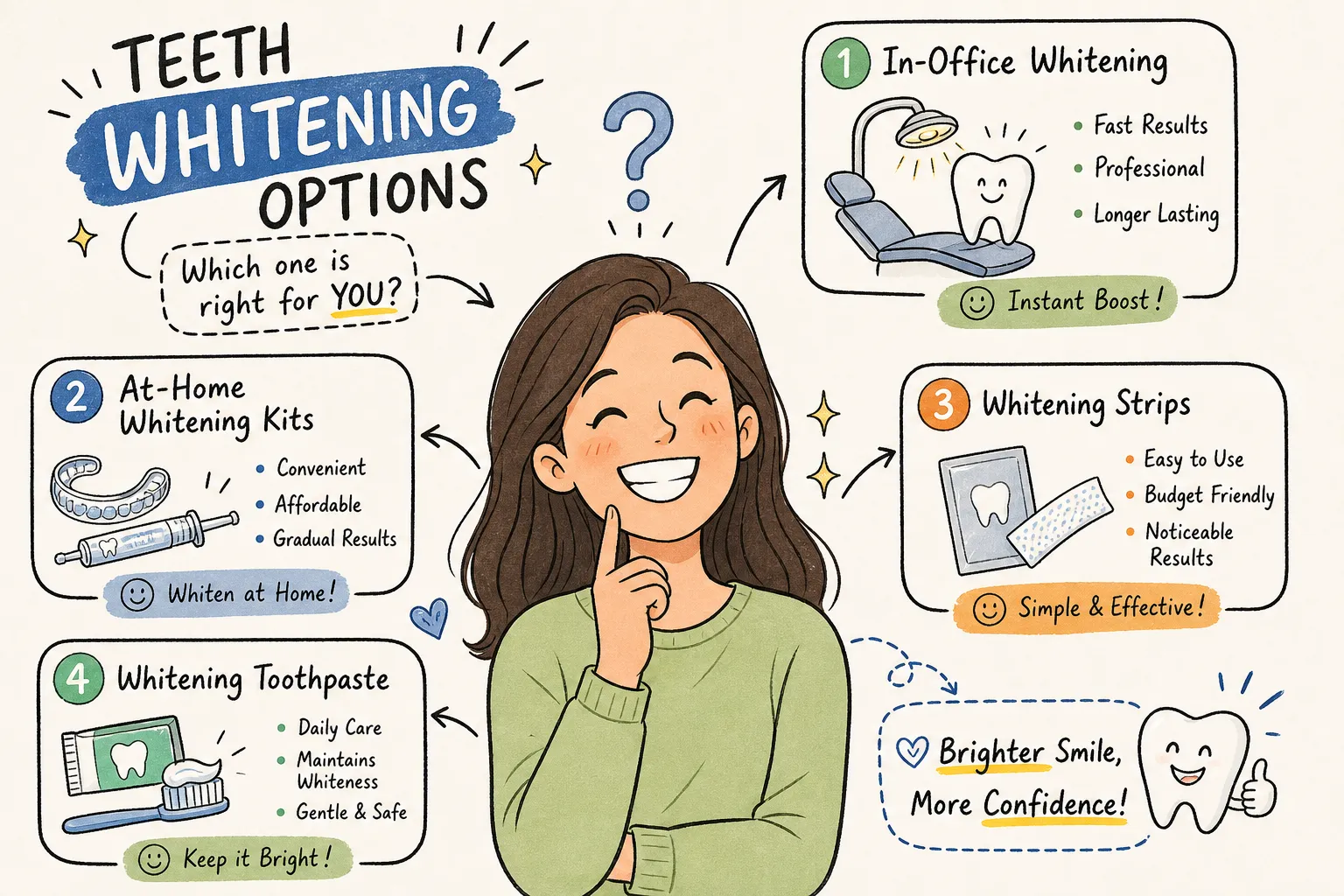
You’ve been standing in the chemist aisle for ten minutes, turning over a box of whitening strips, squinting at the ingredient list, and wondering whether you’d be better off just booking a dental appointment. It’s a genuinely confusing space to navigate. Understanding the different whitening treatment types available, from in-chair professional sessions to store-bought strips, is the first step toward making a confident, informed decision. Whitening options have multiplied rapidly, and the marketing promises on every box sound equally convincing.
At Sunbury Dental Group, many patients ask which whitening option is right for them. People want to know what actually works, what’s worth the cost, and whether the cheaper option will get them to the same result eventually. The honest answer depends on your teeth, your timeline and your budget. This guide breaks down how each treatment works, what it costs in Australia, and how to figure out which one suits your situation.
Whitening treatment types explained
In-chair professional whitening: the fastest results available
In-chair whitening is the gold standard when speed matters. A registered dental practitioner applies a high-concentration hydrogen peroxide gel, typically 25, 40%, directly to your teeth, with a protective barrier placed on your gums beforehand to prevent irritation. Many clinics pair the gel with an LED light to accelerate the bleaching reaction, which is why you’ll often hear the terms “laser whitening” and “LED whitening” used interchangeably. True laser systems exist, but LED-assisted whitening is more commonly used than laser in many Australian clinics.
A typical session runs 60, 90 minutes. Your dentist takes a shade assessment at the start, applies the gel in multiple rounds, then compares the before-and-after result at the end of the appointment. Most patients leave with a noticeable improvement of six to twelve shades in a single visit, a dramatic outcome made possible because in-chair whitening uses the most concentrated bleaching treatment available. Australian regulations only permit these concentrations when applied by a registered dental practitioner.
Costs, results and longevity
In-chair whitening in Australia typically ranges from AUD $600 to $1,200 for a standard session, with premium systems or specialist cosmetic clinics reaching up to $1,500. Results generally last one to three years with good oral hygiene and mindful eating habits. Many dentists recommend following up with a take-home maintenance kit to extend that longevity, a practical and cost-effective approach.
Dentist-prescribed take-home trays: professional results at your own pace
If you want professional-grade results without the upfront cost of an in-chair session, dentist-prescribed take-home trays are the middle-ground option. Your dentist takes an impression of your teeth and fabricates custom-fitted plastic trays specifically shaped to your mouth. You’re provided with a professional-strength whitening gel and wear the trays at home for 30, 60 minutes daily, or overnight, depending on the gel concentration, over approximately two weeks.
The critical difference between these and the generic mouldable trays from a chemist comes down to fit. A custom tray holds the gel precisely against every tooth surface while keeping it away from your gums. That precise contact reduces irritation and maximises whitening time. Generic store-bought trays are mere approximations that shift, wrinkle and create uneven coverage. Dentist-dispensed gels are tailored for professional use within a supervised protocol, which is why a properly followed take-home programme can rival an in-chair result, even though Australian regulations cap home-use peroxide concentrations (6% hydrogen peroxide or 18% carbamide peroxide) regardless of whether the product is dispensed by a dentist or purchased off the shelf.
Costs, results and longevity
Costs for dentist-prescribed take-home kits typically sit between AUD $250 to $610, which includes the custom trays and an instruction session at the clinic. Results are gradual rather than instant, emerging over the two-week treatment period. Longevity is commonly reported at six to twelve months, and sometimes longer with consistent maintenance, broadly comparable to in-chair whitening for many patients, though individual results vary. The custom trays can also be reused for future top-up treatments, making this a cost-effective long-term option.
Over-the-counter options: what’s actually on the shelves
Not everyone wants to start with a dental visit, and there are legitimate over-the-counter options worth understanding. The main categories available in Australian chemists and supermarkets include whitening strips (such as Crest 3D and HiSmile), brush-on whitening pens, whitening gels with mouldable trays, and whitening toothpastes. Each works differently, and results vary considerably.
Whitening strips are the most effective option in this category because they hold the gel in sustained contact with the tooth surface, allowing more time to break down surface stains. Whitening pens are the least reliable: saliva and movement dilute the gel quickly, reducing contact time and overall effectiveness. Whitening toothpastes that rely on abrasives like charcoal or baking soda polish away surface stains but do not bleach the tooth structure. PAP+ formulas (used by brands like HiSmile) can whiten without causing sensitivity, but work more slowly than peroxide-based products.
The reason over-the-counter products have a hard ceiling on results comes down to Australian regulation. The Poisons Standard restricts over-the-counter whitening products to a maximum of 6% hydrogen peroxide or 18% carbamide peroxide. Products above these concentrations are classified as prescription-grade and can only be supplied by a registered dental practitioner. This regulatory cap exists to protect gums and enamel from unsupervised exposure to stronger agents. In practice, it means store-bought products simply cannot match the whitening power available at a dental clinic. Over-the-counter results typically last one to three months, whereas dentist-provided kits last six months or more.

Side effects and risks: what’s normal, what’s not
All whitening treatments carry some level of risk. Knowing the difference between manageable temporary effects and genuine contraindications helps you make a smarter decision before you start, and it’s one of the most useful things a brief dental consultation can clarify.
The two most common side effects are tooth sensitivity and gum irritation. Research suggests sensitivity affects a significant proportion of whitening users, some estimates put the figure as high as 65%, though it typically resolves within a few days of finishing treatment. Gum irritation occurs when peroxide gel contacts soft tissue for prolonged periods, usually from ill-fitting trays or incorrect product use. Both effects are almost always temporary. Professional treatments significantly reduce these risks because a dentist controls the gel concentration and placement from the start.
There are situations where whitening is not recommended without a dental assessment first:
- Pregnant or nursing women
- Children under 16
- Patients with active gum disease or significant enamel erosion
- People with existing crowns or veneers (which don’t change colour with bleaching Whitening Treatment Types)
- Anyone whose discolouration is intrinsic, such as grey or brown undertones caused by medication or past trauma
One risk that often surprises people: long-term overuse of whitening products can paradoxically make teeth appear more yellow over time. Excessive bleaching erodes enamel, making the darker underlying dentine more visible. This outcome is almost entirely preventable with professional guidance and appropriate treatment spacing.
Choosing the right whitening treatment for your situation
The right whitening option isn’t universal. It depends on how quickly you want results, what your budget allows, how sensitive your teeth are, and the current shade and health of your teeth. All three treatment categories have a legitimate place, the key is honest matching.
Consider your timeline first. If you have a wedding, event or special occasion coming up in two weeks, in-chair whitening is the clear choice. If you have a relaxed timeframe and prefer to manage the process at home, dentist-prescribed trays deliver excellent results. If you want to experiment before committing to a professional treatment, a quality peroxide-based strip kit gives you a reasonable starting point, within the limits of Australian regulations.
Sensitivity history also matters significantly. High-sensitivity patients consistently do better with custom trays using lower-concentration gel over a longer period than with a single high-concentration in-chair session. People with existing dental restorations, crowns, bridges or veneers, need specific professional advice because whitening won’t change the colour of those restorations, which can create mismatched shades if the surrounding natural teeth are bleached.
This is exactly where a cosmetic consultation at Sunbury Dental Group changes the outcome. Rather than guessing which product will work for your specific tooth shade and sensitivity level, you get a professional shade assessment, an honest review of your candidacy, and a clear recommendation based on your actual situation. The consultation also identifies any underlying issues, such as early decay or gum inflammation, that would need addressing before whitening begins. Skipping this step can increase the risk of choosing a suboptimal product or aggravating sensitivity issues that could have been identified and addressed early on.
Making the right choice for your smile
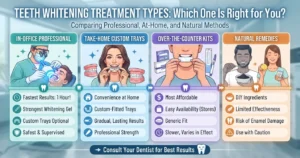
Here is how the three teeth whitening methods stack up. In-chair Whitening Treatment Types delivers the fastest and most dramatic results, typically six to twelve shades in a single appointment, with results lasting up to three years. Dentist-prescribed take-home trays offer professional-grade outcomes at a slower pace and a lower price point, with longevity of six to twelve months or longer for many patients. Over-the-counter products provide a convenient starting point but are limited by Australian regulatory caps on peroxide concentration, producing results that fade within months rather than years.
Selecting the right whitening treatment types comes down to matching the Whitening Treatment Types to your teeth, your timing and your expectations. If you’re ready to move forward with a brighter smile, the next step is a cosmetic consultation with the team at Sunbury Dental Group. Dr Nita Kumari and the team will assess your teeth, identify the whitening approach most likely to deliver the result you’re looking for, and make sure there are no underlying concerns that need attention first. Book your consultation online or call us, you’ll find us at 5/92 Evans Street, Sunbury VIC 3429. Getting the right advice upfront saves both money and frustration down the track.
FAQ – In-Chair Professional Whitening
How does in-chair professional teeth whitening work?
A registered dental practitioner applies a high-concentration hydrogen peroxide gel, typically 25 to 40%, directly to the teeth after placing a protective barrier on the gums to prevent irritation. Many clinics pair the gel with an LED light to accelerate the bleaching reaction, and Australian regulations only permit these concentrations when applied by a registered dental practitioner.
How much does in-chair whitening cost and how long do results last?
In-chair whitening in Australia typically ranges from AUD $600 to $1,200 for a standard session, with premium systems or specialist cosmetic clinics reaching up to $1,500. Results generally last one to three years with good oral hygiene and mindful eating habits, and many dentists recommend a take-home maintenance kit afterward to extend that longevity.
How many shades whiter can I expect from a single in-chair session?
Most patients leave with a noticeable improvement of six to twelve shades in a single visit, a dramatic outcome made possible because in-chair whitening uses the most concentrated bleaching treatment available. A typical session runs 60 to 90 minutes, starting with a shade assessment, followed by the gel applied in multiple rounds, and finishing with a before-and-after comparison.
Dentist-Prescribed Take-Home Trays
What’s different about dentist-prescribed take-home whitening trays compared to chemist kits?
The critical difference comes down to fit — a dentist takes an impression of your teeth to fabricate custom-fitted plastic trays that hold gel precisely against every tooth surface while keeping it away from your gums. Generic store-bought trays are mere approximations that shift, wrinkle, and create uneven coverage, reducing effectiveness and increasing irritation risk.
How much do dentist-prescribed take-home whitening kits cost?
Costs for dentist-prescribed take-home kits typically sit between AUD $250 and $610, which includes the custom trays and an instruction session at the clinic. The custom trays can also be reused for future top-up treatments, making this a cost-effective long-term option.
How long do results from take-home trays last?
Results are gradual rather than instant, emerging over the two-week treatment period, with longevity commonly reported at six to twelve months and sometimes longer with consistent maintenance. This is broadly comparable to in-chair whitening for many patients, though individual results vary based on habits and starting shade.
Over-the-Counter Options
What over-the-counter whitening products are actually available in Australia?
The main categories include whitening strips such as Crest 3D and HiSmile, brush-on whitening pens, whitening gels with mouldable trays, and whitening toothpastes, each working differently with considerably varying results. Whitening strips are the most effective option in this category because they hold gel in sustained contact with the tooth surface, while whitening pens are the least reliable since saliva and movement dilute the gel quickly.
Why can’t over-the-counter whitening products match professional results?
The Poisons Standard restricts over-the-counter whitening products to a maximum of 6% hydrogen peroxide or 18% carbamide peroxide, and products above these concentrations are classified as prescription-grade and can only be supplied by a registered dental practitioner. This regulatory cap protects gums and enamel from unsupervised exposure to stronger agents, meaning store-bought products simply cannot match the whitening power available at a dental clinic.
How long do over-the-counter whitening results last compared to professional treatment?
Over-the-counter results typically last one to three months, whereas dentist-provided kits last six months or more. Whitening toothpastes with abrasives like charcoal or baking soda only polish away surface stains rather than bleaching the tooth structure, while PAP+ formulas can whiten without sensitivity but work more slowly than peroxide-based products.
Side Effects and Risks
What are the most common side effects of teeth whitening?
Tooth sensitivity and gum irritation are the two most common side effects, with research suggesting sensitivity affects a significant proportion of whitening users, with some estimates as high as 65%, though it typically resolves within a few days of finishing treatment. Gum irritation occurs when peroxide gel contacts soft tissue for prolonged periods, usually from ill-fitting trays or incorrect product use, and professional treatments significantly reduce these risks since a dentist controls gel concentration and placement
Who should get a dental assessment before whitening rather than proceeding on their own?
Pregnant or nursing women, children under 16, patients with active gum disease or significant enamel erosion, and people with existing crowns or veneers should seek professional advice first, since restorations don’t change colour with bleaching. Anyone whose discolouration is intrinsic, such as grey or brown undertones caused by medication or past trauma, also needs assessment since standard whitening won’t address that type of staining.
Can whitening products actually make my teeth look more yellow over time?
Yes, long-term overuse of whitening products can paradoxically make teeth appear more yellow, since excessive bleaching erodes enamel and makes the darker underlying dentine more visible. This outcome is almost entirely preventable with professional guidance and appropriate treatment spacing between sessions.
Choosing the Right Option
Which whitening treatment type is right for my timeline?
If you have a wedding, event, or special occasion coming up in two weeks, in-chair whitening is the clear choice for fast, dramatic results. If you have a relaxed timeframe and prefer to manage the process at home, dentist-prescribed trays deliver excellent results, while a quality peroxide-based strip kit gives you a reasonable starting point if you want to experiment before committing to professional treatment.
Does tooth sensitivity affect which whitening treatment I should choose?
Yes, high-sensitivity patients consistently do better with custom trays using lower-concentration gel over a longer period than with a single high-concentration in-chair session. People with existing crowns, bridges, or veneers need specific professional advice, since whitening natural teeth around unchanged restorations can create a mismatched shade.
Why book a consultation instead of just choosing a whitening product myself?
A cosmetic consultation provides a professional shade assessment, an honest review of your candidacy, and a clear recommendation based on your actual tooth condition and sensitivity level, rather than guessing which product will work. The consultation also identifies underlying issues like early decay or gum inflammation that need addressing before whitening begins, since skipping this step can increase the risk of choosing a suboptimal product or aggravating sensitivity.
Does Sunbury Dental Group offer teeth whitening consultations?
Yes, Dr Nita Kumar and the team at Sunbury Dental Group assess your teeth, identify the whitening approach most likely to deliver your desired result, and check for underlying concerns needing attention first. Patients can book online or call the clinic at 5/92 Evans Street, Sunbury VIC 3429, and getting the right advice upfront saves both money and frustration down the track.