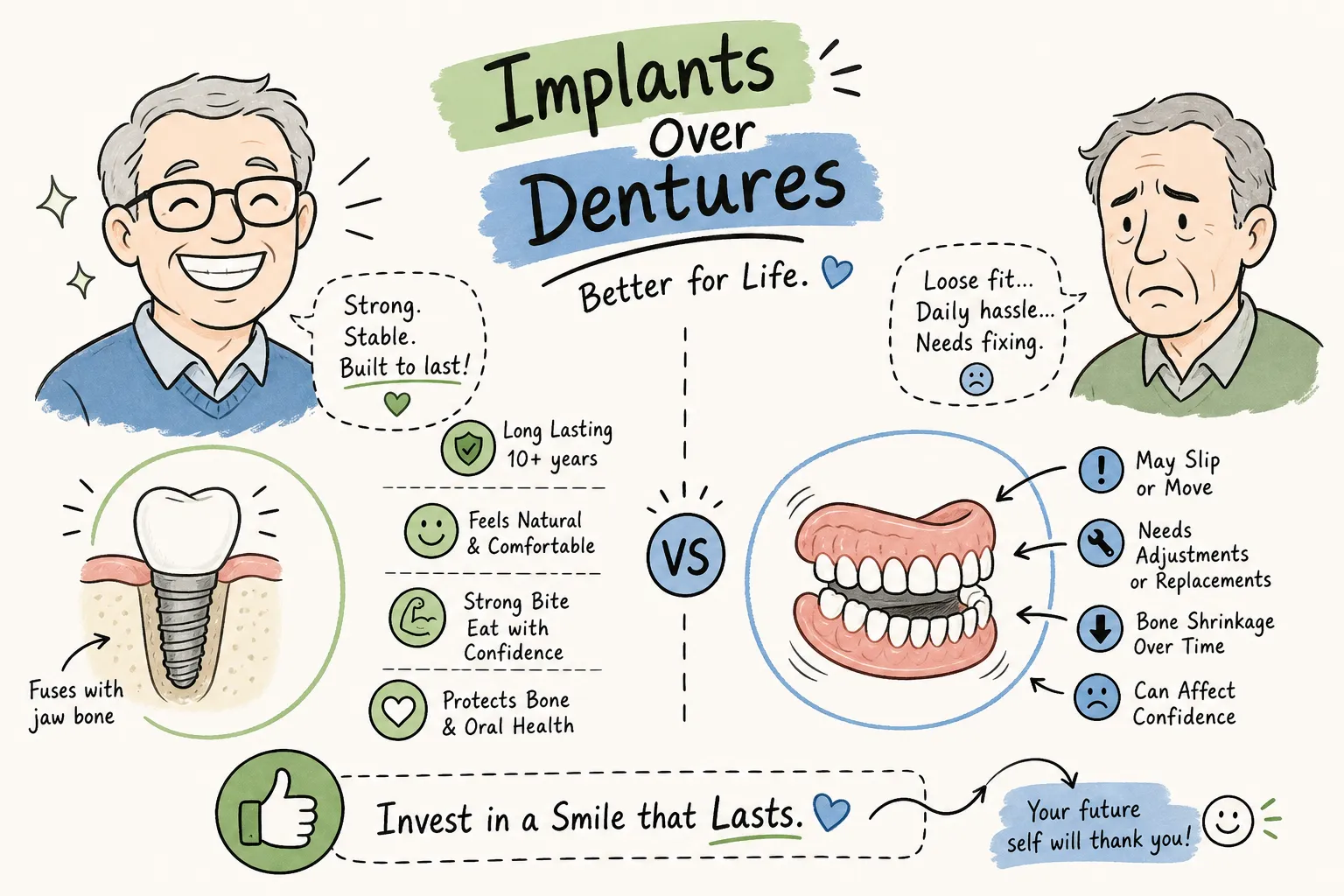
Picture this: you’ve just been told you need to replace a missing tooth, or perhaps several. You’re looking at two very different price tags and wondering why dental implants are better than dentures long term when dentures cost a fraction of the price right now.
The 20-year cost comparison most people get wrong
The upfront price difference between implants and dentures is real, and it makes removable dentures look like the smart financial decision. The problem is that most patients stop the comparison right there, at the initial quote, rather than projecting that cost forward over two decades.
Upfront cost versus lifetime total
A single dental implant in Australia currently sits between $4,500 and $9,000, depending on location, complexity, and the implant system used. A full denture per arch runs $1,500 to $5,250 upfront. That gap looks enormous until you factor in what happens next. Over twenty years, a single implant typically costs $5,000 to $10,500 in total. A full denture over the same period accumulates to $6,000 to $21,000, and often more.
The hidden ongoing expenses of dentures
Understanding why dental implants are better than dentures long term is essential for making informed decisions about your oral health.
Denture wearers rarely budget for what comes after the initial fitting. Relines are needed every one to two years as the jaw changes shape beneath the prosthetic, costing $350 to $650 each time. Adhesives and cleaning products add roughly $150 per year.
When the numbers flip in implants’ favour
The implant post itself rarely needs replacement. Only the crown may need renewal after fifteen to twenty years, a manageable, one-off expense rather than a recurring cycle.
When considering why dental implants are better than dentures long term, it’s important to think about the functional benefits as well.
Why dental implants are better than dentures long term for jawbone preservation
In addition, many patients find themselves questioning why dental implants are better than dentures long term after experiencing the advantages firsthand.
Cost comparisons aside, the clinical argument for implants goes much deeper than dollars. Most patients are genuinely surprised to learn that wearing removable dentures actively accelerates bone loss in the jaw.
From a longevity perspective, why dental implants are better than dentures long term can significantly influence your choice.
Why removable dentures accelerate bone resorption
When a natural tooth root is removed, the jawbone no longer receives the functional stimulation it needs to maintain density. Without that stimulus, the body begins to resorb the bone, treating it as no longer necessary. Dentures rest on gum tissue and transmit minimal force to the underlying bone, so the resorption continues unchecked. The mandible (lower jaw) loses bone at roughly four times the rate of the upper jaw, and total vertical bone height loss can reach 5.2 mm over five years under a conventional full denture.
How implants act as prosthetic tooth roots
Titanium implants fuse directly with the jawbone through a process called osseointegration. Once integrated, they transfer chewing forces into the bone just as natural roots do, triggering the remodelling process that maintains bone density. A 2022 systematic review published in the International Journal of Oral and Maxillofacial Implants found that fixed implant prostheses limit marginal bone loss to as little as 0.13 mm in the first year, compared to 1.16 mm under a removable implant overdenture and considerably more under conventional dentures. That difference compounds significantly over a decade or two.
The long-term physical consequences of bone loss
Ongoing bone resorption under dentures isn’t just a clinical statistic, it shows up in the face. Patients experience a sunken, aged appearance around the cheeks and jaw as the underlying bone structure gradually diminishes.
How implants and dentures compare in everyday life
Every consultation should address why dental implants are better than dentures long term and how they affect daily life.
Clinical outcomes matter, but patients also want to know what it actually feels like to live with each option. The satisfaction data here is worth looking at directly, because the gap between implants and conventional dentures is larger than most people expect.
Patient satisfaction: what the research shows
A meta-analysis published in the Journal of Prosthetic Dentistry comparing implant overdentures with conventional dentures found that 48.3% of implant overdenture patients described themselves as “very satisfied” overall, versus just 6.9% of conventional denture wearers. These aren’t marginal differences, they reflect a genuinely different daily experience.
The biggest drivers of that gap were stability and comfort. On stability, 44.8% of implant overdenture patients rated themselves “very satisfied,” compared to just 1.7% of conventional denture wearers. On comfort, the figures were 41.4% versus 5.2%. When you consider why dental implants are better than dentures long term from a quality-of-life standpoint, patient-reported outcomes like these carry significant weight.
Ultimately, the question of why dental implants are better than dentures long term is one that should guide your decision-making process.
Chewing efficiency and food freedom
Implant solutions average a chewing efficiency rating of 8.4 out of 10, compared to 5.9 out of 10 for conventional dentures. In practical terms, that’s the difference between eating steak, crunchy vegetables, or an apple without hesitation, versus planning meals around what the dentures can handle. Over years, a restricted diet has real consequences for nutrition and quality of life, not just convenience.
Speech, confidence, and day-to-day stability
Dentures that shift or slip during conversation affect confidence in ways that are difficult to quantify but very real for patients experiencing it. 37.9% of implant overdenture patients report being “very satisfied” with their speaking ability, compared to 17.2% of conventional denture wearers. Fixed implant prostheses score highest here because the prosthetic is anchored and doesn’t move, allowing for natural speech and greater self-assurance in professional and social settings.
Many patients report that understanding why dental implants are better than dentures long term has changed their perspectives.
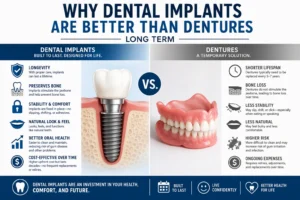
Longevity and maintenance: a long-term view of implant survival rates
The most reliable way to assess long-term value is implant survival rate data, and implants have unusually strong numbers at every time point.
Implant survival rates at 5, 10, and 20 years
Dental implants achieve survival rates of 95 to 98% at five years, 96% at ten years, and 88 to 92% at twenty years. Some implants are still functioning at 38 to 40 years, with one large cohort study reporting a survival rate of 95.6% at that mark. There is no comparable long-term survival data for conventional dentures because they’re not designed for decades of continuous use. Most patients require two to four replacement sets over the same period.
Day-to-day maintenance: implants versus dentures
Implant maintenance looks exactly like caring for natural teeth: twice-daily brushing, flossing, and regular professional check-ups.
Complication rates and what they mean for patients
To understand complication data clearly, it helps to distinguish between implant failures and prosthetic complications. Implant failures, where the implant itself doesn’t integrate or is lost, run at 5 to 10%, concentrated mostly in the first year and strongly associated with smoking and poor osseointegration. On the prosthetic side, implant-fixed dentures carry a complication rate of 7.9% over eight years, compared to 40.7% for tooth-supported fixed prostheses over the same period. Denture complications are more frequent but generally less serious: tissue irritation, pressure sores, and progressive loosening. Implant complications tend to be structural and addressable early; denture complications are chronic and cumulative.
Addressing why dental implants are better than dentures long term can help alleviate concerns about the process.
Are you a suitable candidate for dental implants?
Understanding that implants outperform dentures over time is useful. Knowing whether you’re a suitable candidate is the next practical question, and it’s one worth demystifying.
What a good candidate looks like
Exploring why dental implants are better than dentures long term can also reveal options you may not have considered.
Most healthy adults are candidates for dental implants. The core requirements are sufficient jawbone density to anchor the implant, healthy gum tissue, and a commitment to oral hygiene following the procedure. At Sunbury Dental Group, digital X-rays and a thorough clinical review are typically all that’s needed to determine suitability in the first visit, without any need to travel to Melbourne for specialist imaging.
Factors that can affect implant outcomes
Smoking significantly increases complication risk and failure rates; it reduces blood flow to the gums and jawbone and impairs healing. Uncontrolled diabetes interferes with osseointegration and the body’s ability to integrate the implant effectively.
When dentures are still a reasonable choice
Honesty matters here: for patients with severe systemic illness, significantly compromised bone volume, or financial constraints that make implants genuinely unworkable, dentures remain a functional option.
As you weigh your options, remember why dental implants are better than dentures long term and how that aligns with your goals.
Questions to take to your next dental appointment
The most productive appointments happen when patients arrive already knowing what to ask. Use the list below as a starting point for any conversation about tooth replacement options.
The questions worth asking your dentist
- Am I a suitable candidate based on my current bone density and overall health?
- What is the total treatment cost, including any bone grafting or preparatory work?
- What implant system do you use, and what does the full process and timeline look like?
- What are the realistic risks given my specific health history?
Asking these questions might help clarify why dental implants are better than dentures long term for you.
- Are there implant-supported overdenture options if a fully fixed restoration isn’t the right fit for me?
- What does aftercare look like, and how often will I need review appointments?
Finding a trusted local implant provider in Sunbury
Many patients across Sunbury, Diggers Rest, Riddells Creek, and Gisborne assume they need to travel into Melbourne for implant treatment. That’s not the case. Sunbury Dental Group, led by Dr Nita Kumari, offers implant consultations locally, with transparent treatment planning, flexible payment options, and digital X-rays and advanced imaging to assess candidacy accurately from the very first appointment. There’s no referral maze and no long drive into the city for an initial answer.
By understanding why dental implants are better than dentures long term, you can make a well-informed choice.
For anyone weighing up dental implants versus dentures, that first local consultation cuts through the noise of general cost estimates and online comparisons. You leave with a personalised picture of your options, your suitability, and what the real numbers look like for your specific situation.
The bottom line
So why are dental implants better than dentures long term? It comes down to three compounding advantages: they preserve jawbone that removable dentures actively erode.
These insights into why dental implants are better than dentures long term can significantly impact your quality of life.
The numbers are only useful once they’re applied to your specific situation, and that’s exactly what a consultation is for. Use the questions above as your starting point, then book an appointment and get personalised answers based on your actual clinical picture.
In conclusion, understanding why dental implants are better than dentures long term is crucial for your oral health journey.
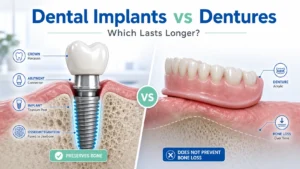
FAQ Why Dental Implants Are Better Than Dentures Long Term
Are dental implants really cheaper than dentures in the long run?
Yes — over a 20-year period, a single implant typically costs $5,000 to $10,500 total, while a full denture accumulates to $6,000 to $21,000 or more due to recurring relines and adhesives. The upfront price gap (implants at $4,500–$9,000 vs. dentures at $1,500–$5,250 per arch) narrows or reverses once ongoing denture maintenance is factored in.
Why do dentures need to be replaced or adjusted so often?
Dentures require relines every one to two years, costing $350 to $650 each time, because the jawbone shape changes beneath the prosthetic as bone resorption progresses. Patients also spend roughly $150 per year on adhesives and cleaning products, expenses that don’t apply to implants.
Do dentures cause bone loss in the jaw?
Yes — removable dentures accelerate bone resorption because they rest on gum tissue and transfer minimal force to the jawbone, so the body resorbs bone it no longer detects as functionally necessary. The lower jaw loses bone at roughly four times the rate of the upper jaw, with vertical bone height loss reaching up to 5.2 mm over five years under a conventional full denture.
How do dental implants prevent bone loss compared to dentures?
Implants fuse with the jawbone through osseointegration and transfer chewing forces the same way natural tooth roots do, which stimulates bone remodelling and preserves density. A 2022 systematic review found fixed implant prostheses limit marginal bone loss to just 0.13 mm in the first year, compared to 1.16 mm for removable implant overdentures and significantly more under conventional dentures.
Are patients actually more satisfied with implants than dentures?
Yes, by a wide margin — 48.3% of implant overdenture patients report being “very satisfied” overall, compared to just 6.9% of conventional denture wearers. The largest gaps appear in stability (44.8% vs. 1.7% very satisfied) and comfort (41.4% vs. 5.2% very satisfied).
Can you eat normally with dental implants versus dentures?
Implants score an average chewing efficiency rating of 8.4 out of 10, compared to 5.9 out of 10 for conventional dentures. This translates to being able to eat steak, crunchy vegetables, or an apple without hesitation, rather than restricting your diet to what dentures can manage.
How long do dental implants actually last?
Dental implants show survival rates of 95–98% at five years, 96% at ten years, and 88–92% at twenty years, with some documented cases still functioning after 38–40 years. There’s no equivalent long-term survival data for dentures because they aren’t designed for decades of continuous use — most denture wearers need two to four replacement sets over the same period.
What’s the failure or complication rate for dental implants?
Implant failure — where the implant doesn’t integrate or is later lost — occurs in 5 to 10% of cases, concentrated mainly in the first year and strongly linked to smoking and poor osseointegration. Prosthetic complications on implant-fixed dentures run at 7.9% over eight years, far lower than the 40.7% rate seen with tooth-supported fixed prostheses over the same period.
Am I a suitable candidate for dental implants?
Most healthy adults qualify if they have sufficient jawbone density, healthy gum tissue, and commit to good oral hygiene afterward. Smoking and uncontrolled diabetes are the two biggest risk factors, as both impair healing and interfere with osseointegration.
Are dentures ever still the better choice?
Yes — dentures remain a reasonable option for patients with severe systemic illness, significantly compromised bone volume, or genuine financial constraints that make implants unworkable. For most other patients, though, the long-term cost, bone preservation, and satisfaction data favor implants.