Dental Veneers in Sunbury: The Complete Guide to a Confident New Smile
This guide walks you through everything you need to know about dental veneers in Sunbury — from what they actually are, to the types available, what the process looks like, and how much they typically cost in Victoria. Whether you’re just starting to explore your options or you’re nearly ready to book a consultation, you’ll find straightforward, honest information here. No confusing dental jargon, no pressure — just the facts to help you make a decision that feels right for you.
Key Highlights
In this article, you’ll discover:
- What dental veneers are and how they work
- The difference between porcelain and composite veneers
- What the veneer fitting process actually involves
- How much dental veneers typically cost in Sunbury and across Victoria
- Whether veneers are the right fit for your smile goals
- How to care for your veneers so they last as long as possible
- Why choosing a trusted local cosmetic dentist in Sunbury matters
What Are Dental Veneers, Exactly?
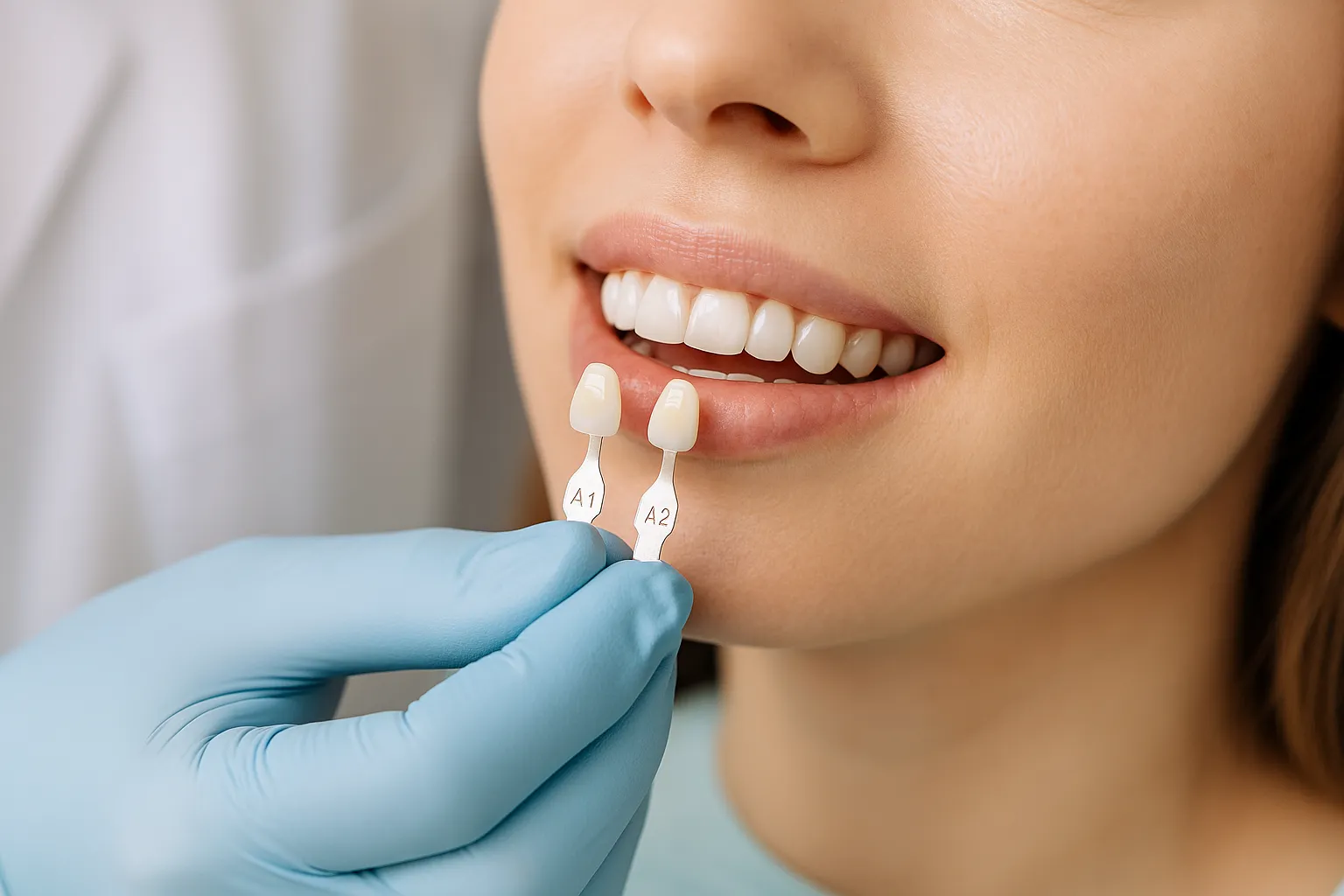
Think of a dental veneer as a very thin, custom-made shell that bonds to the front surface of your tooth. It changes the shape, colour, or size of that tooth sometimes all three at once.
Veneers are one of the most versatile tools in cosmetic dentistry. They can address a whole range of concerns: teeth that feel too short, too gapped, too stained, or a little uneven. For many people, a small number of strategically placed veneers completely changes the way they feel about their smile.
They’re not a fix for every dental problem but when they’re the right option, the results can be genuinely life-changing.
Are You a Good Candidate for Veneers?
Not everyone is automatically suited to veneers, and any dentist worth their salt will tell you that upfront.
Veneers tend to work best for people who:
- Have healthy teeth and gums with no active decay or gum disease
- Want to address cosmetic concerns like discolouration, chips, or minor gaps
- Have sufficient enamel on their teeth (since a small amount is typically removed during preparation)
- Are committed to good oral hygiene and regular dental check-ups
- Have realistic expectations about what veneers can and can’t do
If you have significant alignment issues, tooth grinding (bruxism), or other structural problems, your dentist may recommend addressing those first or suggest a different treatment path altogether.
Porcelain vs. Composite Veneers: Which One’s Right for You?
This is the question most people ask first and it’s a good one.
There are two main types of veneers available in Australia: porcelain and composite resin. Each has real advantages, and the best choice depends on your goals, your timeline, and your budget.
Porcelain Veneers
Porcelain veneers are crafted in a dental laboratory to precisely match your tooth shape and desired shade. The material mimics the translucency of natural tooth enamel beautifully, which is why they’re considered the gold standard in cosmetic dentistry.
They typically require two appointments one to prepare and take impressions of your teeth, and a second to bond the finished veneers in place. The investment is higher, but so is the longevity.
Composite Veneers
Composite veneers use a tooth-coloured resin applied and sculpted directly onto your teeth often in a single visit. They cost less upfront and are easier to repair if damaged. The tradeoff is that they don’t last as long and can be more prone to staining over time.
Here’s a quick look at how they stack up:
| Feature | Porcelain Veneers | Composite Veneers |
| Material | Dental ceramic | Composite resin |
| Appointments needed | Usually 2 | Usually 1 |
| Lifespan | 10–15 years | 5–7 years |
| Stain resistance | Excellent | Moderate |
| Repairability | Requires replacement | Easy to repair |
| Cost per tooth (AUD) | $1,200–$2,500 | $450–$1,000 |
| Reversibility | Permanent | More reversible |
What Does the Dental Veneer Process Look Like?
Getting veneers isn’t something that happens in a single rushed appointment. It’s a considered, step-by-step process and that’s a good thing.
Here’s what a typical porcelain veneer journey looks like:
- Initial consultation — Your dentist assesses your teeth, discusses your goals, and determines whether veneers are suitable for you. This is also where questions about costs and timelines get answered honestly.
- Treatment planning — Your dentist maps out which teeth will be treated and what outcome you’re aiming for. Some practices use digital smile previews to help you visualise the end result.
- Tooth preparation — A thin layer of enamel is gently removed from the tooth surface to create space for the veneer. Local anaesthetic is used to keep you comfortable throughout.
- Impressions or digital scans — Your dentist takes precise measurements of your prepared teeth, which are sent to a dental laboratory where your custom veneers are crafted.
- Temporary veneers — While your permanent veneers are being made, temporary ones protect your teeth and give you a preview of the new look.
- Bonding appointment — Your dentist fits and bonds the finished veneers using a strong dental adhesive, making any final adjustments to ensure the fit and bite feel natural.
- Follow-up check — A review appointment ensures everything has settled well and you’re happy with the outcome.
Composite veneers follow a shorter version of this process often completed within a single appointment since they don’t require lab fabrication
How Much Do Dental Veneers Cost in Sunbury?
Let’s be real, cost is one of the first things people want to know, and there’s no point dancing around it.
In Australia in 2026, the typical cost range is:
- Porcelain veneers: approximately $1,200–$2,500 per tooth
- Composite veneers: approximately $450–$1,000 per tooth
A full set covering six to ten teeth with composite veneers can range from roughly $2,700 to $12,000, depending on the practice and the complexity of the case. Porcelain full-set treatments sit at the higher end of that spectrum given the lab costs involved.
Several factors influence the final price:
- Number of teeth being treated — More veneers means a higher overall cost, though some practices offer package pricing for larger cases
- Material chosen — Porcelain is a more involved, laboratory-crafted product, which is reflected in the price
- The complexity of your case — Significant enamel issues, bite problems, or preparation requirements can add to the time and cost involved
- The experience and location of your dentist — Skilled cosmetic dentists with advanced training and equipment typically charge accordingly
It’s worth noting that dental veneers are generally considered a cosmetic procedure and are not typically covered by Medicare or most private health funds. Some health funds may provide a partial rebate under major dental cover — always check directly with your fund before your appointment.
Veneers vs. Other Cosmetic Options
Veneers aren’t the only way to refresh your smile — they’re just one piece of a bigger cosmetic toolkit.
If you’re weighing up your options, here’s how veneers compare to some alternatives:
- Teeth whitening — A great starting point for staining and discolouration, but it doesn’t change tooth shape or fix chips. Often used alongside veneers or as a standalone treatment.
- Tooth bonding — Similar to composite veneers in many ways; uses resin to repair or reshape individual teeth. A good option for minor fixes at a lower cost.
- Enamel shaping (contouring) — Removes tiny amounts of enamel to smooth rough edges or refine the shape of a tooth. Works best on minor imperfections.
- Orthodontics — If alignment is the core issue, braces or clear aligners address the underlying problem rather than masking it.
Your dentist will talk through all of these with you the goal is always to find the right treatment for your situation, not the most expensive one.
How Long Do Veneers Last?
With proper care, porcelain veneers typically last anywhere from 10 to 15 years. Composite veneers have a shorter lifespan of around 5 to 7 years before they may need refreshing or replacement.
The big variable? How well you look after them.
Here are some practical tips to protect your investment:
- Brush and floss daily — veneers don’t decay, but the natural tooth structure underneath can
- Avoid biting hard objects — ice, fingernails, pen lids, bottle caps — these can chip both veneers and natural teeth
- Wear a night guard if you grind your teeth — bruxism is one of the fastest ways to damage veneers
- Limit heavily staining foods and drinks — especially important for composite veneers, which are more porous than porcelain
- Attend regular dental check-ups — your dentist can monitor your veneers and catch any wear or issues early
Why Choose a Local Dentist for Your Veneers in Sunbury?
There’s real value in choosing a dentist close to home especially for a multi-appointment treatment like veneers.
Having your care managed by a local cosmetic dentist in Sunbury means you’re seeing the same team throughout your entire treatment. They know your history, they understand your goals, and if anything needs attention down the track, you’re not dealing with a stranger. That continuity matters.
At Sunbury Dental Group, we take the time to understand what you’re hoping to achieve before recommending any treatment. We believe informed patients make the best decisions and our job is to give you the information you need, not just to fill a chair.
Around 64% of Australians are concerned about the appearance of their teeth, according to data from the Australian Dental Association. That’s a lot of people quietly wishing their smile felt different. If that sounds familiar, you’re in good company and you don’t have to stay there.
Conclusion
Dental veneers can be a genuinely transformative option but the best outcomes come when you go in with clear expectations, the right information, and a dentist you actually trust.
Here’s what matters most: veneers work best when your oral health is in good shape, when the treatment is tailored to your specific goals, and when you understand what’s involved including the cost, the process, and the commitment to ongoing care. Porcelain veneers offer durability and exceptional aesthetics for those looking for a long-term investment. Composite veneers deliver a more affordable, quicker path that still produces impressive results.
If you’re somewhere in the Sunbury area and you’ve been quietly thinking about changing your smile, the best first step is simply having a conversation.
Disclaimer:
The information provided in this blog is for general informational purposes only and should not be interpreted as professional dental advice. Every dental situation is unique, and individual circumstances can vary significantly. Patients should not rely solely on the content provided here to make decisions about their oral health. For personalized assessment, diagnosis, and treatment, you should consult a qualified dentist or healthcare professional. Sunbury Dental Group accepts no responsibility for any loss, damage, or actions taken based on the information contained in this blog.
Frequently Asked Questions - Dental Veneers Sunbury
How much do dental veneers cost in Sunbury?
Veneer costs in Sunbury are broadly in line with national averages across Victoria. Porcelain veneers generally range from $1,200 to $2,500 per tooth, while composite veneers typically fall between $450 and $1,000 per tooth. The total cost depends on how many teeth are involved, the material chosen, and the complexity of your individual case. Your dentist will provide a detailed treatment quote after your consultation.
Are dental veneers permanent?
Porcelain veneers are considered a permanent treatment because a thin layer of enamel is removed during preparation that change to your natural tooth is irreversible. Composite veneers involve less enamel removal and are considered more reversible by comparison. This is why it’s so important to have a thorough consultation and feel completely confident in your decision before proceeding.
How long do dental veneers last?
With good oral hygiene and regular dental visits, porcelain veneers can last 10 to 15 years or longer. Composite veneers typically last 5 to 7 years before they need to be touched up or replaced. Lifestyle factors like whether you grind your teeth or regularly consume staining foods also affect how long your veneers remain in top condition.
Do dental veneers look natural?
Yes when placed well, veneers look very natural. Porcelain in particular mimics the translucency of real tooth enamel, reflecting light in a way that’s almost indistinguishable from natural teeth. Shade selection is carefully matched to your surrounding teeth (or your desired outcome), and the shape is customised to your facial features. Good cosmetic dentistry should look like you just the best version.
Does getting veneers hurt?
Most patients find the preparation process comfortable. Local anaesthetic is used during tooth preparation, so discomfort during the procedure is minimal. Some sensitivity is normal in the days following preparation while you’re wearing temporary veneers, but this typically settles once the permanent veneers are bonded in place. Your dentist will guide you through what to expect at each stage.
Can I whiten my veneers if they stain?
Standard teeth whitening treatments don’t change the colour of porcelain or composite veneers the active whitening agents only work on natural tooth enamel. If your veneers have discoloured significantly over time, your dentist will discuss your options, which may include polishing or replacement depending on the material and condition. This is another reason why proper care from day one makes such a difference.
What's the difference between veneers and dental bonding?
Dental bonding uses composite resin to repair or reshape individual teeth it’s essentially the same material as composite veneers, but typically applied to a smaller area to fix a specific issue like a chip or minor gap. Veneers cover the entire visible front surface of the tooth and are used for more comprehensive aesthetic improvements. Bonding is generally quicker and cheaper; veneers offer a more complete and longer-lasting result.