
You search “dental veneers cost Australia” and within seconds, you’re looking at prices ranging from $300 to $3,500 per tooth with no explanation for the difference. That gap isn’t a typo, and it isn’t one clinic trying to rip you off while another is doing you a favour. It reflects genuine differences in materials, clinician experience, laboratory quality, and how many teeth are involved. Without context, those numbers are almost useless for planning.
This article breaks down exactly what you’re paying for at each price point. You’ll find 2026 dental veneers cost by material type and city, the main factors that push a quote up or down, what an honest treatment plan should include, and how financing works in practice. Some clinics offer dedicated smile consultations so patients have real, itemised numbers before they commit to anything. By the end of this article, you’ll have the context to make that consultation count.
Dental veneers cost per tooth in 2026: what each type actually charges
Material type is the single biggest driver of your initial quote. Before anything else, you need to know which material you’re being quoted for, because the price difference between types is substantial, and it shapes every other conversation about dental veneers cost.
Composite veneers: the most accessible starting point
Composite veneers sit in the $300 to $1,500 per tooth range in 2026, with most patients paying between $400 and $1,200. The lower end covers direct composite applied chair-side in a single appointment, while indirect composite, fabricated in a lab and bonded at a second visit, sits closer to the upper end of that range. Most patients can expect a lifespan of 4 to 8 years.
Composite is a genuine clinical option, not just a compromise for patients on a tight budget. It’s repairable if chipped, reversible in some cases, and can produce excellent results in the right clinical situation. The trade-off is that it stains more readily than porcelain, needs more frequent maintenance, and will require replacement sooner.
Porcelain and ceramic veneers: the longer-term investment
Porcelain veneers, typically made from lithium disilicate, often called e.max, cost between $1,200 and $2,800 per tooth nationally, with a common average of $1,500 to $2,000. Ceramic and zirconia options run in a similar range of $1,200 to $3,000 depending on the clinic and material grade. The term “ceramic” is used loosely across the industry, so it’s worth asking your dentist exactly which material they’re using.
The higher upfront cost of veneers per tooth reflects a lifespan of 10 to 20 years, strong stain resistance, and a finish that closely resembles natural enamel. Porcelain cannot be repaired if it chips or cracks; it must be replaced entirely. With proper care, though, many patients won’t face replacement for 15 years or more.
Dental veneers cost by city: how location changes what you pay
Where you live plays a real role in what you pay. Sydney clinics typically charge $1,800 to $3,500 per tooth for porcelain veneers, Melbourne runs $1,600 to $2,600, Brisbane sits at $1,500 to $2,400, and regional Australia generally falls between $1,200 and $2,200. Suburban clinics within major cities can price 10 to 20 per cent lower than their CBD counterparts due to lower operating costs. (These figures are indicative ranges drawn from publicly available market data and may vary between individual practices.)
Those differentials compound quickly when you’re treating a full smile. An 8-tooth veneer case in Sydney can cost $16,000 to $28,000, while the same treatment in regional Victoria or suburban Melbourne could come in significantly lower. For patients in areas like Sunbury, this is a real financial advantage worth factoring into the decision. The dental veneers cost in Sunbury VIC, for instance, will typically align with suburban Melbourne pricing rather than inner-city rates.
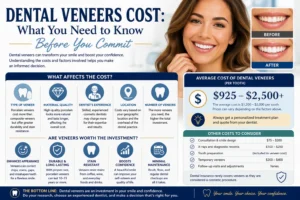
The factors that push your total dental veneers cost up or down
Price variation between quotes isn’t arbitrary. It reflects genuine differences in what you’re receiving and what your specific case requires.
Material quality and laboratory fees
The difference between a $2,000 veneer and a $3,500 veneer often comes down to material grade and where the veneers are fabricated. A clinic using a local boutique laboratory with high-strength lithium disilicate is going to charge more than one using a budget overseas facility with economy-grade pressed units. The practical difference shows up in colour accuracy, fit, and how long the veneers hold up over years of use, measurable clinical variables that matter well beyond the first year.
Number of teeth, prep work, and procedure complexity
Your total veneer treatment cost scales directly with the number of teeth being treated. The quote can also include preparatory work that’s genuinely necessary before any veneer can be placed. Gum disease treatment, for example, can range from a few hundred dollars for a straightforward clean to several thousand for advanced periodontal care; cavities need to be addressed before cosmetic work begins; and some cases require root canal treatment beforehand. Temporary veneers worn during the fabrication period are another cost item, though many clinics include these in the per-tooth fee.
None of these are hidden extras designed to inflate the bill. They’re clinical necessities for specific situations. A transparent quote will identify them clearly and cost them separately so you understand the full picture upfront.
Your dentist’s experience level and clinic overheads
A cosmetic dentist with advanced training, a strong case portfolio, and a reputation for precise aesthetic results charges more because the skill set is genuinely different from general dentistry. Urban clinics also carry significantly higher rent, wages, and equipment costs than regional practices. These factors are built into the quote as a reflection of real costs, not arbitrary markups. When you compare two quotes at very different price points, experience level and overhead are almost always part of the explanation.
What an honest veneer quote should include
Two quotes for “porcelain veneers” can look very different on paper while covering very different scopes of work. Knowing what should be included helps you evaluate them properly.
What the fee should cover from start to finish
A comprehensive veneer quote should cover the initial consultation and treatment planning, any imaging or diagnostic work required, tooth preparation, temporary veneers during the fabrication period, the fitting appointment, and a follow-up review. If a quote doesn’t itemise these stages, ask directly which are included and which are charged separately. A good clinician will expect those questions and answer them without hesitation.
When a low quote is a warning sign
A porcelain veneer quoted at $800 per tooth deserves scrutiny, not celebration. Low quotes can reflect offshore laboratory fabrication, a less experienced clinician, materials that won’t perform long-term, or a quote that excludes preparatory work you’ll need anyway. Transparent pricing means every stage is explained before you agree to anything. If a clinic can’t tell you what laboratory they use or why their price sits well below the market average, that’s worth noting.
Composite vs porcelain: which works out cheaper over time
The upfront price tells only part of the story. The total cost of veneers over your lifetime depends heavily on how often you’re replacing them.
Lifespan and maintenance requirements compared
Porcelain veneers last 10 to 20 years with minimal maintenance beyond regular professional cleans. Composite veneers last 4 to 8 years, require more frequent polishing and touch-ups, and are more prone to staining and chipping. One practical advantage composite holds is repairability: if a composite veneer chips, it can often be fixed chair-side. A porcelain veneer that breaks needs to be replaced entirely, a meaningful difference if it happens early in the veneer’s life.
The 20-year cost calculation
Consider a single tooth treated at age 35. At $800 per tooth for composite, replaced every 6 to 7 years, you’re looking at roughly three replacements across 20 years, bringing the total to around $2,400. A porcelain veneer at $1,800 per tooth, replaced once at the 15-year mark, comes to $3,600 over the same period, though often less if longevity holds. The gap narrows considerably when you account for maintenance costs and the fact that composite may need professional attention between replacements.
This doesn’t make porcelain the right choice for everyone automatically. For patients in their 20s or those wanting a conservative, lower-commitment option, composite makes real sense. The point is simply that upfront price and long-term cost are two different numbers, and both matter when you’re making a decision that affects your smile for decades.
How to split the dental veneers cost with a payment plan
Even when the investment is justified, the upfront number can be a genuine obstacle. Australian patients have access to a well-developed range of financing options, from short-term interest-free plans through to longer personal loan arrangements, which makes managing dental veneers cost more achievable across different budget sizes.
Short-term interest-free options for smaller cases
For single veneers or smaller composite cases in the $1,000 to $3,000 range, BNPL providers like Afterpay, Humm, and Smile Now offer interest-free repayments typically structured over 12 to 20 weeks. Repayments run around $150 to $250 per fortnight with no deposit required. These work well for straightforward cases but have credit limits that make them unsuitable for full smile makeovers.
Medium and long-term plans for full smile makeovers
For larger cases, DentiCare offers up to $12,000 interest-free with a 20 per cent deposit, with repayments around $231 per fortnight. MediPay extends up to $55,000 over 48 months interest-free, with approvals typically completed within 60 minutes (subject to provider terms and conditions at time of application). For full smile cases reaching $24,000 to $30,000, personal loan options like TLC apply interest at roughly 8 to 10 per cent per annum, which is worth factoring into your total cost planning.
Most private health funds do not cover purely cosmetic veneers, though trauma-related cases may qualify for partial cover under major dental extras. The majority of clinics can process finance applications on the same day as your consultation, so you don’t need to have funding arranged before you come in.
How to get an accurate quote before you commit
The best financial decision you can make is getting a thorough consultation before you agree to anything. A proper quote should reflect your specific teeth, your goals, and everything that needs to happen to achieve the result you’re after.
Questions worth asking at your consultation
Walk in prepared with a few direct questions: What material is being used, and which laboratory will fabricate the veneers? Is any preparatory work required, and if so, is it costed separately? What exactly is included in the per-tooth price? What does aftercare and review look like once the veneers are placed? These questions separate a structured treatment consultation from a quick sales pitch, and a good clinician will welcome all of them.
What transparent pricing looks like in practice
A clinic that handles cosmetic dentistry well will walk you through a full treatment plan, provide an itemised quote, and give you time to consider your options without pressure to decide on the day. Look for a practice that clearly explains the full cost of treatment, including materials, laboratory fees, and any preparatory work, before you agree to a single thing. At Sunbury Dental Group, smile consultations are structured with this in mind, so patients in Sunbury and the surrounding suburbs can understand what’s involved, what the expected timeline looks like, and what the outcome could realistically be. That kind of clarity is what makes a significant investment feel worth making.
The bottom line on dental veneers cost
Dental veneers cost follows a clear logic once you understand the variables. Material type, location, clinician experience, laboratory quality, and what’s included in the quote all shape the final number. Porcelain costs more upfront but often less over a 15 to 20 year horizon. Composite is a legitimate option for the right patient and the right case. Financing is widely available across a range of budget sizes, from single teeth through to full smile makeovers.
Choosing a clinic based on the cheapest number you found online, without knowing what that number includes, is where most people go wrong. A better first step is a consultation with a clinic that will give you a complete, itemised treatment plan and answer every question you bring in the door. If you want a precise dental veneers cost for your smile and you’re in Sunbury or the surrounding area, book a smile consultation at Sunbury Dental Group and leave knowing exactly what your options are.

FAQ
How much do dental veneers cost per tooth in Australia in 2026?
Dental veneers range from $300 to $3,500 per tooth in 2026, with the price gap reflecting genuine differences in materials, clinician experience, and laboratory quality rather than inconsistent pricing. Composite veneers sit at the lower end, while porcelain and ceramic options command a significant premium for their longer lifespan and durability.
How much do composite veneers cost?
Composite veneers cost between $300 and $1,500 per tooth in 2026, with most patients paying $400 to $1,200. Direct composite applied chair-side in a single visit sits at the lower end, while indirect composite fabricated in a lab and bonded at a second appointment costs closer to the upper end.
How much do porcelain veneers cost?
Porcelain veneers, typically made from lithium disilicate (e.max), cost between $1,200 and $2,800 per tooth nationally, averaging $1,500 to $2,000. Ceramic and zirconia alternatives run in a similar $1,200 to $3,000 range depending on the clinic and material grade.
What’s the difference between “ceramic” and “porcelain” veneers?
The term “ceramic” is used loosely across the dental industry and can refer to several different material grades, so it’s worth asking your dentist exactly which material they’re using. This distinction matters because material grade directly affects colour accuracy, fit, and how long the veneers last.
Cost by Location
Does location affect dental veneers cost?
Yes, location plays a significant role — Sydney clinics typically charge $1,800 to $3,500 per tooth for porcelain veneers, Melbourne runs $1,600 to $2,600, Brisbane sits at $1,500 to $2,400, and regional Australia generally falls between $1,200 and $2,200. Suburban clinics within major cities can price 10 to 20 percent lower than their CBD counterparts due to lower operating costs.
How much would a full smile makeover with veneers cost in Sydney vs Melbourne?
An 8-tooth veneer case in Sydney can cost $16,000 to $28,000, while the same treatment in regional Victoria or suburban Melbourne comes in significantly lower. Dental veneers cost in Sunbury VIC typically aligns with suburban Melbourne pricing rather than inner-city rates, offering a real financial advantage for local patients.
What Drives the Price
Why do veneer quotes vary so much between clinics?
Material grade and laboratory fabrication location are major drivers — a clinic using a local boutique laboratory with high-strength lithium disilicate charges more than one using a budget overseas facility with economy-grade pressed units. Clinician experience level and clinic overheads (urban rent, wages, equipment costs) also factor directly into the quote.
What preparatory work might be added to my veneer quote?
A veneer quote can include gum disease treatment, cavity treatment, or root canal work if needed before cosmetic work begins, along with temporary veneers worn during fabrication. These aren’t hidden extras — they’re clinical necessities for specific situations, and a transparent quote will identify and cost them separately.
Is a very low veneer quote a warning sign?
Yes, a porcelain veneer quoted at $800 per tooth deserves scrutiny rather than celebration. Low quotes can reflect offshore laboratory fabrication, a less experienced clinician, materials that won’t perform long-term, or a quote that excludes preparatory work you’ll actually need.
What a Quote Should Include
What should a comprehensive veneer quote cover?
A complete quote should cover the initial consultation and treatment planning, diagnostic imaging, tooth preparation, temporary veneers, the fitting appointment, and a follow-up review. If a quote doesn’t itemise these stages, ask directly which are included and which are billed separately.
What questions should I ask at a veneer consultation?
Ask what material is being used and which laboratory will fabricate the veneers, whether preparatory work is required and costed separately, exactly what’s included in the per-tooth price, and what aftercare and review looks like. These questions separate a structured treatment consultation from a quick sales pitch.
Composite vs Porcelain Long-Term
Which lasts longer, composite or porcelain veneers?
Porcelain veneers last 10 to 20 years with minimal maintenance beyond regular cleans, while composite veneers last 4 to 8 years and need more frequent polishing and touch-ups. Composite is repairable chair-side if chipped, but a porcelain veneer that breaks must be replaced entirely.
Is porcelain or composite cheaper over 20 years?
At $800 per tooth, composite replaced every 6 to 7 years totals roughly $2,400 over 20 years, while porcelain at $1,800 per tooth replaced once at 15 years totals around $3,600 over the same period. The gap narrows once maintenance costs are factored in, and composite remains a legitimate choice for younger patients or those wanting a lower-commitment option.
Financing Options
Can I pay for veneers in instalments?
Yes, for smaller cases in the $1,000 to $3,000 range, BNPL providers like Afterpay, Humm, and Smile Now offer interest-free repayments over 12 to 20 weeks with no deposit required. For larger cases, DentiCare offers up to $12,000 interest-free with a 20 percent deposit, while MediPay extends up to $55,000 over 48 months interest-free.
Does private health insurance cover veneers?
Most private health funds do not cover purely cosmetic veneers, though trauma-related cases may qualify for partial cover under major dental extras. Most clinics can process finance applications on the same day as your consultation, so funding doesn’t need to be arranged beforehand.
Choosing a Clinic
Does Sunbury Dental Group offer veneer consultations?
Yes, Sunbury Dental Group offers structured smile consultations so patients in Sunbury and surrounding suburbs understand what’s involved, the expected timeline, and realistic outcomes before committing. Their consultations provide a full, itemised treatment plan covering materials, laboratory fees, and any preparatory work upfront.