Invisalign vs Braces: Which Is Right for You? (Sunbury Dentist's Honest Guide)
Deciding between Invisalign vs braces is one of the most common questions we hear from families across Sunbury, Diggers Rest, Riddells Creek, and the surrounding areas. This guide walks you through what actually separates the two options from how they work and how long they take, to what they cost and who each one suits best. We’ve kept it practical and honest, because you deserve real answers, not a glossy brochure.
Key Highlights
In this article, you’ll discover:
- The core differences between Invisalign and traditional braces — and why it’s not just about looks
- A side-by-side comparison of metal braces, ceramic braces, and clear aligners
- Realistic treatment timelines for each option
- Current Australian cost ranges for both treatments
- Which option suits kids, teens, and adults — and why it’s not one-size-fits-all
- What families in Sunbury are actually choosing, and the reasons behind it
- The key questions to ask at your consultation before committing to either path
What Are the Key Differences Between Invisalign and Braces?
If you’ve been googling “invisalign vs braces” at 11pm, you’re not alone. It’s one of the most searched orthodontic topics in Australia — and for good reason. Both options straighten teeth, but how they do it is completely different.
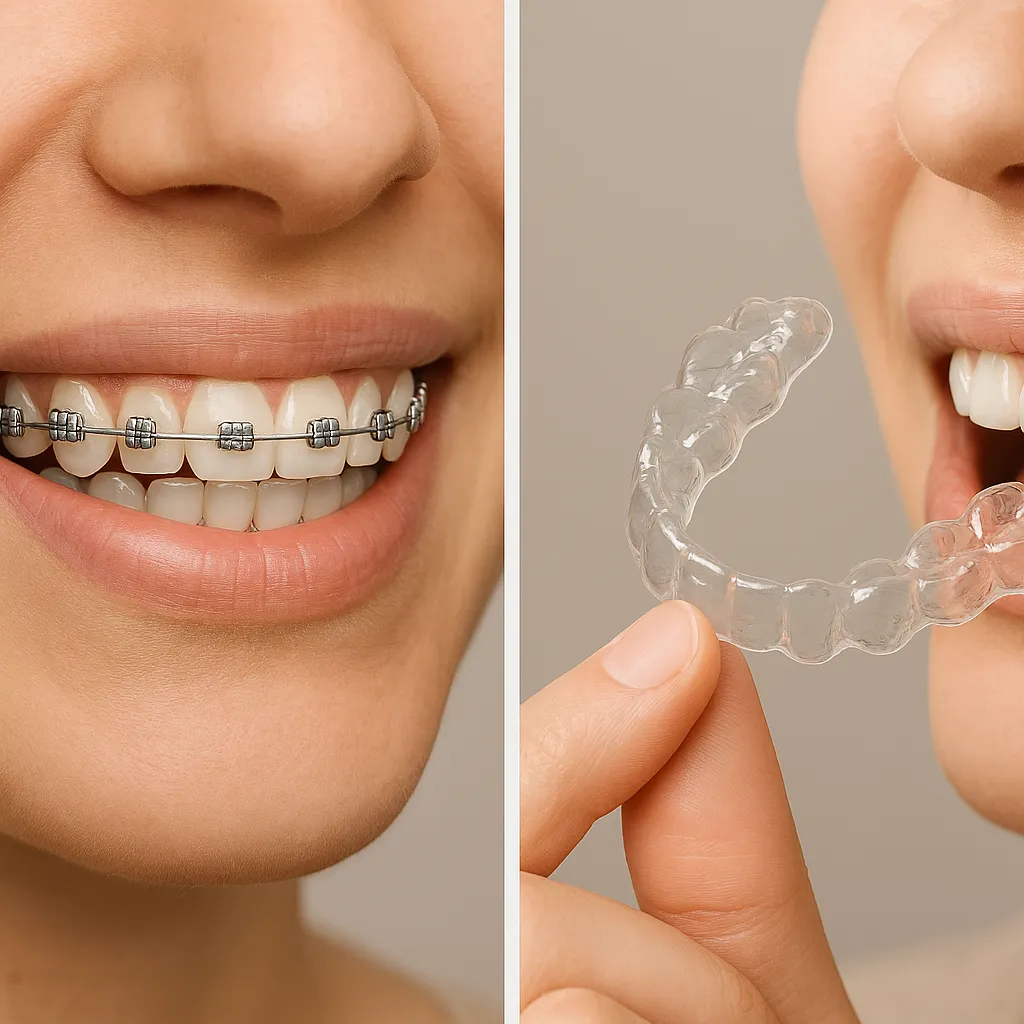
Traditional braces use metal brackets bonded directly to your teeth, connected by wires and elastic bands. Your dentist adjusts them at regular appointments to gradually guide your teeth into position. They work continuously — day and night — because they’re fixed in place.
Invisalign uses a series of custom-made, removable clear aligners. You swap to a new set roughly every one to two weeks, and each tray nudges your teeth a little further along. The big catch? They need to be worn 20–22 hours every day to work as intended.
Here’s a quick breakdown of what sets them apart:
- Visibility: Invisalign aligners are virtually invisible; traditional metal brackets are obvious; ceramic brackets blend in better but aren’t fully hidden
- Removability: Invisalign comes out for eating and brushing; braces stay on 24/7
- Cleaning: Braces require extra care around brackets teeth braces hardware; aligners let you brush and floss normally
- Suitability: Braces handle complex bite corrections more predictably; Invisalign suits mild to moderate cases well
- Discipline required: Invisalign outcomes depend heavily on consistent wear; braces work regardless of compliance
Neither one is universally “better.” It really does come down to your specific teeth, your lifestyle, and — honestly — your personality.
Comparison Table: Metal Braces vs. Ceramic Braces vs. Clear Aligners
| Feature | Metal Braces | Ceramic Braces | Invisalign (Clear Aligners) |
| Visibility | Highly visible | Tooth-coloured, less visible | Virtually invisible |
| Removable? | No | No | Yes |
| Comfort | Can irritate gums/cheeks | Smoother feel, less friction | Generally most comfortable |
| Treatment range | Mild to very complex | Mild to complex | Mild to moderate (complex cases vary) |
| Oral hygiene | More difficult to clean | More difficult to clean | Easy — remove and brush normally |
| Estimated cost (AUS) | ~$5,000–$9,000 | ~$6,500–$11,000 | ~$3,500–$9,000 |
| Best for | Complex cases, kids, teens | Appearance-conscious patients | Adults, image-conscious teens |
| Approx. treatment time | 12–24+ months | 12–24+ months | 6–18+ months |
Note: All costs are estimates only. Your actual treatment fee will be confirmed at your personalised consultation at Sunbury Dental Group.
Which Option Works Faster?
Speed is a big deal, especially for parents trying to plan around school photos, formals, and sports seasons. The honest answer? It depends on the complexity of your case.
For mild to moderate alignment concerns, Invisalign can often complete treatment in 6 to 18 months. Traditional braces typically run 12 to 24 months, sometimes longer for more complex corrections.
That said, Invisalign’s timeline is entirely dependent on how consistently the aligners are worn. Skip a few days here and there, and the whole schedule can blow out. Braces just keep working — no willpower required.
Here’s a rough guide to expected timelines:
- Minor crowding or small gaps — Invisalign: as little as 6–12 months; Braces: 12–18 months
- Moderate alignment issues — Invisalign: 12–18 months; Braces: 18–24 months
- Complex bite corrections — Invisalign may not be suitable; Braces: 24–36 months or more
Speed matters — but it shouldn’t be the only factor. A treatment that finishes in 12 months but doesn’t address your bite properly isn’t a win.
Cost Comparison: Invisalign vs Traditional Braces in Sunbury
Let’s talk money — because it’s the thing most people want to know but feel awkward asking.
In Australia, the rough cost ranges are:
- Metal braces: approximately $5,000–$9,000
- Ceramic braces (tooth-coloured brackets): approximately $6,500–$11,000
- Invisalign Express (minor corrections): approximately $3,500–$5,000
- Invisalign Lite (mild to moderate cases): approximately $5,000–$6,500
- Full Invisalign treatment: approximately $6,000–$9,000
Costs vary based on the complexity of your case, how many aligners are needed, and the length of treatment. Private health insurance with orthodontic cover may offset some of the cost — check your policy’s annual and lifetime limits before assuming what’s covered.
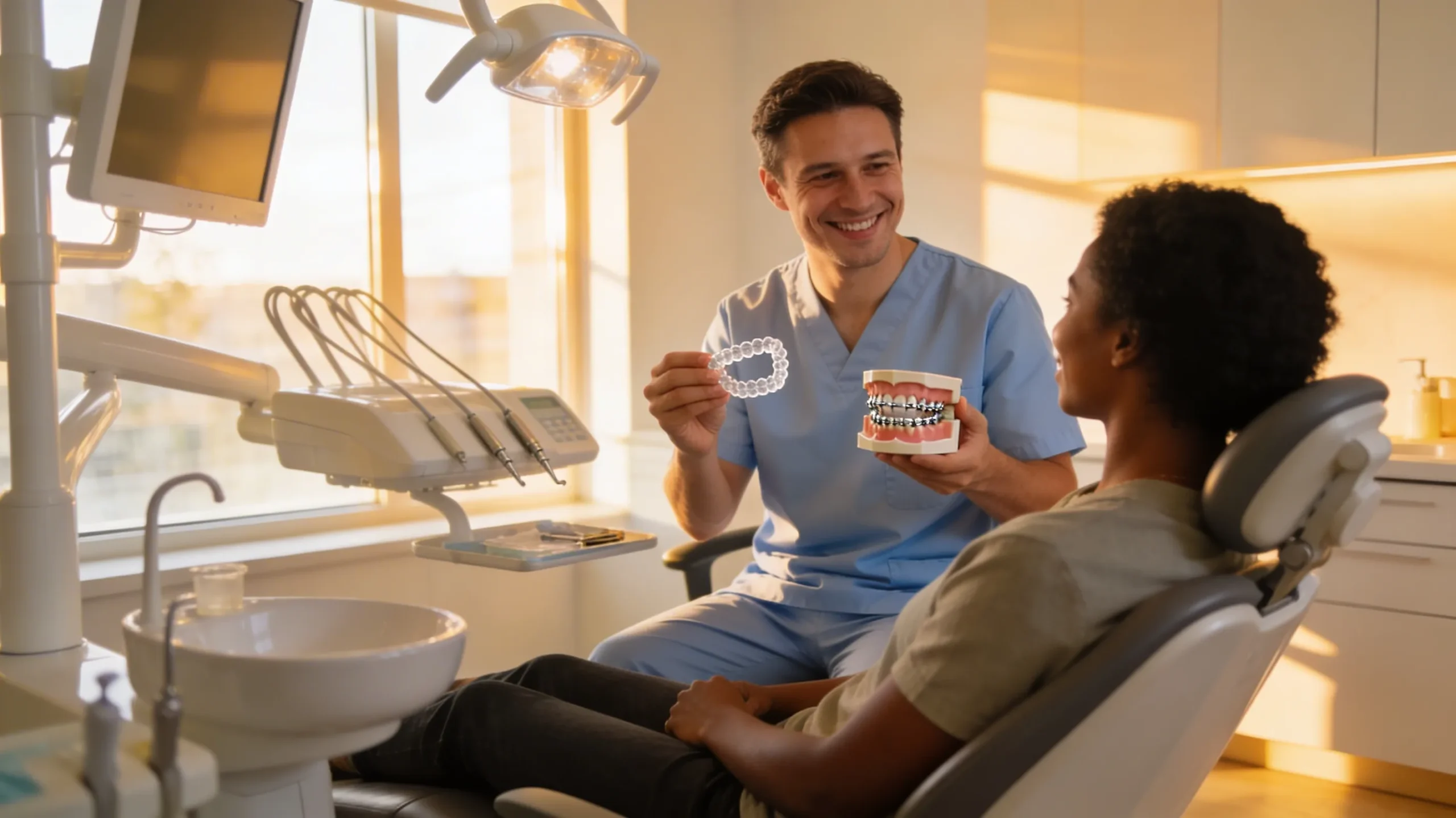
At Sunbury Dental Group, we offer personalised quotes after a thorough assessment — because putting a price on treatment before we’ve seen your teeth isn’t something we’re willing to do. We also offer flexible payment plan options to help make treatment more manageable for families.
Which Is Better for Kids, Teens, and Adults?
There’s no universal answer here, but there are some helpful patterns.
For younger children (under 12): Traditional braces are generally the more appropriate starting point. Most Invisalign cases require second molars to have fully erupted — typically around ages 12–13 — before clear aligner treatment can begin.
For teens: Both options work, but the right choice depends heavily on your teenager’s maturity and commitment. Invisalign Teen includes compliance indicators (small blue dots on the aligner that fade with wear) and eruption tabs to allow for still-developing teeth. But if your teen is likely to forget their aligners at soccer training, traditional brackets teeth braces may deliver more predictable results.
For adults: Invisalign is enormously popular, and for good reason. Most adult cases involve mild to moderate misalignment, and the ability to straighten teeth without anyone noticing fits seamlessly into professional life. Transparent tooth braces are also a fantastic choice for adults who had braces as a teen but experienced relapse over the years.
The key questions to discuss at your consultation:
- How complex is the movement required?
- How disciplined is the patient likely to be with aligner wear?
- Are there any bite issues (overbite, underbite, crossbite) that need addressing?
- What matters most — aesthetics, speed, cost, or comfort?
What Our Sunbury Patients Choose (and Why)
Families across Sunbury, Gisborne, Sunbury South, Bulla, and surrounding suburbs come to us at very different stages of the decision-making process. Some arrive already set on Invisalign; others arrive convinced braces are the only “real” option. Most leave somewhere in the middle — with a treatment plan tailored to their actual needs.
Adults and working professionals most frequently opt for Invisalign, citing the discreet appearance as their primary reason. Teens who are active in contact sports often lean toward Invisalign too — no metal in the mouth means less risk during a collision.
Parents of younger teens and children, especially those with more complex alignment issues, frequently find that traditional braces are the more clinically sound recommendation — and they’re often pleasantly surprised by how much modern brackets and wires have improved in comfort and appearance.
The bottom line? Both options work. The right one is the one that fits your teeth, your lifestyle, and your commitment level — and we’ll always give you an honest recommendation, not just the one that costs more.
Conclusion
The invisalign vs braces decision doesn’t have a single right answer — it has your right answer. For straightforward alignment in adults and image-conscious teens, Invisalign’s discreet, removable design is hard to beat. For younger patients or more complex bite corrections, traditional braces deliver consistent, reliable results that don’t depend on daily discipline. Cost-wise, both options sit in a similar range for most Australian families — so the decision really does come down to clinical suitability and lifestyle fit.
The smartest move? Book a consultation, get a proper assessment, and let our Sunbury team give you a recommendation based on your actual teeth — not a guess.
⚠️ Disclaimer: Prices listed in this article are indicative ranges based on current 2026 Victorian market data and are subject to change without notice. Individual treatment costs will vary based on clinical assessment findings, material selection, and case complexity. A personalised written treatment plan and quote will be provided following a consultation. This content is for general informational purposes only and does not constitute dental, medical, or financial advice. Sunbury Dental Group operates in accordance with AHPRA advertising guidelines, the Dental Board of Australia standards, and Australian Consumer Law.
Frequently Asked Questions - Invisalign vs Braces
Is Invisalign as effective as braces for straightening teeth?
For mild to moderate alignment concerns, Invisalign can produce results comparable to traditional braces when worn consistently for 20–22 hours daily. For more complex issues such as significant bite corrections or severe crowding traditional braces may offer greater clinical control. Your dentist will assess your specific needs before recommending either option
How much does Invisalign cost compared to braces in Australia?
Invisalign treatment in Australia currently ranges from approximately $3,500 for minor corrections up to $9,000 for comprehensive full-arch cases. Traditional metal braces typically fall between $5,000 and $9,000, while ceramic (tooth-coloured) braces can range from $6,500 to $11,000. Exact costs depend on your individual case complexity and will be confirmed at your consultation.
Can teenagers use Invisalign, or is it only for adults?
Invisalign Teen is specifically designed for adolescent patients and includes features such as compliance indicators and eruption tabs to accommodate still-developing teeth. Most teens can begin treatment once their second molars have come through, usually around ages 12–13. Whether Invisalign or braces is more suitable for your teenager will depend on the complexity of their case and their ability to wear aligners consistently.
How long does Invisalign treatment take compared to braces?
Invisalign treatment typically takes 6 to 18 months for mild to moderate cases, while traditional braces generally require 12 to 24 months. Invisalign timelines are heavily influenced by patient compliance — aligners must be worn 20–22 hours per day. Braces work continuously regardless of patient behaviour, which can make them more predictable for some people.n.
Does health insurance cover Invisalign or braces in Australia?
Many private health insurance policies with orthodontic extras cover both braces and Invisalign, though annual and lifetime limits apply and vary between funds. It’s worth calling your insurer directly to ask about your specific policy’s orthodontic benefit and any waiting periods that may apply. Our team at Sunbury Dental Group can also assist with health fund queries during your consultation.
Are clear aligners painful to wear?
Most patients find Invisalign aligners more comfortable than metal braces overall, as there are no brackets or wires to irritate soft tissue. It’s normal to feel some pressure or mild soreness when switching to a new aligner tray — this is a sign the teeth are moving as intended and usually settles within a day or two.
What happens if I lose an Invisalign aligner?
Lost aligners should be reported to your dentist promptly. Depending on where you are in your treatment sequence, your dentist may advise you to wear your previous set temporarily or move forward to the next tray. Replacement aligners can generally be ordered, though additional fees may apply, and extended periods without an aligner in place can slow your treatment progress.