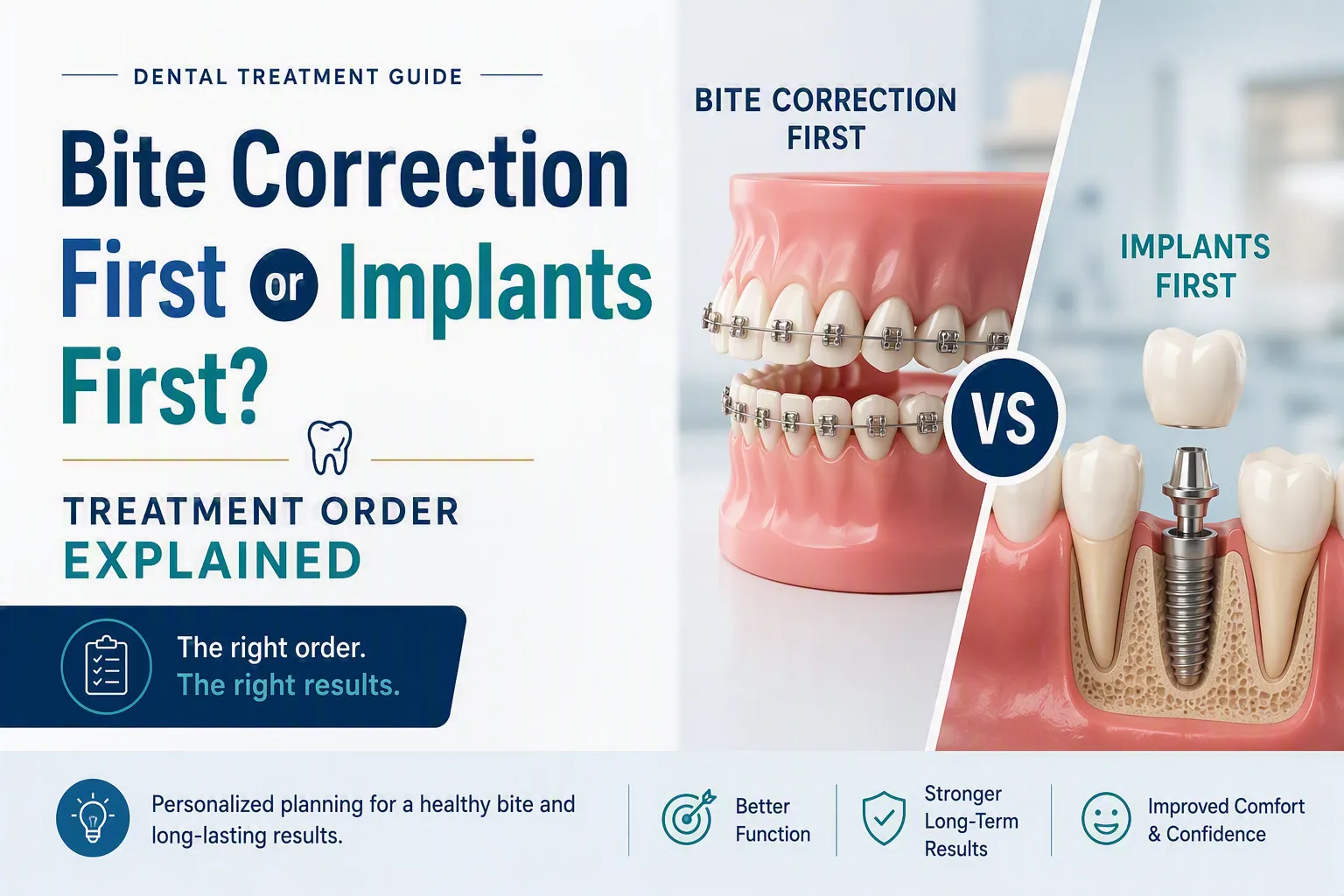
Orthodontics Before or After Implants? How Sunbury Families Can Get the Sequence Right
If you’ve got a missing tooth and a crooked bite, you’ve probably found yourself Googling the same question at 11pm: do you fix the bite first, or get the implant first? Honestly, it’s one of the more confusing corners of dentistry, and we don’t blame you for feeling a bit lost. The good news is that this isn’t a coin toss — there’s real clinical reasoning behind the answer, and it changes depending on your mouth.
We’re Sunbury Dental Group, and we work with families across Sunbury, Diggers Rest, Bulla, Gisborne, Riddells Creek and the surrounding areas who are trying to plan out exactly this kind of combined treatment. This article walks through how orthodontists and dentists actually decide the order, why it matters, and what it might look like for your own smile.
Overview: What This Article Covers
Here’s the short version before we get into it properly. We’ll explain why the order of orthodontics before or after implants genuinely changes your results, not just your appointment schedule. We’ll walk through the most common sequencing pattern (spoiler: straightening usually comes first), plus the exceptions where implants go in early. You’ll also get a plain-English look at treatment planning for missing teeth and a crooked bite, how a combined dental treatment plan comes together, and what questions to bring to your own consultation.
In This Article, You’ll Discover…
Why dental implants don’t move once they’re placed, and what that means for planning
The typical sequence dentists follow when treating missing teeth and misalignment together
When it actually makes sense to place an implant before orthodontic treatment
How sequencing dental treatment protects your long-term bite and your budget
What a combined dental treatment plan looks like from first visit to final crown
Local considerations for Sunbury families weighing up cost, timing, and travel to specialists
Questions worth asking your dentist before you commit to either pathway
Why the Order Actually Matters
Let’s get one thing straight early: teeth move, implants don’t. Once an implant fuses to your jawbone through a process called osseointegration, it’s fixed in place for good. Your natural teeth, on the other hand, can shift for your whole life, especially if there’s a gap sitting next to them.
That difference is the whole reason sequencing matters so much. If you place an implant into a gap before straightening the surrounding teeth, you might lock that implant into a position that no longer suits your bite once everything else has moved. Then you’re stuck. You can’t just nudge an implant sideways the way you can a natural tooth.
So dentists and orthodontists tend to ask one core question first: is this implant site already in the right spot, or does it need to shift before anything permanent goes in?
The Short Answer
In most cases, orthodontics comes first. Straightening your teeth creates the right spacing, angles, and bite alignment, and then the implant gets placed into a site that’s already correct. But “most cases” isn’t “all cases,” and that’s where things get interesting.
The Typical Treatment Sequence Explained
When someone comes in with both a missing tooth and a crooked bite, treatment planning for missing teeth and crooked bite issues usually follows a fairly predictable rhythm. Here’s how it tends to unfold.
Assessment and diagnosis — X-rays, scans, and a full bite analysis to map out what’s misaligned and where the gap sits.
Orthodontic phase — Braces or clear aligners shift your existing teeth into their ideal positions, opening up (or closing down) the space for the implant.
Space verification — Your orthodontist confirms the gap is the right width and angle before handing things over.
Implant placement — The implant post goes into the jawbone at the now-correct site.
Healing and integration — This can take a few months while the implant fuses with the bone.
Final restoration — A custom crown or bridge attaches to the implant, finishing the smile.
That’s the textbook order, and it’s the most common approach for a reason — it protects the final result and reduces the chance of redoing work down the track.
Why This Order Protects Your Investment
Think of it like laying floorboards in a renovation before you bolt down the kitchen island. If you install the island first and then realise the floor needs adjusting, you’re pulling up cabinetry you just paid for. Implants work the same way. Move the teeth, confirm the space, then commit to something permanent.
When Implants Go First: The Exceptions
Here’s where it gets less black-and-white. Sometimes placing the implant early — or even alongside orthodontic treatment — is actually the smarter move.
Anchorage needs: A mini-implant or temporary anchorage device can act as a fixed point that orthodontists use to move other teeth around it, almost like a scaffold.
Already-correct site: If the missing tooth’s gap is already in the ideal position and nothing around it needs to move, there’s no clinical reason to wait.
Long edentulous gaps: When a tooth’s been missing for years, the surrounding bone can shrink. Sometimes an earlier implant helps preserve bone volume before it deteriorates further.
Combined simultaneous cases: In select, carefully assessed situations, orthodontics and implant placement happen in parallel, with the orthodontist planning tooth movement around the implant’s known position.
None of this is a DIY decision, though. Whether you fall into an exception category depends entirely on a proper clinical assessment of your jaw, bone density, and bite — not on general advice you read online (including this article).
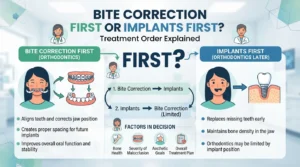
Building a Combined Dental Treatment Plan
A combined dental treatment plan isn’t just “do this, then do that.” It’s closer to project management for your mouth, with a dentist and often an orthodontist working from the same blueprint.
What Goes Into the Plan
Full diagnostic records: X-rays, 3D scans, photos, and bite impressions
A clear timeline showing how long each phase should realistically take
Coordination notes between your general dentist and any orthodontic specialist involved
A written treatment order (bite correction first or implants first) with the reasoning behind it
Cost breakdown for each stage, so there are no surprises partway through
Contingency notes for how the plan might shift if healing or movement doesn’t go exactly as expected
Who’s Usually Involved
Depending on complexity, your combined dental treatment plan might involve your regular dentist, an orthodontist, and sometimes an oral surgeon or periodontist for the implant surgical stage. Good communication between these providers is honestly one of the biggest predictors of a smooth outcome. If your dentist and orthodontist aren’t talking to each other, that’s a red flag worth raising.
Sequencing Dental Treatment: A Local Perspective for Sunbury Families
Sunbury’s grown fast over the last decade, and we’re seeing more families settle here who moved from other parts of Melbourne where they’d already started orthodontic treatment elsewhere. That creates a very real, very local version of this question: do you finish the braces you started in Point Cook, then come to us for the implant? Or is there a reason to pause?
For most Sunbury patients, distance and timing play a bigger role than people expect. A family in Bulla juggling school runs and footy training doesn’t want a treatment plan that drags on for three years if it doesn’t need to. That’s why we sit down early and map out a realistic timeline before any treatment starts, rather than deciding phase-by-phase as we go.
Common Local Scenarios We See
Teenagers finishing orthodontic treatment who then need a missing tooth (often from an accident) restored with an implant afterwards
Adults with long-standing gaps and mild crowding who need both corrected as part of a broader smile plan
Patients transferring from an orthodontist in the CBD who need a Sunbury-based dentist to coordinate the implant stage locally
If any of that sounds like your situation, it’s worth bringing your existing records to your first consult so we’re not starting from scratch.
[INTERNAL LINK: suggest anchor text “book a treatment planning consultation” linking to /patient/book-an-appointment/]
What Happens If You Skip the Sequencing Step
We get it — waiting is frustrating when you just want the gap filled. But skipping proper sequencing can cause a few headaches later.
The implant might end up angled awkwardly once neighbouring teeth shift
Your bite might not close evenly, leading to jaw strain or uneven wear
You could need corrective work down the line, which usually costs more than getting it right the first time
Healing timelines can clash, delaying your final crown anyway
None of this means implants-first is wrong. It just means it needs to be a decision, not a default.
Cost, Timeframes, and What to Ask Your Dentist
Every treatment plan is different, and costs vary depending on how many teeth are involved, whether you need braces or clear aligners, and the complexity of the implant surgery. We can’t quote a figure without seeing your mouth first — and honestly, any dentist who quotes a firm price before an assessment probably hasn’t looked closely enough. What we can tell you is that a written, itemised treatment plan should always be provided before you commit to anything, in line with your consumer rights under Australian Consumer Law.
Questions Worth Bringing to Your Consultation
Is my implant site already in the correct position, or does it need to shift first?
How long will the orthodontic phase realistically take before we can place the implant?
Will I need a temporary tooth replacement during the waiting period?
Who’s coordinating my care if more than one provider is involved?
What happens if my teeth don’t move exactly as planned?
Bringing a written list like this to your appointment helps you walk out with real clarity instead of more questions.

Frequently Asked Questions
Do you always need orthodontics before getting a dental implant?
No, not always. Most patients benefit from straightening first because it lets the implant sit in the ideal position, but some cases call for an implant early to act as an anchor point.
Can I get braces and an implant at the same time?
In select cases, yes — this happens when the implant site is already correctly positioned and won’t interfere with tooth movement elsewhere. It needs careful assessment though, not a general assumption.
How long does the whole combined process usually take?
It varies a lot depending on how much movement your teeth need and how quickly the implant integrates with your jawbone, but plans often span several months to over a year. Your dentist should give you a personalised timeline rather than a generic estimate.
What happens if I already have an implant and now need braces?
Your orthodontist plans tooth movement around the fixed implant, since it won’t move like your natural teeth. This is common and manageable with the right diagnostic planning.
Will treatment sequencing affect the cost of my treatment?
Yes, sequencing can influence overall cost because getting the order wrong sometimes leads to additional corrective work later. A written treatment plan should outline projected costs for each stage upfront.
Is it ever unsafe to place an implant before finishing orthodontic treatment?
It’s not inherently unsafe, but it can lead to a poorly positioned implant if the surrounding teeth still need to move significantly. That’s why a thorough clinical assessment always comes before any decision on order.
Bringing It All Together
Whether bite correction or implants come first really comes down to your specific mouth, not a one-size-fits-all rule. In most situations, straightening happens first to get the spacing and bite right, with the implant following once everything’s settled. But there are genuine exceptions, especially around anchorage and bone preservation, where an earlier implant makes more sense.
The real takeaway here is this: don’t let anyone — including us — tell you the answer without a proper assessment first. A combined dental treatment plan built around your actual scans, bite, and goals is the only way to sequence this correctly.
If you’re a Sunbury family trying to work out where to start, we’re happy to walk through it with you properly. Book your appointment at Sunbury Dental Group today with a full treatment planning consultation:
Book Your Treatment Planning Consultation