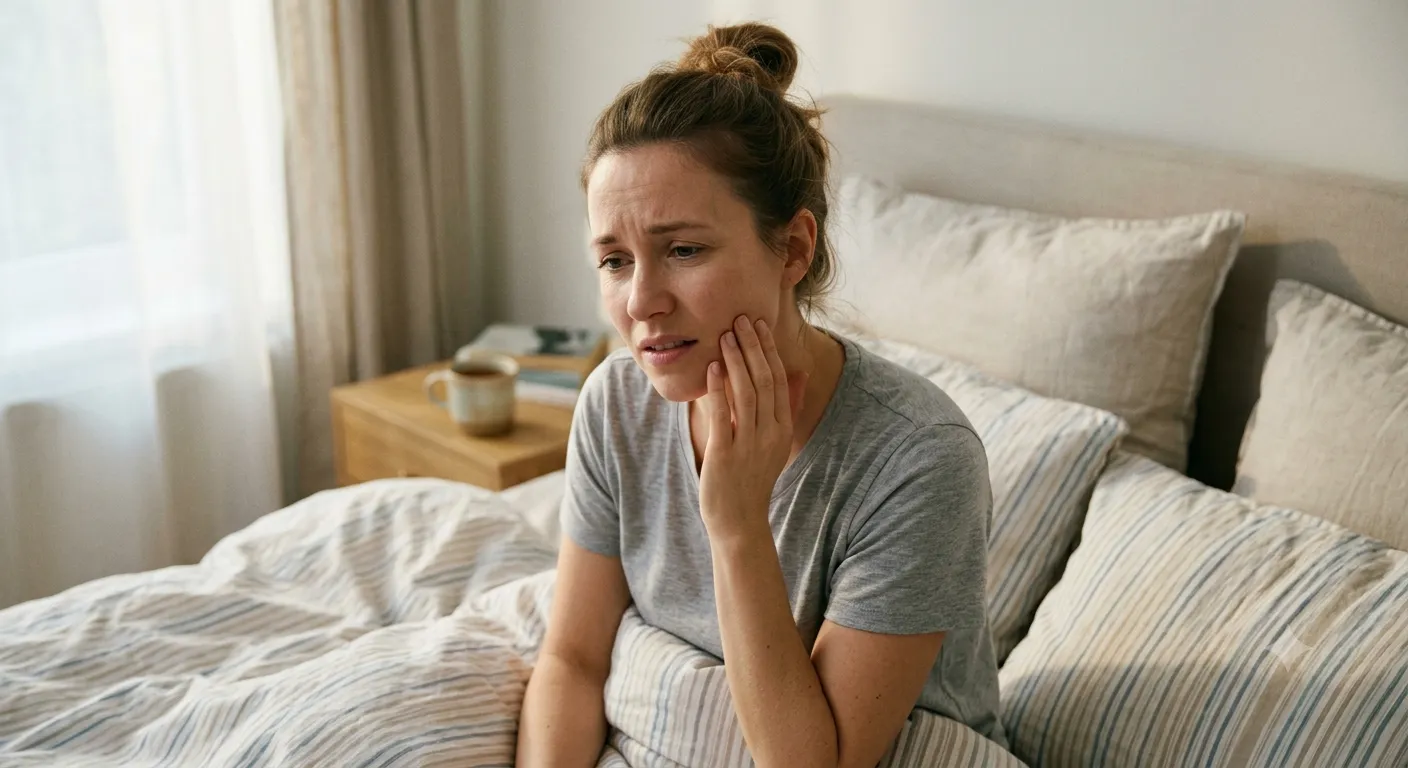
Morning Jaw Pain and Headaches: Could It Be Teeth Grinding?
You wake up, and before your feet even hit the floor, your jaw already aches and there’s a dull throb behind your temples. Sound familiar? A lot of our Sunbury patients describe exactly this, and they’re often shocked to learn the answer isn’t stress or a bad pillow. It’s their teeth, grinding away all night while they sleep.
Overview
This guide explains why so many people experience jaw pain and headaches first thing in the morning, and why teeth grinding, known as bruxism, is often the real cause. We’ll walk through the common bruxism symptoms, explain how a night guard for grinding actually works, and cover practical TMJ pain relief options you can start using today. You’ll also find honest answers to the questions our Sunbury patients ask most. By the end, you’ll understand exactly what’s happening in your jaw at 3am, and what to do about it. If you’re suffering from these issues, consider consulting a jaw pain and headaches dentist for professional advice on effective treatments from a qualified specialist.
In This Article, You’ll Discover…
This article highlights the importance of seeking help from a jaw pain and headaches dentist if you experience these symptoms regularly to ensure proper diagnosis and treatment.
- Why morning jaw pain and headaches are often linked to nighttime teeth grinding
- The most common bruxism symptoms to watch for
- How a dentist actually diagnoses grinding, even if you’ve never noticed it yourself
- What a night guard for grinding does, and why it works
- Simple TMJ pain relief techniques you can try at home
- What causes bruxism in the first place, stress isn’t the only trigger
- When jaw pain means it’s time to see a dentist, not just push through it
The Jaw Pain and Headaches Dentist Connection
Here’s something most people don’t realise: your jaw muscles and the muscles around your temples and skull are deeply connected. When you clench or grind your teeth overnight, those same muscle groups tense up repeatedly, and that tension radiates outward as a headache.
Bruxism can happen during sleep or while you’re awake, and in many cases, people have no idea they’re doing it at all. It’s often a partner or family member who notices the grinding sound first, long before the person experiencing it connects the dots.
This is exactly why so many people end up searching for a jaw pain and headaches dentist rather than a GP. Dentists are often the ones who spot the physical evidence of grinding, worn enamel, flattened teeth, tiny cracks, well before a patient even mentions head or jaw pain.
Common Bruxism Symptoms to Watch For
Let’s get specific about what grinding actually feels and looks like, because the signs go well beyond just a sore jaw.
- Headaches or facial pain that’s noticeably worse in the morning
- Sore or tight jaw muscles, especially right after waking
- Teeth that feel flattened, chipped, or fractured
- Increased tooth sensitivity from worn-down enamel
- Earaches or a ringing sensation in your ears
- A partner mentioning you grind your teeth loudly at night
- Jaw clicking, popping, or a feeling of tightness when you open your mouth wide
If a few of these sound familiar, that’s a pretty strong pattern pointing toward bruxism rather than a random headache issue.
A custom-fitted night guard protects your teeth while you sleep.
What Actually Causes Teeth Grinding?
Stress gets blamed for almost everything jaw-related, and it’s genuinely a major factor, but it’s not the whole picture.
Stress and Anxiety
Emotional tension, whether it’s work stress, anxiety, or frustration, is one of the biggest drivers of awake bruxism, and it can carry over into sleep too. Your body processes that tension physically, and unfortunately, your jaw is often where it shows up.
Sleep-Related Factors
Sleep bruxism is actually classified as a sleep-related movement disorder. Poor sleep quality, sleep apnoea, and irregular sleep patterns can all contribute to nighttime grinding without you ever waking up aware of it.
Lifestyle Triggers
- Caffeine and alcohol consumption, particularly in the evening
- Smoking or recreational drug use
- Certain medications that affect neurotransmitter activity
- Concentrating intensely or thinking deeply, which some people do with clenched jaws without noticing
Dental and Bite Factors
Sometimes it comes down to how your teeth fit together. Misaligned bites or missing teeth can encourage grinding as your jaw tries to find a comfortable resting position.
How We Diagnose Bruxism at the Dentist
You might be wondering how a dentist figures this out, especially if you’ve never noticed yourself grinding. Here’s roughly what that visit looks like.
- A visual check of your teeth for flattening, chipping, or unusual wear patterns
- Gentle palpation of your jaw muscles to check for tenderness or tightness
- Listening for clicking or popping sounds when you open and close your mouth
- Questions about your sleep quality, stress levels, and any headache patterns
- A check of your bite alignment to rule out contributing dental factors
- If needed, a referral for a sleep assessment if we suspect a broader sleep disorder is involved
Regular six-monthly dental check-ups are honestly one of the best ways to catch bruxism early, sometimes before you’ve even noticed the symptoms yourself.
Night Guards for Grinding: How They Actually Help
A night guard, sometimes called a splint or occlusal guard, is one of the most common and effective TMJ pain relief tools we recommend. It creates a physical barrier between your upper and lower teeth, so even if you do grind, your teeth aren’t wearing directly against each other.
Here’s the honest bit: we don’t fully understand exactly why night guards ease jaw pain and headaches for so many people, but the clinical results speak for themselves. What we do know is they protect your enamel from further damage while reducing the physical impact of grinding.
Types of Night Guards
| Type | Best For | Notes |
| Custom-fitted (dentist-made) | Moderate to severe bruxism | Precisely moulded to your bite, most durable |
| Boil-and-bite (over-the-counter) | Mild, occasional grinding | Softer material, less precise fit |
| Hybrid guards | People wanting extra comfort | Elasticized material that softens for adjustment |
For anyone experiencing regular morning jaw pain, a custom-fitted guard from your dentist is almost always the better long-term investment, since it’s built specifically for your bite.
TMJ Pain Relief You Can Try at Home
Alongside professional treatment, there’s plenty you can do yourself to ease discomfort day to day.
- Apply a warm compress to your jaw for 15 to 20 minutes to relax tense muscles
- Use an ice pack instead if the pain feels more acute or sharp
- Eat softer foods and cut things into smaller pieces to reduce jaw strain
- Avoid chewing gum, which keeps jaw muscles working unnecessarily
- Practice gentle jaw stretches, opening and closing slowly a few times a day
- Cut back on caffeine and alcohol in the evening, both can worsen grinding
- Try relaxation techniques like deep breathing or meditation before bed
None of these replace a proper dental assessment, but they genuinely help take the edge off while you sort out a longer-term plan.
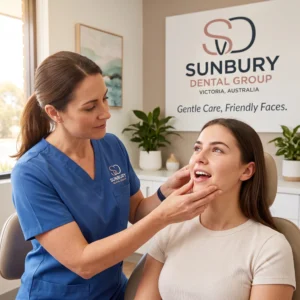
A proper jaw assessment helps identify the real cause behind your pain.
Frequently Asked Questions
Can teeth grinding really cause headaches?
Yes, the constant tension from clenching or grinding your jaw muscles overnight often radiates outward, causing headaches that are typically worse in the morning. This is one of the most common bruxism symptoms dentists see.
How do I know if I grind my teeth at night?
Many people don’t realise they grind until a partner mentions the sound, or a dentist notices flattened, chipped, or worn teeth during a check-up. Morning jaw soreness and headaches are also strong indicators worth mentioning at your next visit.
Does a night guard for grinding actually work?
Yes, a properly fitted night guard creates a barrier between your teeth, protecting them from further wear and often reducing jaw pain and headaches. Custom-fitted guards from a dentist tend to work better than generic over-the-counter options.
What’s the difference between bruxism and TMJ disorder?
Bruxism refers specifically to the grinding or clenching action, while TMJ disorder refers to problems with the jaw joint itself, which grinding can contribute to over time. They often overlap, but they’re not exactly the same thing.
Can stress alone cause teeth grinding?
Stress and anxiety are major contributors to bruxism, particularly the awake form, but sleep disorders, lifestyle habits, and bite alignment can all play a role too. It’s rarely just one single cause.
Should I see a dentist or a doctor for jaw pain and headaches?
A dentist is often the right first stop, since they can check for physical signs of grinding and fit a night guard if needed. If sleep disorders or broader health concerns are suspected, they may refer you on for further assessment.
The Bottom Line
Morning jaw pain and headaches are common, but they’re not something you have to just live with. Teeth grinding is often the hidden cause, and the good news is it’s genuinely manageable with the right combination of a properly fitted night guard, lifestyle adjustments, and regular dental check-ups. Catching it early protects both your teeth and your quality of sleep.
If mornings have been rough lately, or you’ve noticed your teeth looking a little worn, it’s worth having a proper look.
Book your appointment at Sunbury Dental Group today: