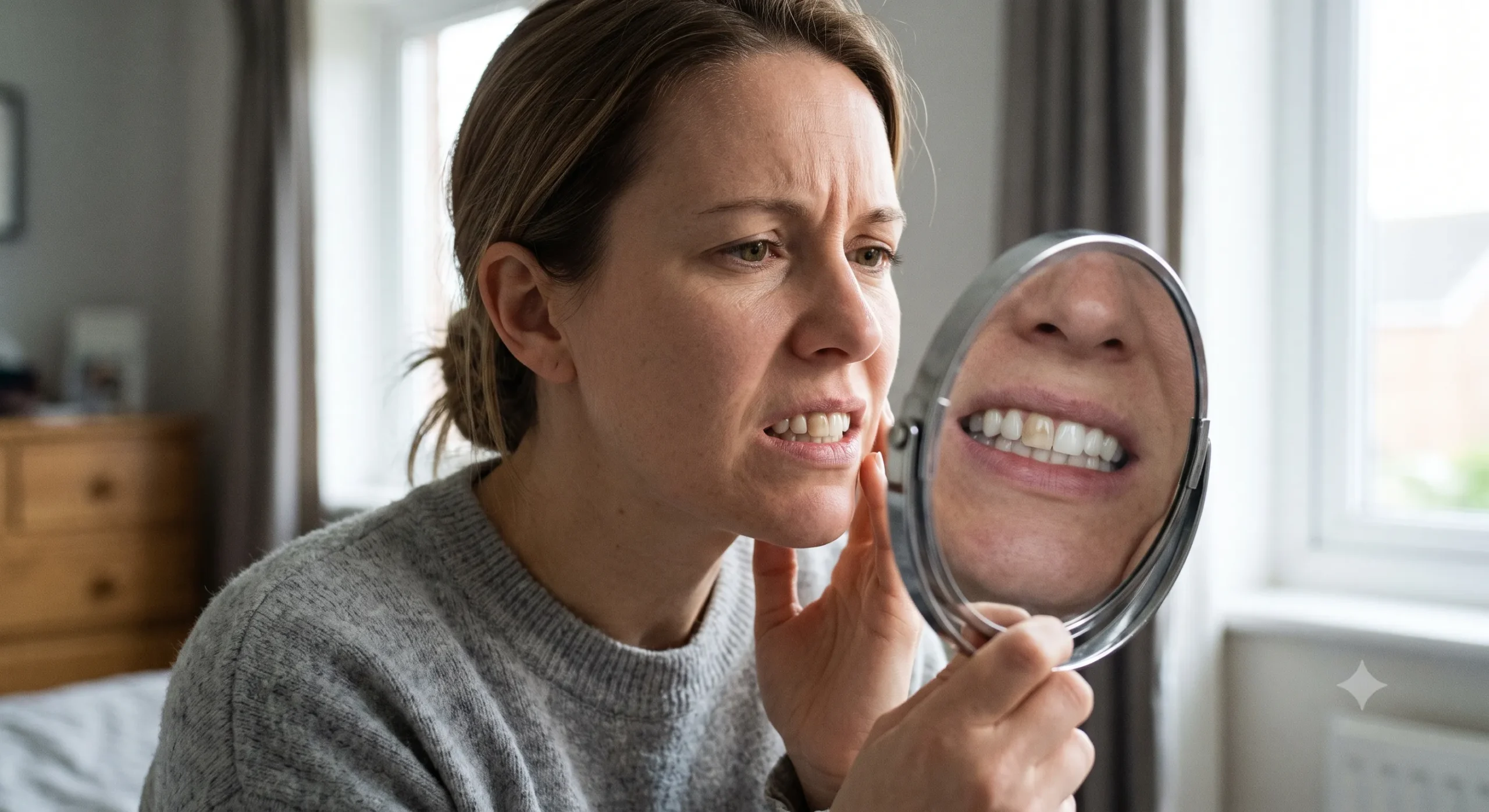
Tooth Turned Grey Suddenly? What It Means and What to Do
You caught it in a photo, or maybe you noticed it brushing your teeth this morning. One tooth just looks… off. Darker, greyer, not quite matching its neighbours. It’s a strange, slightly unsettling thing to notice, and we get why it sends people straight to Google at 11pm. Let’s talk through what’s actually going on.
Overview
Understanding Why Your Tooth Turned Grey Suddenly
This guide explains why a tooth turned grey suddenly, what dying tooth symptoms actually look like, and the most common discoloured tooth causes we see in our Sunbury clinic. We’ll walk through when grey discolouration is genuinely urgent versus when it can wait for a routine visit, and cover the root canal warning signs worth knowing. You’ll also get honest, practical answers to the questions people search for most when this happens. No scare tactics, just the real story behind that grey tooth.
In This Article, You’ll Discover…
- Why a single tooth can suddenly turn grey while the others stay white
- The most common dying tooth symptoms beyond just the colour change
- What’s really happening inside a tooth when the nerve is affected
- Key root canal warning signs that mean it’s time to book in
- Treatment options if a tooth has genuinely died
- Whether grey teeth can be saved, or if extraction is inevitable
- How to protect your other teeth from the same fate
Why Did My Tooth Turn Grey Suddenly?
Here’s the short version: a tooth usually turns grey because of internal damage or trauma affecting the nerve and blood vessels inside it. Something has disrupted the tooth’s internal blood supply, and that change shows up as a colour shift you can see from the outside.
This is different from surface staining caused by coffee, wine or smoking, which affects the whole mouth gradually. A single grey tooth points to something happening inside that one specific tooth.
The Most Common Discoloured Tooth Causes
- A knock, bump, or impact injury, even one from years ago, that damaged the nerve
- Deep decay that’s reached the pulp (the soft tissue inside your tooth)
- A previous root canal where minor internal bleeding left staining
- Pulp necrosis, where the nerve tissue inside the tooth has died
- Internal resorption, a less common process where the tooth structure breaks down from within
- Old filling materials that have discoloured the tooth from the inside
Trauma is genuinely one of the biggest triggers here, and here’s the tricky part: it doesn’t have to be a dramatic accident. A minor knock during sport, a fall as a kid, even biting down hard on something unexpected, any of these can quietly damage the nerve, with the grey colour only showing up months or even years later.
What’s Actually Happening Inside the Tooth
When trauma or infection affects a tooth, it can disrupt blood flow to the pulp, causing internal bleeding. As that blood breaks down over time, it releases iron-containing compounds that stain the tooth structure from the inside out, creating that characteristic dark or grey look.
If the nerve tissue dies completely, this is called pulp necrosis. Once that happens, the tooth is often described as “dead” or “non-vital,” meaning it’s no longer receiving a healthy blood supply, and it won’t heal or lighten on its own.
Dying Tooth Symptoms Beyond the Colour Change
Discolouration is often the first sign, but it’s rarely the only one. Here’s what else tends to show up alongside it.
- Pain or tenderness in the tooth, though some people feel nothing at all
- Increased sensitivity to hot or cold temperatures
- Bad breath or a persistent bad taste in your mouth
- Swelling around the gum line near the affected tooth
- Pain when biting down or chewing on that side
- A small pimple-like bump on the gum, which can indicate an abscess
- The colour deepening over time, from grey to brown or even black if left untreated
If you’re noticing pain alongside the colour change, that’s genuinely worth treating as urgent rather than waiting it out.
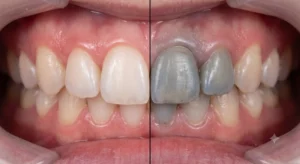
nternal damage, not surface staining, is usually behind a single grey tooth.
Root Canal Warning Signs Worth Knowing
Grey discolouration is actually one of the most commonly cited root canal warning signs, alongside a handful of others.
| Sign | What It Suggests |
| Tooth turning grey, brown or dark | Possible nerve damage or pulp necrosis |
| Persistent pain that doesn’t ease with painkillers | Ongoing infection or inflammation |
| Sensitivity lasting more than a day after triggers | Nerve involvement |
| Swelling or a bump on the gum | Abscess formation |
| Bad taste or persistent bad breath | Active infection |
| Pain when chewing or biting | Inflammation reaching the root area |
Not every grey tooth needs a root canal, but this combination of signs is exactly what we’re checking for during an assessment.
Can a Grey Tooth Be Saved?
Genuinely, yes, in many cases. It really depends on why the tooth turned grey and how much internal damage has occurred.
Treatment Options We Consider
- Root canal treatment — removes the dead or infected pulp tissue and seals the tooth, often stopping further discolouration and saving the tooth long-term
- Internal bleaching — if the tooth is otherwise healthy but discoloured, bleaching from the inside can sometimes restore a more natural shade
- Composite bonding — a tooth-coloured resin applied to mask discolouration for a more affordable cosmetic fix
- Porcelain veneers — thin custom shells that cover the tooth entirely for a seamless colour match
- Crowns — full coverage for teeth that are significantly weakened or discoloured, protecting the remaining structure
The right option depends entirely on your specific tooth, which is exactly why an in-person assessment matters more than guessing from a mirror.
What to Do If Your Tooth Turns Grey
Don’t wait this one out at home. Here’s a sensible approach.
- Book a dental appointment as soon as you notice the change, even without pain
- Avoid biting down hard on that tooth in the meantime
- Skip very hot or cold foods and drinks if you’re noticing sensitivity
- Take note of when you first noticed it, and whether you recall any past injury to that area
- Mention any accompanying symptoms, swelling, bad taste, or pain, clearly to your dentist
Early assessment genuinely gives you more treatment options. The longer a dying tooth goes unchecked, the more likely infection spreads or the tooth structure weakens further.
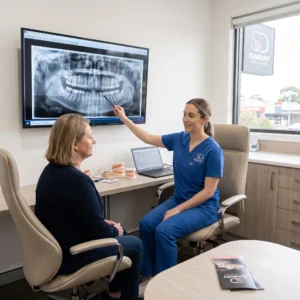
An X-ray helps confirm what’s really happening beneath the surface.
Frequently Asked Questions
Why did my tooth suddenly turn grey with no pain?
A tooth can turn grey without pain if the nerve has died gradually, which doesn’t always cause discomfort. It’s still worth getting checked, since painless doesn’t mean harmless in this case.
Is a grey tooth always dead?
Not always, but grey discolouration usually indicates internal damage, trauma, or nerve involvement of some kind. A dental assessment, sometimes including an X-ray, is the only way to know for certain.
Can a dead tooth be saved?
Yes, in many cases a root canal treatment can save a dead or dying tooth by removing the damaged tissue and sealing it. Whether the tooth is genuinely saveable depends on the extent of the damage.
Will teeth whitening fix a grey tooth?
No, standard teeth whitening only works on the outer enamel and won’t fix discolouration coming from inside the tooth. Internal bleaching or restorative options like veneers or crowns are usually needed instead.
How long after an injury can a tooth turn grey?
It can take anywhere from a few weeks to several years for discolouration to appear after trauma, since the internal damage often develops gradually. This is why some people are surprised to trace a grey tooth back to an old injury they’d almost forgotten about.
Does a grey tooth mean I need a root canal?
Not necessarily, but it’s one of the more common root canal warning signs, especially when paired with sensitivity, pain, or swelling. Only a proper dental assessment can confirm whether treatment is needed.
The Bottom Line
A tooth that’s turned grey suddenly is your body’s way of flagging internal damage, whether from old trauma, deep decay, or a dying nerve. The good news is that with early assessment, many grey teeth can be treated and even saved through root canal therapy, internal bleaching, or restorative options like crowns and veneers. Waiting rarely helps and often narrows your treatment choices.
If you’ve noticed a tooth changing colour, even without pain, it’s worth having it looked at properly rather than watching and waiting.
Book your appointment at Sunbury Dental Group today:
Note: This content is general educational information only and doesn’t replace individual diagnosis from a registered dental practitioner. Any tooth discolouration, with or without pain, should be assessed in person, in line with AHPRA advertising guidelines and Australian Consumer Law.