
Cold Sensitivity in One Tooth: Causes and Solutions
You take a sip of water, and out of nowhere, one tooth sensitive to cold water sends a sharp jolt straight through your jaw. It’s over in a second, but it’s enough to make you wince every single time it happens. If this sounds familiar, you’re definitely not alone, and there’s usually a clear reason behind it. Many people experience this sensation with a tooth sensitive to cold water.
Overview
This guide will help you understand how to deal with a tooth sensitive to cold water effectively.
This guide explains why you might have a tooth sensitive to cold water, especially when it’s just one tooth and not your whole mouth. We’ll cover the most likely causes, from enamel erosion to a sensitive tooth one side that might point to something more specific like a crack or cavity. You’ll also learn practical enamel erosion treatment options and what tooth nerve pain actually means for your next steps. By the end, you’ll know whether this is a quick fix or something worth getting checked properly for your tooth sensitive to cold water.
In This Article, You’ll Discover…
- Why cold sensitivity often affects just one tooth rather than your whole mouth
- The difference between general sensitivity and a sensitive tooth one side
- What’s really happening beneath the surface when cold water triggers pain
- Practical enamel erosion treatment options you can start using at home
- When cold sensitivity signals tooth nerve pain that needs professional care
- How dentists diagnose the exact cause behind your sensitive tooth
- Simple daily habits that protect your enamel long term
Why Is My Tooth Sensitive to Cold Water?
If you’ve ever experienced a tooth sensitive to cold water, you understand how alarming it can be.
Here’s the short version: sensitivity happens when the protective outer layer of your tooth, the enamel, wears down or when your gums recede enough to expose the layer underneath called dentine. Dentine contains tiny tubules that connect directly to the nerve inside your tooth, so when cold hits those exposed channels, that nerve reacts fast, and it hurts.
This is sometimes called dentine hypersensitivity, and it’s honestly one of the most common reasons people end up searching for answers about a tooth sensitive to cold water. The good news is that once you understand what’s triggering it, there’s usually a clear path to relief.
Identifying the cause of a tooth sensitive to cold water is crucial for effective treatment.
When It’s Just One Tooth: What That Really Means
If your whole mouth feels sensitive, that often points to general enamel wear or gum recession affecting multiple teeth. But when it’s just one specific tooth reacting sharply, that’s a different story, and it deserves a closer look.
Understanding why it’s just one tooth sensitive to cold water can help target treatment.
Common Causes of a Sensitive Tooth One Side
- A cracked tooth, sometimes from grinding, biting something hard, or an old injury
- A cavity or decay that’s reached deeper into the tooth structure
- An infected tooth or one with an underlying abscess
- A recently placed filling that’s still settling in
- Gum recession isolated to that specific tooth, exposing the root surface
Here’s the thing: pain localised to one tooth is actually more useful information than you’d think. It narrows things down considerably and usually means we’re not dealing with generalised wear, but something specific to that tooth.
Enamel Erosion: The Most Common Culprit
Don’t ignore a tooth sensitive to cold water; get a professional evaluation if symptoms persist.
Enamel erosion is genuinely one of the biggest drivers of cold sensitivity, and it happens gradually, which is why people are often surprised when it suddenly becomes noticeable.
What Causes Enamel Erosion
Maintaining good oral hygiene can help prevent a tooth sensitive to cold water from developing.
If you have a tooth sensitive to cold water, frequent exposure to acidic foods and drinks can worsen the condition.
- Frequent exposure to acidic foods and drinks, like citrus, soft drinks, and wine
- Brushing too hard or using an abrasive toothpaste
- Teeth grinding (bruxism), which wears down enamel over time
- Acid reflux or frequent vomiting, which exposes teeth to stomach acid
- Brushing too soon after eating, before saliva has had a chance to neutralise acid
Saliva actually works hard behind the scenes to neutralise the acids you’re exposed to daily, but frequent acid attacks can overwhelm that natural defence over time.
Knowing when to seek help for a tooth sensitive to cold water can save you discomfort.
Enamel Erosion Treatment Options
Once erosion has happened, you can’t regrow enamel the way skin heals, but you absolutely can protect what’s left and manage the sensitivity effectively.
If your tooth is sensitive to cold water, a gentle approach to brushing is essential to avoid further damage.
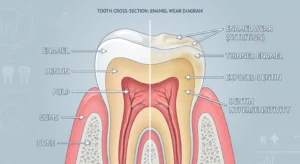
Enamel erosion happens gradually, often without you noticing until sensitivity sets in.
At-Home Enamel Erosion Treatment
- Switch to a desensitising toothpaste designed specifically for sensitive teeth
- Use a soft-bristled toothbrush and ease up on brushing pressure
Consider using specialized products for a tooth sensitive to cold water.
- Limit acidic foods and drinks, or rinse with water afterward rather than brushing immediately
- Chew sugar-free gum after meals to boost saliva production naturally
- Wait at least 30 minutes after eating before brushing your teeth
Professional Enamel Erosion Treatment
- Fluoride varnish applications to strengthen remaining enamel
- Remineralising treatments that help restore some mineral content to weakened enamel
- Dental bonding to protect exposed areas and reduce sensitivity
- A custom night guard if grinding is contributing to the wear
Understanding Tooth Nerve Pain
Cold sensitivity that’s mild and brief is one thing. But if you’re experiencing genuine tooth nerve pain, that’s a different level of concern worth addressing properly.
Signs It’s More Than Simple Sensitivity
| Symptom | What It Might Suggest |
| Sharp pain lasting several seconds after cold exposure | Possible nerve involvement |
| Pain that lingers well after the trigger is gone | Deeper decay or nerve inflammation |
| Pain when chewing on that specific tooth | Possible cavity or cracked tooth |
| Spontaneous pain with no trigger at all | Advanced nerve damage or infection |
| Visible crack or chip in the tooth | Cracked tooth syndrome |
Pain from hot or cold food is genuinely a warning sign that shouldn’t be ignored, since it usually indicates an underlying issue rather than just “sensitive teeth” in general.
How We Diagnose the Real Cause
When you come in with a sensitive tooth, here’s roughly what the assessment involves.
- A visual check for visible cracks, decay, or wear on the affected tooth
- Gentle testing with cold air or a cold stimulus to pinpoint exactly which tooth is reacting
- Checking your bite and looking for signs of grinding or clenching
- An X-ray if deeper decay, infection, or a crack below the surface is suspected
- A review of your brushing habits and diet to identify contributing factors
If sensitivity doesn’t improve within a few days, or if it’s getting worse rather than better, that’s the point where seeing a dentist genuinely matters more than trying another home remedy.
It’s important to note that a tooth sensitive to cold water may require professional evaluation if symptoms persist.
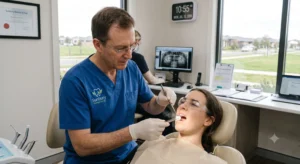
A simple cold-stimulus test helps pinpoint exactly what’s causing your sensitivity.
Frequently Asked Questions
Why does only one tooth hurt when I drink cold water?
When just one tooth reacts, it usually points to something specific to that tooth, like a crack, cavity, or localised gum recession, rather than general enamel wear. This kind of localised pain is actually helpful for narrowing down the cause during an assessment.
Can enamel erosion be reversed?
Enamel itself can’t regrow once it’s eroded, but remineralising treatments and fluoride can help strengthen what remains and reduce sensitivity. Preventing further erosion through diet and brushing habits is the most effective long-term approach.
Is tooth sensitivity to cold always serious?
Not always, mild sensitivity that fades quickly is common and often manageable with desensitising toothpaste. However, sharp pain that lingers, or pain combined with chewing discomfort, is worth having checked by a dentist.
How long does tooth sensitivity to cold usually last?
For many, simply addressing a tooth sensitive to cold water can lead to quick improvements in comfort.
Simple sensitivity typically lasts just a few seconds after the trigger is removed. If pain lingers for longer, especially minutes rather than seconds, it often points to a deeper issue like decay or nerve involvement.
What toothpaste is best for a sensitive tooth?
Toothpaste specifically formulated for sensitivity, often containing potassium nitrate or stannic fluoride, works by blocking the tiny channels in exposed dentine. Using it consistently, rather than occasionally, gives the best results.
Can a cracked tooth cause cold sensitivity?
Remember, if you experience a tooth sensitive to cold water, seeking timely advice from your dentist can help.
Yes, a cracked tooth is one of the more common causes of sensitivity isolated to a single tooth, particularly when combined with pain on chewing. Cracks aren’t always visible to the naked eye, so a dental assessment is often needed to confirm it.
The Bottom Line
The experience of having a tooth sensitive to cold water varies between individuals, which is why personalized treatment is key.
Awareness of a tooth sensitive to cold water can lead to proactive steps for dental health.
A tooth sensitive to cold water usually comes down to worn enamel, exposed dentine, or something specific to that one tooth like a crack or cavity. Simple cases respond well to desensitising toothpaste and gentler daily habits, but persistent or sharp nerve pain deserves a proper assessment rather than guesswork. Catching the cause early protects both your comfort and the long-term health of that tooth sensitive to cold water.
If that cold-water wince has been happening more than once or twice, it’s worth having it looked at properly.
If you notice your tooth sensitive to cold water, it’s best to avoid trigger foods and consult a professional.
Book your appointment at Sunbury Dental Group today:
Ultimately, addressing a tooth sensitive to cold water promptly can protect your overall dental health.