
Why Does My Tooth Hurt When I Bite Down? Causes & Fixes
You take a bite of your sandwich, and suddenly there’s this sharp, electric jolt shooting through your jaw. Ouch. If your tooth hurts when biting down, you’re probably wondering whether it’s something minor or a full-blown dental emergency waiting to happen.
Honestly, it could be either. That’s the frustrating part about tooth pain — it doesn’t come with a neat little label explaining what’s wrong. But there are patterns, and once you understand them, you can figure out roughly what you’re dealing with and how urgently you need to act.
We see this exact complaint constantly in our Sunbury practice, and we get it. Chewing is something you do dozens of times a day without thinking about it — until suddenly, you can’t stop thinking about it.
Overview
Understanding Why Your Tooth Hurts When Biting Down
This guide breaks down the most common reasons your tooth hurts when chewing or biting, from cracked teeth to cavities, gum issues, and even sinus problems. We’ll walk through how to tell the difference between a minor annoyance and a genuine dental emergency, plus what actually happens when you come see us about it. By the end, you’ll know what to watch for, what to do in the meantime, and when to stop waiting and book an appointment.
In This Article, You’ll Discover
- The most common reasons a tooth hurts specifically when you bite down
- How cracked tooth pain feels different from cavity pain
- Why sinus congestion can sometimes mimic a toothache
- The dental emergency signs that mean you shouldn’t wait
- What to do at home while you’re waiting for an appointment
- How we diagnose the exact cause of your pain
- Practical ways to protect your teeth from this happening again
Why Does This Even Happen? The Short Answer
When a tooth hurts under biting pressure, it usually means something’s compromising the tooth’s structure or irritating the nerve inside it. Pressure travels through the tooth in a way it shouldn’t, and your nerve reacts — loudly.
Sometimes it’s obvious, like a visible chip. Other times, there’s nothing to see at all, and that’s honestly the more unsettling scenario for most patients. Let’s go through the usual suspects.
Cracked Tooth Pain: The Sneaky Culprit
Cracked tooth pain is one of the trickiest things to diagnose, and it’s more common than people realise. A crack can start tiny — smaller than a hair — and still cause serious discomfort when you bite.
Here’s what makes it distinctive: the pain often hits hardest the moment you release your bite, not just when you clamp down. That sharp, fleeting zing when you let go of a hard piece of food? That’s a classic sign.
What Causes a Cracked Tooth?
Teeth don’t usually crack for no reason. A few things tend to be behind it:
- Biting down on something unexpectedly hard, like a stray bone or ice cube
- Grinding or clenching your teeth at night, often without even realising it
- Large old fillings that have weakened the remaining tooth structure
- General wear and tear that builds up over years of chewing forces
- A blow to the face or jaw from sport or an accident
None of these are particularly dramatic on their own. That’s what makes cracked tooth syndrome frustrating — it sneaks up on you.
Why Cracks Are Hard to Spot
Cracks are often invisible on a regular visual exam and don’t always show up clearly on X-rays either. We sometimes use a special dental dye or a “bite test” with a small stick to pinpoint exactly which tooth (and which cusp) is causing trouble. It’s a bit like detective work, honestly — the pain tells a story, and our job is figuring out where it’s coming from.
Tooth Pain When Chewing: Other Common Causes
Cracks aren’t the only reason your tooth hurts when chewing. A handful of other issues show up just as often in our chair.
Tooth Decay and Cavities
A cavity that’s grown deep enough can cause real pain under pressure, especially once it’s close to the nerve. Unlike cracked tooth pain, cavity pain tends to be more constant and often comes with sensitivity to sweet or cold foods too.
Dental Abscess or Infection
If there’s a throbbing, deep ache alongside swelling, warmth, or even a bad taste in your mouth, you might be dealing with an abscess. This is genuinely one of those situations where waiting can make things significantly worse — infections don’t resolve on their own.
Loose or Failing Fillings
An old filling can shrink, crack, or come loose over time, leaving gaps where pressure and bacteria sneak in. Chewing on that side suddenly feels sharp or uncomfortable, sometimes seemingly out of nowhere.
Gum Disease and Bone Loss
When gums recede or bone support weakens, teeth can become slightly mobile, and biting pressure transfers unevenly. It’s less of a sharp pain and more a dull, achy soreness that worsens with chewing.
Referred Sinus Pain
Here’s one that catches people off guard — your upper back teeth sit right near your sinuses, and sinus pressure can genuinely mimic tooth pain. If you’ve got a cold or hay fever alongside the discomfort, and it worsens when you bend forward, sinus involvement is worth considering.
Is This a Dental Emergency? How to Tell
Not every toothache needs an urgent, drop-everything appointment. But some absolutely do, and knowing the difference matters.
Signs You Should Book Urgently
According to guidance echoed across Australian dental emergency resources, these are dental emergency signs you shouldn’t ignore:
- Severe, throbbing pain that doesn’t ease with over-the-counter pain relief
- Visible swelling in your face, gum, or jaw
- A fever alongside tooth pain — this can signal a spreading infection
- A tooth that’s become loose or has shifted position
- Persistent bleeding from the gum around the painful tooth
- Pain that’s getting progressively worse over 24 to 48 hours
- A visible crack, chip, or hole in the tooth causing pain
If any of these sound familiar, please don’t sit on it. Infections in particular can escalate quickly, and it’s always better to be checked and reassured than to wait and regret it.
Signs It’s Probably Not Urgent (But Still Needs a Visit)
- Mild, intermittent discomfort only when chewing certain foods
- Sensitivity that comes and goes without swelling or fever
- Discomfort that’s been stable for weeks without worsening
These still deserve a dental check-up — just not necessarily an emergency one.
Australian Dental Association — Dental Emergencies,
What to Do While You’re Waiting for Your Appointment
You don’t need to just grit your teeth (sorry) until your appointment. A few sensible steps can ease things in the meantime:
- Rinse gently with warm salt water to reduce irritation and clean the area
- Take over-the-counter pain relief like paracetamol or ibuprofen, following the packet instructions
- Avoid chewing on the affected side altogether
- Skip very hot, cold, or sugary foods that might aggravate the nerve
- Apply a cold compress to your cheek if there’s any swelling
- Never place aspirin directly on the tooth or gum — it can burn the tissue
These are stopgap measures, not fixes. If the pain persists, worsens, or comes with swelling, please contact us rather than continuing to manage it at home indefinitely.
How We Diagnose Why Your Tooth Hurts When Biting
When you come in with this complaint, we don’t just glance and guess. Diagnosing biting pain properly usually involves a few steps working together.
We’ll start with a thorough visual exam, checking for visible cracks, worn fillings, or signs of decay. From there, we often use a bite test — a small stick or tool you gently bite on — to isolate exactly which tooth and which surface is triggering the pain. X-rays help rule out issues below the gumline, like abscesses or bone loss, that aren’t visible from the surface.
Sometimes we’ll also test the tooth’s response to cold or heat, since how a tooth reacts tells us a lot about whether the nerve is inflamed, dying, or perfectly healthy underneath a structural problem. It sounds like a lot of steps for one sore tooth, but pinpointing the actual cause means we can treat the real problem — not just mask the symptom.
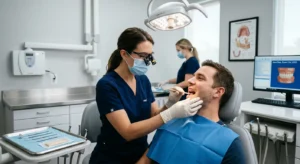
Pinpointing exactly which tooth is causing pain often takes a bit of detective work.
Treatment Options: What Happens Next
Treatment really depends on what’s actually causing the pain — there’s no one-size-fits-all fix here. A few of the more common paths include:
- Small cracks or minor decay: A filling or dental bonding might be all that’s needed
- Larger cracks or extensive decay: A crown to protect and reinforce the remaining tooth structure
- Nerve involvement: Root canal treatment to remove damaged or infected tissue and relieve pain
- Abscess or infection: Drainage and possibly antibiotics, alongside treating the underlying cause
- Severely damaged teeth: In rare cases, extraction may be the only realistic option
We’ll always walk you through your options, the costs involved, and what to expect before we proceed with anything — that’s not just good practice, it’s a requirement under Australian Consumer Law for informed consent and transparent pricing. You should never feel pressured or left in the dark about what a treatment plan actually involves.
Protecting Your Teeth Going Forward
Once the immediate issue is sorted, a few habits help prevent round two:
- Wear a night guard if you grind or clench your teeth during sleep
- Avoid chewing ice, hard lollies, or using your teeth as tools
- Keep up with six-monthly check-ups so small issues get caught early
- Replace old, worn fillings before they fail completely
- Address gum health proactively, since weakened support increases fracture risk
Small habit changes now genuinely save you from bigger, more painful problems down the track.
Frequently Asked Questions
Why does my tooth hurt only when I bite down, but not otherwise?
This pattern is a classic sign of cracked tooth syndrome, where pressure on the crack triggers pain that eases once you stop biting. It’s worth getting checked promptly, since untreated cracks can worsen over time.
Can a tooth hurt when chewing without any visible damage?
Yes, absolutely — cracks and early decay often aren’t visible to the naked eye and don’t always show up on X-rays either. That’s exactly why a proper clinical exam, including bite testing, matters so much.
Is tooth pain when biting down always a dental emergency?
Not always, but severe pain, swelling, fever, or a loose tooth are all dental emergency signs that need urgent attention. Mild, intermittent discomfort can usually wait for a regular appointment, though it still shouldn’t be ignored.
Can sinus problems really cause tooth pain?
Yes — your upper back teeth sit close to your sinuses, so sinus pressure or infection can create toothache-like pain, especially across multiple teeth rather than just one. If it worsens when you bend forward and comes with congestion, sinus involvement is likely.
What happens if I ignore a cracked tooth?
Ignoring it lets the crack potentially deepen, which can eventually affect the nerve and lead to infection or the need for root canal treatment. Catching it early usually means a much simpler, less invasive fix.
How long can I wait before seeing a dentist about tooth pain when chewing?
If there’s no swelling, fever, or worsening pain, booking within the next few days is usually fine. But if pain is severe, spreading, or accompanied by swelling, please don’t wait — contact us straight away.
Bringing It All Together
A tooth that hurts when you bite down is your body’s way of flagging that something needs attention — whether that’s a hidden crack, a cavity, or even sinus pressure borrowing your tooth’s nerve pathways. The key things to remember: don’t ignore worsening pain, watch for genuine dental emergency signs like swelling or fever, and get a proper diagnosis rather than guessing at home.
Left untreated, most of these issues only get more complicated and more expensive to fix. Catching them early is almost always the easier, less stressful path.
If your tooth’s been bothering you every time you chew, don’t tough it out any longer. Book your appointment at Sunbury Dental Group today — click here to book online.
[Book Your Dental Check-Up Now →]
This article provides general information only and isn’t a substitute for personalised advice from a registered dental practitioner. Always consult your dentist about symptoms specific to you.