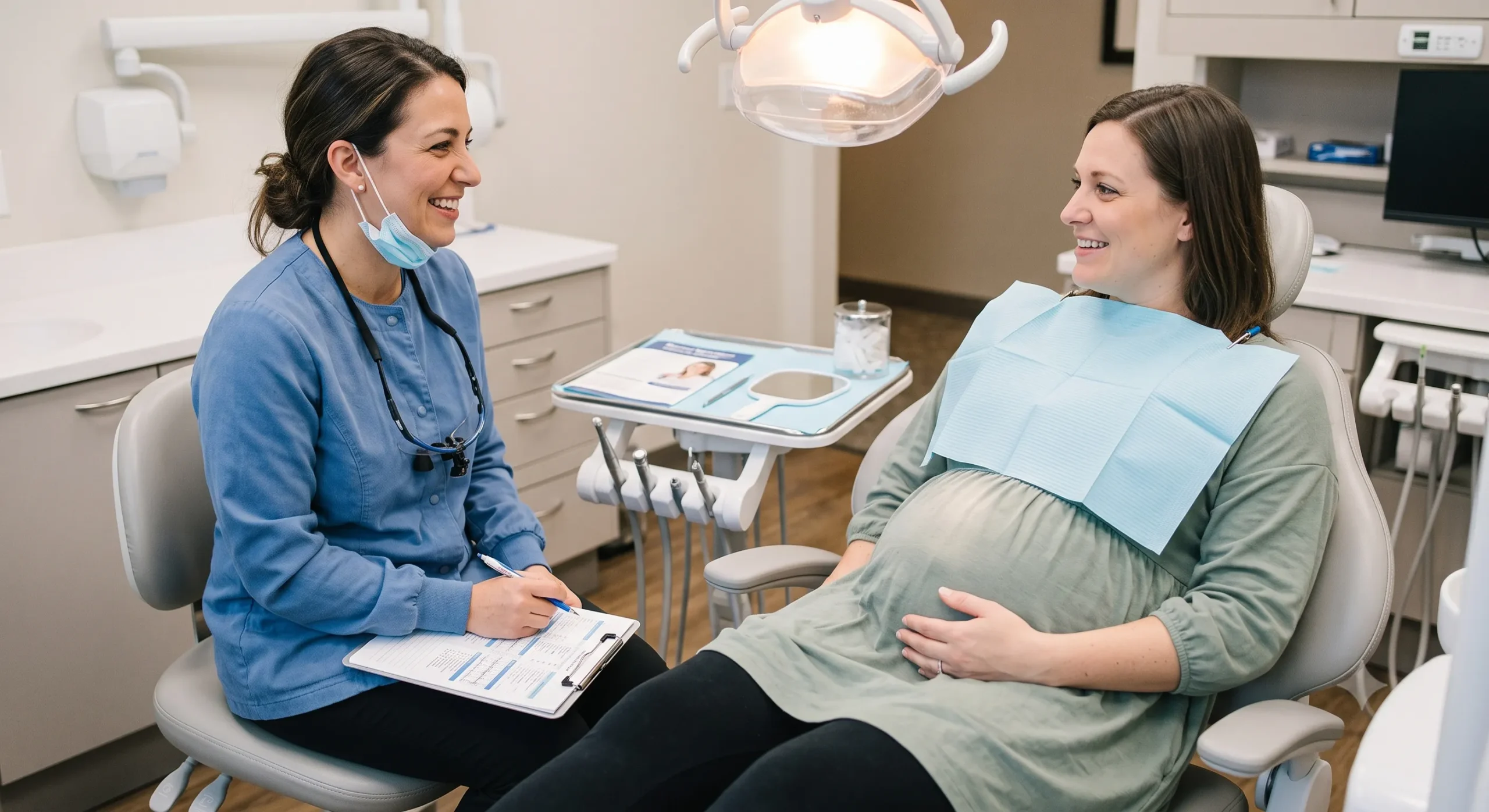
Dental Treatment During Pregnancy: What’s Actually Safe (and When)
If you’ve just found out you’re pregnant and your next thought was “wait, can I even go to the dentist now?” — you’re definitely not alone. It’s one of those questions that pops up constantly, right alongside “can I eat sushi” and “is it too early to buy the pram.” The reassuring answer is yes, dental treatment during pregnancy is not just safe, it’s genuinely important for you and your baby.
We’re Sunbury Dental Group, and we see plenty of expecting mums from Sunbury, Diggers Rest, Bulla, Gisborne, and the wider Hume region who are understandably cautious about anything medical right now. This article walks through what’s safe, what’s ideal timing, and why your gums might suddenly be acting up more than usual.
Overview: What This Article Covers
We’re going to bust the myth that dentists can’t touch pregnant patients, because that’s simply not true according to major dental and obstetric bodies. You’ll learn when dental x-rays are safe, why pregnancy seems to trigger gum problems out of nowhere, and which trimester is genuinely the best time for routine work. We’ll also cover what to do if you’re dealing with a dental emergency partway through pregnancy, because that clock doesn’t pause just because you’re expecting.
In This Article, You’ll Discover…
Why dental treatment during pregnancy is considered safe at every stage, according to major health bodies
The truth about dental x-rays and radiation exposure while pregnant
Why gum disease in pregnancy is so common, and why ignoring it isn’t a great idea
Which trimester dentists generally prefer for routine, non-urgent treatment
What still needs care or caution, even though most treatment is safe
What to do if a dental emergency happens mid-pregnancy
Practical oral hygiene tips tailored to what’s happening in your body right now
Is Dental Treatment During Pregnancy Actually Safe?
Let’s answer this properly, right up front, because we know it’s the reason you’re here. Yes. According to the American Dental Association and the American College of Obstetricians and Gynecologists, preventive, diagnostic, and restorative dental treatment is safe throughout every stage of pregnancy. That includes cleanings, fillings, root canals, and even extractions if something urgent comes up.
The bigger risk, honestly, isn’t the treatment — it’s avoiding it. Delaying necessary dental work during pregnancy can allow small problems to snowball into bigger, more complex ones down the track. Nobody wants to be dealing with an abscess at 32 weeks pregnant when it could’ve been sorted out months earlier with a simple filling.
Why So Many Women Still Hesitate
We get why the hesitation exists. Pregnancy comes with a firehose of “avoid this” advice, and it’s easy to lump dental care in with the long list of things you’re told to steer clear of. But dentistry isn’t like some of those other categories — it’s been extensively studied, and the research consistently lands on the same conclusion: routine and emergency dental care is safe.
Pregnancy Safe Dental X-Ray: Separating Fact From Fear
This is probably the single biggest worry we hear. “Can I really have an x-ray while I’m pregnant?” Let’s look at what the evidence actually says, because the fear here is understandable but largely outdated.
How Much Radiation Are We Actually Talking About?
A single dental x-ray exposes you to somewhere between 0.005 and 2.1 micrograys of radiation, an amount so small it’s considered clinically insignificant. To put that in perspective, the risk of harm from a dose that low is many thousands of times smaller than the everyday background risk of childhood cancer that exists regardless of any dental visit. That’s not us downplaying it — that’s the actual physics of it.
Why Dentists Still Take Precautions
Even though the risk is minimal, dentists still use lead aprons and thyroid collars as standard practice when x-raying pregnant patients, simply because caution costs nothing and reassurance matters. Modern digital x-ray equipment also uses significantly less radiation than the older film-based systems many people picture when they think of dental x-rays.
Digital dental x-rays use very low radiation doses, focused specifically on the mouth
Lead aprons and shields further protect the abdominal area during any exposure
Studies examining thousands of pregnant women found no significant link between dental x-rays and adverse outcomes like low birth weight or preterm delivery
Most guidelines suggest reserving non-urgent x-rays for after the first trimester where possible, purely as a conservative approach
Gum Disease in Pregnancy: Why It Sneaks Up on You
Here’s something that catches a lot of expecting mums off guard. You brush and floss exactly the same as always, yet suddenly your gums are puffy, tender, or bleeding when you didn’t have any issues before. That’s pregnancy gingivitis, and it’s remarkably common.
Why It Happens
Pregnancy hormones — particularly rising progesterone and oestrogen — increase blood flow to the gums and heighten their response to the bacteria in plaque. Basically, the same amount of plaque that never bothered your gums before pregnancy can now trigger a much stronger inflammatory response. It’s frustrating, but it’s not a sign you’re doing something wrong.
Managing It Properly
Keep brushing twice daily and flossing once a day, even if your gums feel tender — skipping it usually makes things worse, not better.
Rinse with a warm saltwater solution to help calm inflamed gum tissue.
Book a professional clean, since removing plaque and tartar buildup is the single most effective way to reduce pregnancy gingivitis symptoms.
Consider more frequent cleanings during pregnancy — some dentists recommend every three months rather than the usual six.
Flag any severe or worsening symptoms early, since your dentist may recommend specific antibacterial mouth rinses if needed.
Left unmanaged, gum disease during pregnancy isn’t just uncomfortable — some research has linked more severe periodontal disease with increased risk of preterm birth and low birth weight, which is exactly why staying on top of it matters.

Pregnancy hormones can make gums more sensitive — good hygiene habits matter more than ever.
The Best Time to See a Dentist While Pregnant
If you’re planning routine, non-urgent treatment, timing does make a bit of a difference — not because other times are dangerous, but because some windows are simply more comfortable.
Trimester by Trimester
First trimester: Generally used for check-ups, education, and hygiene advice. Elective procedures are often held off here, mainly because morning sickness and general discomfort make treatment less pleasant, not because it’s unsafe.
Second trimester (weeks 17–28): Widely considered the ideal window for routine dental work. Morning sickness has usually settled, and you’re not yet dealing with the physical discomfort of late pregnancy.Third trimester: Emergency and urgent treatment can absolutely still happen, but elective procedures are often deferred toward the end, mainly due to the difficulty of lying flat comfortably for extended periods.
What About Emergencies?
Emergencies don’t check a calendar before happening, and dentists know that. Extractions, root canals, and fillings can be safely performed at any stage of pregnancy if something urgent comes up. Waiting out a painful infection until after delivery isn’t the safer option — it’s usually the riskier one.
The second trimester is often the most comfortable window for routine dental care.
What Still Needs Extra Care or Caution
Being safe overall doesn’t mean absolutely everything gets a green light without thought. A few things genuinely do need a more tailored approach.
Certain medications: Some antibiotics and pain relief options are considered safer than others during pregnancy, so always mention you’re pregnant before any prescription is written.
Elective cosmetic work: Treatments like teeth whitening are often deferred until after pregnancy, simply out of an abundance of caution rather than confirmed risk.
Positioning during longer appointments: Lying flat for extended periods in later pregnancy can cause discomfort or reduced blood flow, so shorter appointments or side-lying positioning may be used.
Anxiety and stress management: If dental visits make you anxious, it’s worth mentioning this openly so your dental team can adjust their approach accordingly.
None of these are reasons to avoid the dentist. They’re just reasons to make sure your dentist knows you’re pregnant right from your very first phone call.
A Local Note for Sunbury and Surrounding Families
We know plenty of our patients are juggling morning sickness, work, and trying to get to appointments without too much fuss. If you’re pregnant and based around Sunbury, Diggers Rest, or Bulla, it’s worth mentioning your pregnancy and due date when you book so we can plan appointment length and positioning around what’s comfortable for you specifically. We also find that being upfront early means we can build a simple maintenance plan that carries you comfortably through to your due date without any dental surprises along the way.
Questions Worth Asking Your Dentist
Is there anything about my specific pregnancy that changes how we should approach treatment?
Should any planned treatment wait until the second trimester, or is now fine?
Are there specific pain relief or antibiotic options that are safer for me right now?
What can I do at home to manage gum sensitivity in the meantime?
What’s the plan if a dental issue comes up later in my pregnancy?
Frequently Asked Questions
Can I go to the dentist while pregnant?
Yes, absolutely — preventive, diagnostic, and restorative dental treatment is considered safe at every stage of pregnancy. In fact, keeping up regular checkups during pregnancy is genuinely recommended, not something to avoid.
Are dental x-rays safe during pregnancy?
Yes, dental x-rays deliver an extremely low radiation dose that’s considered clinically insignificant, especially with a lead apron and thyroid shield in place. Large studies have found no significant link between dental x-rays and adverse pregnancy outcomes.
Why do my gums bleed more since I got pregnant?
This is called pregnancy gingivitis, caused by hormonal changes that make your gums react more strongly to plaque than they did before. Consistent brushing, flossing, and a professional clean can help manage it effectively.
What’s the best trimester for dental work during pregnancy?
The second trimester, roughly weeks 17 to 28, is generally considered the most comfortable window for routine, non-urgent treatment. That said, urgent or emergency treatment can safely happen at any stage if needed.
Can untreated gum disease affect my pregnancy?
Some research suggests severe, untreated gum disease may be linked to a higher risk of preterm birth and low birth weight, which is why managing it properly matters. This is exactly why staying on top of oral hygiene and checkups during pregnancy is worth the effort.
Is local anaesthetic safe to use during pregnancy?
Yes, commonly used local anaesthetics like lidocaine are considered safe for use during pregnancy. Always let your dental team know you’re pregnant so they can select the most appropriate option for you specifically.
Bringing It All Together
The short version is genuinely reassuring: dental treatment during pregnancy is safe, dental x-rays carry minimal risk with proper precautions, and pregnancy gum sensitivity is common but manageable with the right care. If anything, staying on top of your oral health right now is one small, manageable way to look after both yourself and your growing baby.
If you’re expecting and due for a checkup, or you’re dealing with sensitive, bleeding gums that just won’t settle, don’t wait it out. Book your appointment at Sunbury Dental Group today for pregnancy-friendly dental care:
Book My Pregnancy-Safe Checkup