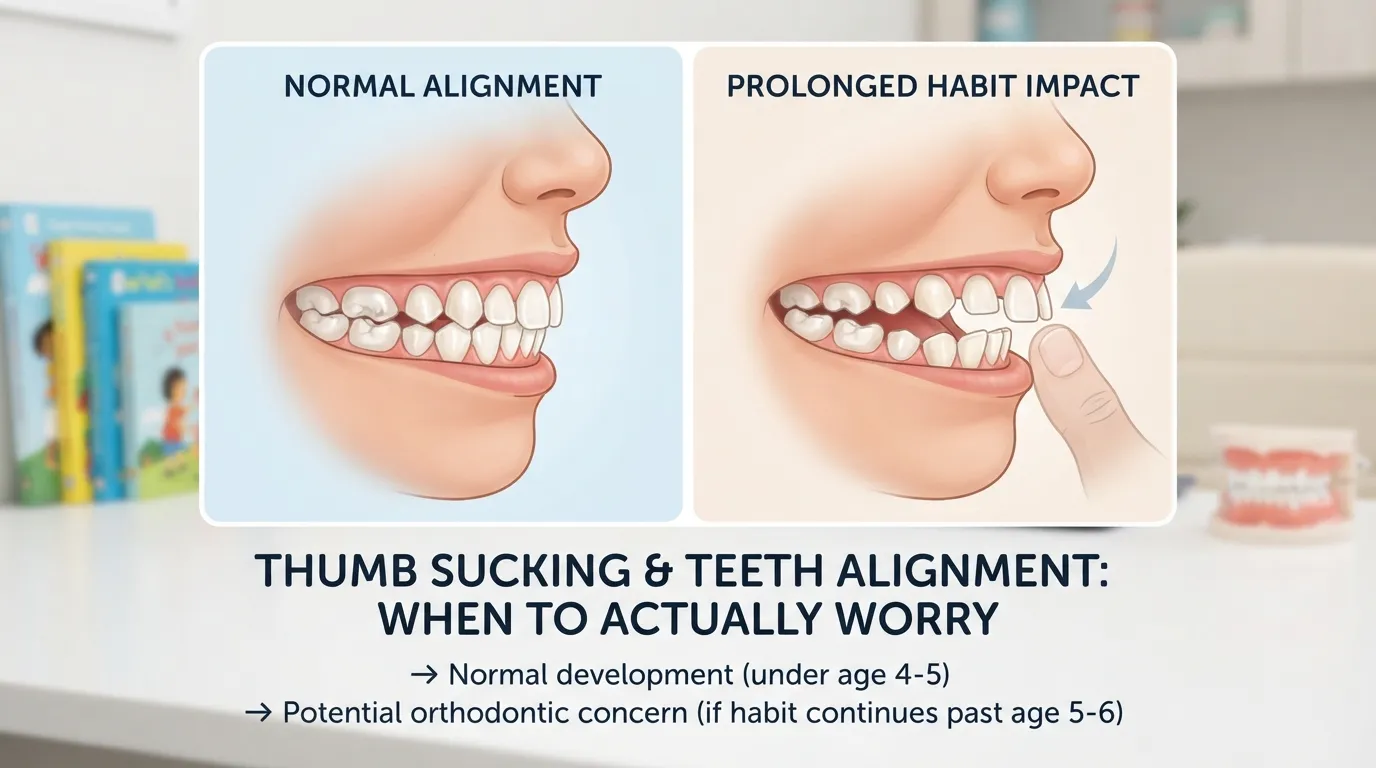
If you’ve caught yourself watching your five-year-old suck their thumb during storytime and quietly wondering, “should I be worried about this?” — you’re definitely not alone. It’s one of those parenting questions that sits in the back of your mind, somewhere between “probably fine” and “am I letting this go too long?”
Here’s the honest answer: thumb sucking teeth alignment concerns are real, but timing matters more than the habit itself. Most toddlers who suck their thumb never end up needing treatment. Others do. Let’s talk through exactly where that line sits, so you’re not guessing.
Overview: What This Guide Covers
We’re looking at when thumb sucking genuinely starts affecting a child’s teeth and bite, and when it’s simply a normal, harmless phase. You’ll learn about open bite children develop from prolonged sucking habits, the age that matters most, and gentle, evidence-based ways to help your child stop thumb sucking habit patterns. We’ll also cover the pediatric orthodontic signs worth watching for, and what actually happens if a dental check-up flags a concern.
In This Article, You’ll Discover…
Thumb Sucking Teeth Alignment
The exact age when thumb sucking stops being “just a phase”
How thumb sucking actually changes a growing mouth and bite
What an open bite in children actually looks like, and why it happens
Gentle, proven ways to stop thumb sucking habit patterns without a fight
Pediatric orthodontic signs that mean it’s time for a proper check
What early intervention treatment can look like if needed
Reassurance around what’s normal and what genuinely isn’t

Most thumb sucking teeth alignment concerns resolve naturally before permanent teeth arrive.
Why Thumb Sucking Happens in the First Place
Thumb sucking is one of the most natural self-soothing behaviours out there. Babies do it in the womb, toddlers do it to settle before sleep, and it’s honestly one of the least worrying habits a young child can have.
For most kids, it fades away on its own somewhere between ages two and four, right around when the front baby teeth are still doing their job and adult teeth haven’t started coming through yet. That timing is actually the whole key to this topic.
The Age That Actually Matters
Here’s the thing nobody quite explains clearly enough: thumb sucking before age four is rarely a dental concern. The mouth is still developing, baby teeth have room to move back into place, and the pressure from sucking hasn’t had years to reshape anything permanent.
Once a child passes four or five, especially once permanent teeth start erupting, that same habit can start reshaping how teeth and jaws grow. It’s not an overnight switch, more a gradual shift in risk the longer the habit continues past that window.
Why Timing Changes Everything
Adult teeth are still finding their final position well into the primary school years. If a thumb is consistently pressing against the front teeth and jaw during that window, it can genuinely alter the way those teeth settle in permanently.
How Thumb Sucking Changes Teeth Alignment
The mechanics here are pretty straightforward once you see them laid out. A thumb sitting between the upper and lower front teeth for hours a day, every day, applies constant gentle pressure in one direction.
Common changes linked to prolonged thumb sucking:
Upper front teeth flaring forward, sometimes called an overjet
Lower front teeth tipping backward
A narrowed upper palate from the sucking action itself
Crossbite, where upper back teeth sit inside the lower ones
Open bite, where front teeth don’t meet even when the back teeth do
That last one, open bite children develop from this habit, tends to be the most talked-about outcome, and for good reason.

Open bite children develop from prolonged thumb sucking is highly treatable when caught early.
Understanding Open Bite in Children
An open bite is exactly what it sounds like. The back teeth close together normally, but there’s a visible gap between the upper and lower front teeth even with the mouth fully shut.
Sometimes that gap even matches the shape of the child’s thumb almost exactly, which tells you a lot about how directly the habit is driving the shift. It’s not painful, and kids usually don’t notice it themselves, but it can affect speech sounds, biting into food, and confidence about their smile as they get older.
The reassuring part? Open bite treatment for children is very manageable, particularly when caught early rather than left until the teenage years.
Pediatric Orthodontic Signs Worth Watching For
You don’t need to become an amateur orthodontist here, but a few signs are worth a proper look if you notice them:
A visible gap between front teeth when your child bites down normally
Front teeth that seem to be pushing forward or flaring outward
Difficulty pronouncing certain sounds, particularly “s” and “th” sounds
Your child still sucking their thumb intensely past age five
Complaints about their bite feeling “off” or teeth not meeting comfortably
None of these mean panic mode. They just mean it’s worth mentioning at your child’s next dental check-up rather than waiting.
Gentle Ways to Stop Thumb Sucking Habit Patterns
This is where patience really pays off. Pressure and nagging tend to backfire, sometimes making kids cling to the habit harder out of anxiety.
Approaches that genuinely help, based on paediatric guidance:
Praise and encouragement when they’re not sucking, rather than criticism when they are
Identify emotional triggers, since many kids suck their thumb more when anxious or tired
Offer an alternative comfort object, like a soft toy to squeeze instead
Use a simple reward chart, building from one night, to a week, to longer stretches
Involve your child’s dentist in the conversation, since hearing it from someone other than mum or dad sometimes lands differently
Avoid harsh methods like scolding, shaming, or forcing a glove onto their hand against their will — these tend to create more stress without actually solving anything. If gentle approaches aren’t working after consistent effort, a chat with your dentist about options like a thumb guard is a reasonable next step.
What Happens If Treatment Is Needed
If a check-up does flag a genuine alignment concern, don’t panic — this is common, and it’s very treatable, especially when caught in the primary school years. Depending on severity, your dentist might simply monitor things at future visits, recommend habit-breaking strategies, or refer you to an orthodontist for a tailored assessment around age seven, which is generally considered a good window for early evaluation.

Gentle, encouraging approaches work best to stop thumb sucking habit patterns for good.
FAQ: Thumb Sucking and Teeth Alignment
At what age does thumb sucking start affecting teeth alignment?
Thumb sucking generally isn’t a concern before age four, since baby teeth have room to settle back into place. Past age five, especially once adult teeth start erupting, the risk of lasting changes increases.
What does an open bite from thumb sucking look like?
An open bite shows as a visible gap between the upper and lower front teeth, even when the back teeth close together normally. Sometimes the gap closely matches the shape of the child’s thumb.
Will my child’s teeth naturally correct themselves if they stop thumb sucking early enough?
Often, yes, particularly if the habit stops before permanent teeth fully settle into position. The earlier the habit ends, the more likely natural correction happens without treatment.
How do I get my child to stop thumb sucking without a battle?
Gentle encouragement, identifying triggers, and offering alternative comfort objects tend to work far better than scolding or forceful methods. Involving your dentist in a calm conversation can also help kids take it seriously.
Does thumb sucking cause permanent damage to teeth?
It can, if the habit continues well past the age when adult teeth are coming through, but most changes are treatable with early orthodontic intervention. The key factor is catching it and addressing it before the teenage years.
Wrapping It Up
Thumb sucking is normal, common, and rarely worth losing sleep over before age four. The real watch-point is what happens after that, particularly around open bite and other alignment changes that can develop if the habit lingers into the school years. Catching it early with a proper dental check makes treatment simpler and gentler for everyone involved.
Got questions about your child’s smile development? Book your appointment at Sunbury Dental Group today and we’ll take a proper look together.