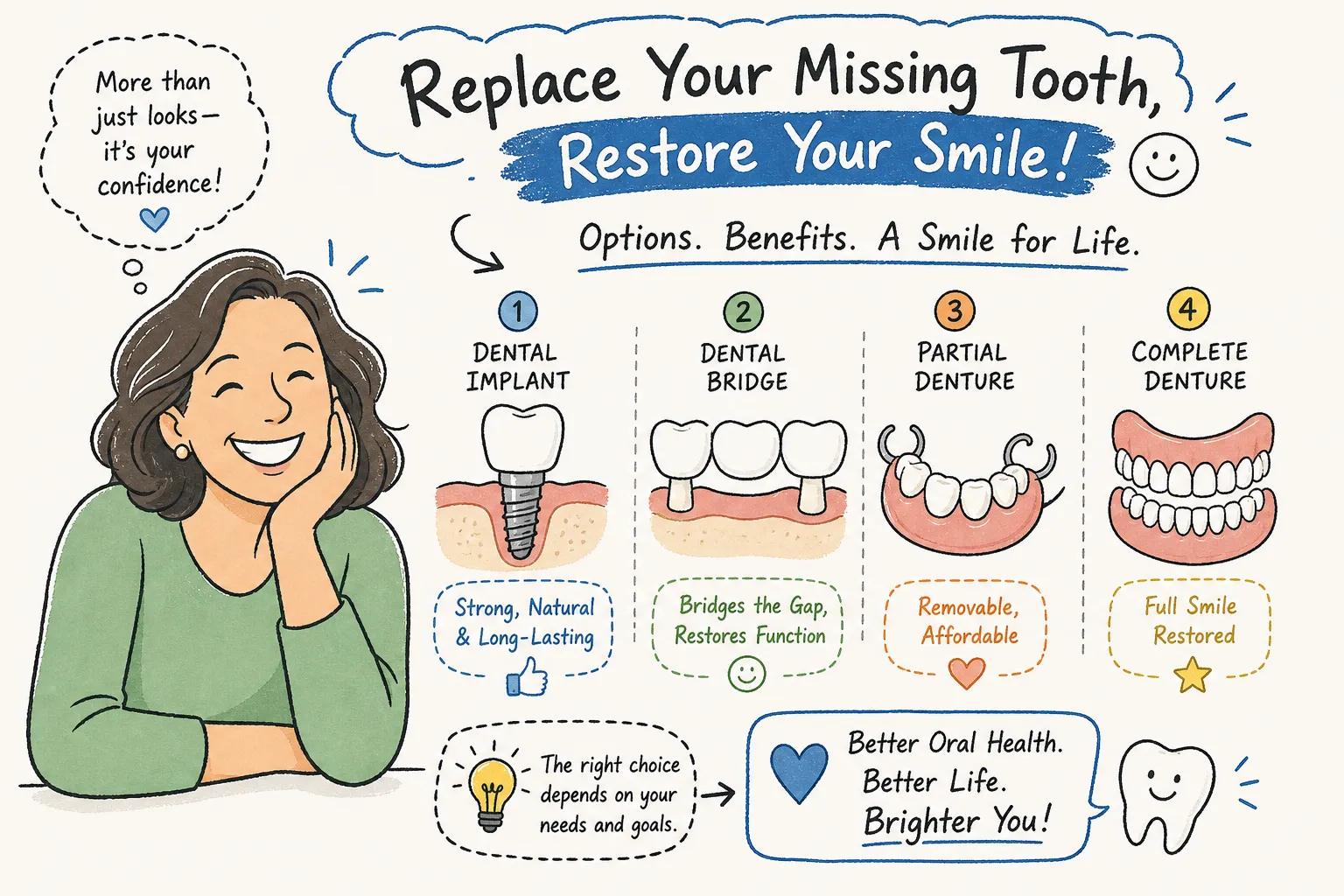
The good news is that modern dentistry offers several ways to replace a missing tooth, ranging from affordable removable options to permanent solutions that function like natural teeth. There isn’t a single “best” answer that suits everyone. The right choice depends on your bone health, budget, timeline, and what you want your smile to do for you over the next decade. Sunbury Dental Group offers restorative consultations locally, so patients across the north-west of Melbourne can explore their options without a trip to the CBD.
This guide walks through each major option, what it costs in Australia right now, how long it lasts, and what questions to bring to your next appointment.
Why a missing tooth needs replacing sooner than you think
The urgency here isn’t about aesthetics. It’s about bone. When a tooth is removed or lost, the jawbone in that area no longer receives stimulation from chewing. Without that pressure, the body treats the bone as surplus and begins reabsorbing it. Clinical studies on alveolar bone resorption show the most dramatic changes occur within the first three to six months, with the jaw losing up to 63% of its horizontal width in that window. By the end of the first year, the available bone volume can be significantly reduced.
This matters enormously for treatment planning. Dental implants require sufficient bone density to anchor securely, so the longer someone waits, the more likely they are to need a bone graft before an implant is even possible. That adds both cost and time to the process. Acting within the first six months preserves more tooth replacement options and generally lowers the overall investment required, since grafting is less likely to be needed.
Adjacent teeth compound the problem. Natural teeth drift toward any gap in the arch over months and years, altering the bite and creating uneven wear. Crooked, drifting teeth are harder to restore later, delays compound this, and teeth that have shifted may require orthodontic correction before a replacement can even be seated correctly.
Dental implants, tooth replacement options that mimic a natural tooth
An implant is a titanium post placed surgically into the jawbone, where it fuses with the surrounding bone over three to six months in a process called osseointegration. Once that fusion is complete, an abutment and porcelain crown are attached on top, creating a restoration that looks, feels, and bites like a natural tooth. Because the post integrates with the bone directly, it is the only tooth replacement option that actively prevents ongoing bone loss.
What implants cost in Australia and how long they last
In Australia in 2026, a single implant including the post, abutment, and crown typically costs between $3,000 and $7,000, with most straightforward cases in Melbourne and surrounding areas sitting around $4,800 to $6,000. Complex cases involving bone grafting or sinus lifts can push that higher. The titanium post is designed to last a lifetime; the crown typically needs replacement after 10 to 15 years, much like any other dental crown.
The long-term value stacks up well. With a 90 to 95 per cent success rate over 10 years and no impact on neighbouring teeth (unlike a bridge, which requires filing down the adjacent teeth), implants often offer better long-term value in published cost-benefit analyses over a 20-year horizon. That said, they aren’t right for everyone. Insufficient bone density is the most common barrier, though grafting resolves this in many cases. Active gum disease, uncontrolled diabetes, and smoking all increase failure risk and need to be addressed before treatment begins. Candidacy is confirmed through a clinical assessment, including digital X-rays or a CBCT scan, not a general checklist.
What about mini dental implants?
Mini dental implants are a narrower variation of the standard implant, roughly half the diameter, and are sometimes indicated when bone volume is insufficient for a conventional implant or when a patient needs a lower-cost solution to stabilise a lower denture. They carry some limitations around biting force and longevity compared to full-size implants, but for the right candidate they can be a practical stepping stone or a suitable long-term solution in specific clinical situations. Your dentist can advise whether mini implants are worth considering in your case.
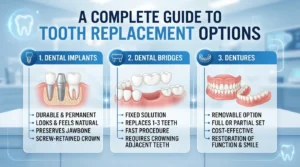
Dental bridges: a fixed result without surgery
A bridge spans a gap by crowning the two teeth on either side of the space and suspending a false tooth between them. The entire structure is cemented permanently in place, which means no removal, no nightly soaking, and no adhesives. For patients who want a fixed result and want to avoid a surgical procedure, a bridge is a practical and well-established option.
In Australia, a standard three-unit bridge currently costs between $2,000 and $4,500, making it comparable to or slightly less than a single implant for many straightforward cases. The lifespan is typically 10 to 15 years, after which the bridge may need replacing, particularly if the supporting teeth have changed over time.
The honest trade-offs are worth understanding before committing. The two healthy abutment teeth must be filed down significantly to accept the crowns, this is irreversible and increases their long-term vulnerability. Because the false tooth sits above the gum rather than integrating with the bone, bone resorption continues beneath the bridge over time. This isn’t a dealbreaker for everyone, but it is something to factor into a long-term plan. Bridges work best when the adjacent teeth are strong and intact, and they aren’t suitable when multiple consecutive teeth are missing or when the neighbouring teeth are already heavily restored.
Partial and full dentures, affordable tooth replacement options
Dentures have evolved significantly and remain a legitimate, practical choice for many patients, particularly those who aren’t surgical candidates or who need a solution quickly. A removable partial denture replaces one or several teeth using an acrylic or metal framework that clips onto remaining natural teeth. In Australia, partial dentures range from approximately $800 to $2,500, making them the most budget-accessible option for replacing a missing tooth. They require no surgery and can often be placed within a few appointments, which makes them a sensible interim solution or a permanent choice depending on circumstances.
Full dentures replace an entire arch and rest on the gum tissue. The main limitation is stability: as bone resorption continues beneath a conventional denture, the fit deteriorates over time, and patients often find themselves relying on adhesives. Studies on masticatory force in denture wearers consistently find that conventional dentures deliver around 10% of natural bite strength, which affects confidence and food choices more than most people anticipate before getting dentures.
Implant-supported dentures and the All-on-4 approach
By anchoring a full denture onto two to four titanium implants, the restoration is locked in place, transmits chewing forces to the bone, and eliminates slipping. The All-on-4 concept, which supports a full arch on just four strategically placed implants, is one of the most effective approaches for patients replacing an entire arch. Clinical reviews of implant-supported denture outcomes report approximately 75% less bone loss compared to conventional removable dentures, reflecting the benefit of returning load to the jaw. This hybrid approach offers a strong middle ground between conventional dentures and individual implants, especially for patients who have experienced significant tooth loss.
The factors that determine which tooth replacement option suits you
Bone density and volume are the primary gatekeepers for any implant-based solution. A digital X-ray or CBCT scan gives the dentist a precise picture of what bone is available and whether grafting will be needed. This single piece of information often shapes the entire treatment plan, so it is the natural starting point for any restorative assessment.
Active gum disease must be treated and stabilised before any restorative work proceeds. Placing a bridge or implant into an infected environment sets both the restoration and the surrounding tissue up to fail. Similarly, systemic health factors, including uncontrolled diabetes and osteoporosis, increase surgical risk, which may steer the initial recommendation toward a bridge or denture as a safer first step. These are not permanent disqualifications; they are variables a skilled dentist accounts for when building a realistic treatment plan.
Budget and timeline shape the decision just as meaningfully as clinical factors. For patients with a tight budget or a short timeline, a partial denture or bridge is often the most sensible starting point, with implants as a longer-term upgrade when circumstances allow.
For patients prioritising longevity and wanting to minimise future dental work, implants typically offer the strongest return on investment despite the higher upfront cost. Lifestyle factors, including smoking, contact sports, and commitment to home hygiene, all genuinely affect outcomes and should be discussed openly during a consultation rather than glossed over.
Getting a clear recommendation without travelling to Melbourne
A restorative consultation at Sunbury Dental Group includes a full clinical assessment, digital X-rays, and a conversation about health history, budget, and the outcome you are hoping for. Dr Nita Kumari and the team explain each suitable option in plain language, not dental jargon, and provide a transparent treatment plan with pricing before anything is agreed to. Patients across Sunbury, Diggers Rest, Riddells Creek, Gisborne, and surrounding suburbs can access this level of restorative expertise locally.
Before committing to any treatment, it is worth arriving at your consultation with a few specific questions prepared:
- What happens to the bone beneath this option over the next 10 years?
- Can this be upgraded to an implant later if my circumstances change?
- What does the total cost include, and are there likely additional expenses?
- What is the realistic lifespan given my specific bone health and medical history?
These questions help you get the most out of any consultation and make sure the recommendation you receive reflects your full situation, not just the gap in your smile.
The clearest next step
Every tooth replacement option comes with its own trade-offs, and the best choice is the one that fits your bone health, budget, and long-term goals. The decision becomes far less complicated once a professional assessment is in hand. Once you know your bone density, your gum health, and what each option would realistically cost and last in your specific situation, the path forward becomes clear.
If you are weighing up your tooth replacement options in Sunbury or the surrounding area, a local restorative consultation is a practical first step toward making a confident, informed decision. Visit us at 5/92 Evans Street, Sunbury VIC 3429, or book online to get started.
FAQ – General overview questions
Q: What are the main tooth replacement options available today?
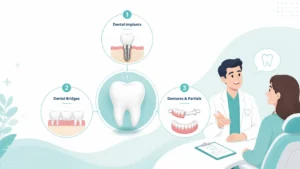
The three most common ways to replace missing teeth are dental implants, dental bridges, and dentures (full or partial), each suited to different clinical situations and budgets.
Q: How do I know which tooth replacement option is right for me?
The best choice depends on how many teeth are missing, the condition of surrounding teeth, your bone and gum health, age, and budget, so a personalised assessment with your dentist is essential.
Q: Can missing teeth be left untreated?
Leaving a gap untreated can lead to shifting teeth, bone loss in the jaw, bite problems, and increased strain on remaining teeth over time.
Dental implants
Q: What is a dental implant and how does it work?
A dental implant is a titanium or ceramic post surgically placed into the jawbone to act as an artificial tooth root, which then supports a crown, bridge, or denture.
Q: How much do dental implants cost in Australia?
Single dental implants in Australia typically range from around 3,000 to 7,500 dollars per tooth depending on the case, materials, and any bone grafting required.
Q: How long do dental implants last?
With proper care, a well-placed dental implant can last a lifetime, and even the crown on top typically remains functional for decades before it may need replacement.
Q: Who is a good candidate for dental implants?
Implants tend to suit patients who want a long-term, fixed solution, have adequate bone density and healthy gums, and prefer not to remove an appliance at night.
Dental bridges
Q: What is a dental bridge and when is it recommended?
A dental bridge uses crowns on the teeth either side of a gap to hold one or more artificial teeth in place, and is often recommended when one or two teeth are missing and adjacent teeth may already need crowns.healthline+1
Q: How much does a dental bridge cost?
Dental bridges in Australia generally cost between 500 and 1,500 dollars per tooth, though implant-supported bridges cost more due to the added surgical component.
Q: How long do dental bridges last?
A traditional bridge typically lasts five to fifteen years, while an implant-supported bridge can last twenty years or longer with good oral hygiene.
Dentures and partial dentures
Q: What is the difference between full dentures and partial dentures?
Full dentures replace an entire arch of missing teeth, while partial dentures are removable appliances that fill in gaps where only some natural teeth remain.
Q: Are dentures a cost-effective tooth replacement option?
Yes, dentures generally have the lowest upfront cost of the three main options, making them a practical choice for patients who need multiple teeth replaced on a budget.
Q: How long do dentures typically last?
Partial dentures usually last around five to seven years before needing a reline or replacement due to changes in gum and bone shape.
Comparing options
Q: What’s the difference in cost between implants, bridges, and dentures?
Dentures are usually the cheapest upfront, bridges sit in the mid-range per tooth, and dental implants carry the highest initial cost but often prove more cost-effective long-term.
Q: Which tooth replacement option preserves jawbone health best?
Dental implants are the only option that actively preserves jawbone density, since they replace the tooth root and stimulate the bone the way a natural tooth does.
Q: Do dental bridges or dentures affect my adjacent teeth?
Yes, a fixed bridge requires shaping the adjacent teeth to hold crowns, while dentures rely on clasps or suction against the gums rather than altering nearby teeth.
Booking and next steps
Q: How do I start the process of replacing a missing tooth at Sunbury Dental Group?
Book a consultation so your dentist can assess your bone health, remaining teeth, and goals before recommending the most suitable and cost-effective tooth replacement option.
Q: Is tooth replacement covered by private health insurance in Australia?
Coverage varies by fund and policy; dental bridges and dentures are more commonly partially covered, while implants may receive lower rebates, so checking with your insurer is recommended