
Adult Dental Check-Ups: How Frequently Is Often Enough?
How often should adults get a dental check-up? It’s one of the most common questions dentists hear. The answer is more nuanced than the familiar ‘every six months’ most of us grew up with. Many adults are advised to see a dentist regularly. However, the ideal dental check-up frequency depends on your individual health history, risk profile, and the condition of your mouth right now. Understanding how often should adults get a dental check up can greatly impact your oral health.
Understanding how often should adults get a dental check up is vital for maintaining good oral health.
Good dental practices build recall plans around each patient’s actual risk profile and oral health history. They focus on long-term goals, not a one-size-fits-all schedule. This approach is meaningfully different and far more useful. Sunbury Dental Group in Sunbury VIC takes this kind of evidence-based, personalised approach to planning your dental recall interval.
By the end of this article, you’ll know the baseline recommendation from Australian dental authorities, which risk factors change that interval, what actually happens at a routine check-up, and how to lock in the right schedule with your dental team.
Knowing how often should adults get a dental check up helps in preventing potential dental issues.
How Often Should Adults Get a Dental Check-Up, Australian Guidelines
This is crucial for maintaining optimal dental health. The question of how often should adults get a dental check up is essential for personalized dental care.
This brings us back to the question of how often should adults get a dental check up and its importance.
The Australian Dental Association (ADA) and Healthdirect recommend that most healthy adults aim for a check-up every six to twelve months. Healthdirect clearly states that ‘a dental practitioner will determine the exact frequency based on the health of your teeth and gums.’ This single sentence shifts the six-month habit from a strict rule to a sensible starting point.
The question of how often should adults get a dental check up really hinges on your personal needs.
The ADA clarifies that a one-size-fits-all approach doesn’t work. Adults with very low risk of oral disease may only need a check-up every one to two years. High-risk patients, such as those managing gum disease, diabetes, or a pattern of frequent cavities, may need visits every three to four months. The range supported by Australian dental check-up recommendations spans three to twenty-four months. Your dentist will set the specific interval based on evidence gathered during your visit.
Clinical research backs this up. A major Cochrane systematic review and the large INTERVAL randomised controlled trial both found no meaningful difference in tooth decay, gingival bleeding, or quality of life between adults on six-month recall and those on personalised, risk-based intervals over a four-year period. For adults with good oral health, extending to twelve months doesn’t produce worse outcomes, and that finding is rated high certainty. So if your dentist recommends a yearly visit, they’re following the evidence, not cutting corners.
The Risk Factors That Shorten Your Dental Cleaning Interval
Active periodontal (gum) disease is a common reason a dentist moves a patient to a three-to-four-month schedule. Once pocketing, bone loss, or consistent bleeding on probing is present, monitoring every twelve months becomes too infrequent for effective disease management. Quarterly visits allow the dental team to track changes, reinforce home care, and intervene before things deteriorate further.
So, how often should adults get a dental check up if they have specific risk factors?
Diabetes, particularly when poorly controlled, accelerates both gum tissue breakdown and cavity development. Patients with an HbA1c above 8% are routinely placed on a three-to-four-month recall, and even well-controlled diabetics benefit from six-monthly visits rather than annual ones. Smoking sits in the same high-risk category: it masks early gum inflammation, raises oral cancer risk substantially, and calls for more frequent soft tissue monitoring than most patients realise.
Understanding how often should adults get a dental check up is crucial for diabetics.
Dry mouth (xerostomia) is another major risk factor for decay. Saliva neutralises acids and washes away bacteria; without it, cavities form rapidly, and existing restorations deteriorate faster. Xerostomia often results from medications, causing many adults to develop this risk factor without linking it to their dental health. If you’ve had three or more new cavities in recent years or if you’re managing extensive dental work including crowns, bridges, or implants, a yearly check-up isn’t enough. A three-to-six-month dental cleaning interval is the standard clinical recommendation for these groups.
Patients often wonder how often should adults get a dental check up based on their treatments.
Who Can Safely Wait Longer Between Visits
Not everyone needs to visit the dentist twice a year. A genuinely low-risk adult has no history of gum disease, consistently low decay rates, excellent home hygiene habits, no systemic conditions affecting oral health, and doesn’t smoke. For this profile, Australian guidelines support recall intervals of up to twelve to twenty-four months without negative impacts on oral health outcomes. A two-year gap for a healthy adult with a clean track record is clinically appropriate.
For many low-risk adults, the question is how often should adults get a dental check up becomes less critical.
The important caveat is that risk profiles change. New medications, increased stress, dietary shifts, and ageing all affect your oral health in ways that aren’t always obvious. Two years is generally the maximum safe gap, even for patients with excellent health. “Low risk” means you visit less often, not that you stop visiting altogether. Staying in contact with your dentist, even on a longer cycle, is what keeps small issues from becoming expensive ones.
As we talk about how often should adults get a dental check up, we recognize that risk profiles can change.
What Actually Happens at a Routine Adult Check-Up
A standard adult check-up covers more ground than most people expect. Your dentist updates your medical and dental history (including any new medications, since these can affect oral health), conducts a thorough visual examination of every tooth surface for decay and wear, measures periodontal pocket depths to assess gum health, and screens the soft tissues of your mouth and neck for any signs of oral cancer. A bite and jaw assessment checks for grinding patterns or early signs of TMJ dysfunction. Taken together, this is a comprehensive health review, not just a look at your teeth.
During your routine check-up, you might ask how often should adults get a dental check up based on your findings.
Digital X-rays are taken periodically when clinically indicated, the timing is guided by your individual risk profile and your dentist’s clinical judgement, to detect issues that aren’t visible during the clinical exam: decay between teeth, early bone loss, or problems beneath existing restorations. Early detection of these problems typically means simpler treatment options and significantly lower costs than addressing the same issues once they’ve progressed. Sunbury Dental Group is equipped with digital X-ray technology to support this kind of thorough, preventive care.
The findings from your check-up directly determine your recall interval. A clean exam with healthy gum pocket readings and no new decay may result in a twelve-month recall. Active bleeding on probing or early bone loss changes that recommendation to three to four months. The recall interval isn’t a guess; it’s a clinical decision made from evidence gathered during the appointment itself. Your dentist sets that interval at the end of the visit, and understanding why can help you take it seriously.
Ultimately, the findings will influence how often should adults get a dental check up in the future.
Practical Questions to Ask at Your Next Appointment
Don’t hesitate to ask your dentist how often should adults get a dental check up during your visit.
Walking into a check-up with a few specific questions changes the dynamic of the visit. Instead of passively receiving a recall appointment, you leave with a clear understanding of your own risk profile and what you can do about it. These aren’t awkward questions, dentists expect them and welcome them.
- Am I currently low, moderate, or high risk for decay and gum disease?
- Based on today’s findings, what recall interval do you recommend for me specifically?
- Are there any risk factors I should address before my next visit?
- What signs at home should prompt me to book sooner rather than waiting for my scheduled appointment?
If it’s been over twelve months since your last check-up, the most practical first step is to book a comprehensive exam that includes digital X-rays. This establishes a current baseline and gives your dentist everything they need to build an appropriate recall plan. Many practices offer a comprehensive new-patient exam with imaging and a personalised recall recommendation all in one appointment, Sunbury Dental Group is structured exactly this way. No guesswork, no generic advice about coming back in six months regardless of what the findings actually show.
Addressing the Barriers That Keep People Away
Cost is the most commonly cited reason Australians delay dental care. Research shows that about 63% of Australians report putting off dental visits due to affordability concerns. Practical supports are available that many people don’t know about. The Child Dental Benefits Schedule (CDBS) provides eligible children aged 0 to 17 with capped benefits for basic services including check-ups, cleaning, and fillings. You can check the current cap and eligibility criteria at Service Australia, as the figure is updated periodically.
Dental anxiety is the other significant barrier, and it’s worth naming directly. Avoiding the dentist because of fear almost always results in a more complex and more costly visit when you eventually go, compared to what a routine check-up would have involved. The gap between appointments doesn’t reduce the anxiety; it usually increases it, while allowing small issues to develop into larger ones. Communicating your concerns before your appointment, even in a brief note when you book online, gives the dental team the opportunity to adjust their approach. Sunbury Dental Group is structured to support nervous patients, from the way appointments are paced to how treatment options are explained before anything happens.
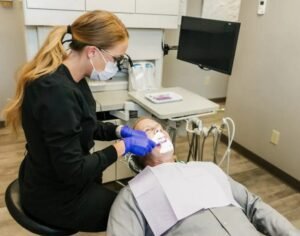
How Often Should Adults Get a Dental Check-Up? Getting the Interval Right for You
Wondering how often should adults get a dental check-up? Here’s the practical summary: most healthy adults need a routine dental exam every six to twelve months. High-risk patients need visits every three to four months, while low-risk adults with excellent oral health may be fine on a twelve-to-twenty-four-month dental recall interval. The right answer specifically for you comes from your dentist based on their findings during your visit, not from a general rule.
To summarize, the answer to how often should adults get a dental check up is personalized for each individual.
If you’re unsure where you sit, the simplest step is to book a check-up and let the clinical findings guide the schedule. For residents in Sunbury, Diggers Rest, Riddells Creek, Gisborne, Lancefield, and surrounding areas, Sunbury Dental Group offers comprehensive adult check-ups with digital X-ray imaging and a personalised recall plan built around your actual risk profile. It takes the guesswork out of one of the more straightforward investments you can make in your long-term health.
Understanding how often should adults get a dental check up can significantly enhance your oral health journey.
FAQ Section: Adult Dental Check-Ups — How Often Is Often Enough?
Q1: How often should healthy adults get a dental check-up in Australia?
The Australian Dental Association and Healthdirect generally recommend most healthy adults have a check-up every six to twelve months, with the exact interval determined by your dentist based on the health of your teeth and gums. This isn’t a strict rule — it’s a starting point that your dentist adjusts based on your individual risk profile.
Q2: Is it actually safe to wait twelve months between dental visits instead of six?
For adults in good oral health, research including a major Cochrane systematic review and the INTERVAL randomised controlled trial found no meaningful difference in tooth decay, gum bleeding, or quality of life between six-month and personalised, risk-based recall intervals over a four-year period. This finding is rated high certainty, so a dentist recommending a yearly visit for a low-risk patient is following the evidence, not cutting corners.
Q3: What health conditions mean I might need to see a dentist more often than every six months?
Active gum disease, poorly controlled diabetes (particularly with an HbA1c above 8%), smoking, and dry mouth (xerostomia) are all risk factors that can shorten your recommended interval to every three to four months. Patients managing extensive dental work such as crowns, bridges, or implants, or who’ve had three or more new cavities in recent years, are also typically placed on a shorter three-to-six-month cycle.
Q4: Can some adults safely go longer than a year between dental check-ups?
Yes, adults with no history of gum disease, low decay rates, strong home hygiene habits, no relevant systemic conditions, and no smoking history may be supported on a recall interval of up to twelve to twenty-four months. Two years is generally considered the maximum safe gap even for very low-risk patients, since risk profiles can shift over time.
Q5: What actually happens during a routine adult dental check-up?
A standard check-up includes an update to your medical and dental history, a full visual examination of every tooth surface, periodontal pocket depth measurements to assess gum health, an oral cancer screening of the soft tissues in your mouth and neck, and a bite and jaw assessment for grinding or TMJ signs. Digital X-rays are taken periodically when clinically indicated to detect issues not visible during the exam, such as decay between teeth or early bone loss.
Q6: How does my dentist decide how long until my next check-up?
Your recall interval is a clinical decision based on the findings from your visit, not a guess. A clean exam with healthy gum readings and no new decay may support a twelve-month recall, while active bleeding on probing or early bone loss would typically shorten that to three to four months.
Q7: What should I ask my dentist to understand my own check-up schedule?
It’s reasonable to ask whether you’re currently low, moderate, or high risk for decay and gum disease, what recall interval is recommended for you specifically based on that day’s findings, what risk factors you could address before your next visit, and what warning signs at home should prompt an earlier appointment.
Q8: What if it’s been years since my last dental visit?
The most practical first step is booking a comprehensive exam that includes digital X-rays to establish a current baseline, which then allows your dentist to build an appropriate, personalised recall plan going forward rather than defaulting to generic advice.