
Bleeding Gums When Flossing: Warning Sign or Normal?
You flossed, spat, and there it was, a streak of blood on the white thread. Your first thought was probably “did I do something wrong?” We hear this question constantly in our Sunbury clinic, and honestly, it deserves a proper answer, not just a quick reassurance.
Overview
This guide breaks down exactly what it means when your gums bleed while flossing, and when that bleeding is genuinely nothing to worry about versus an early sign of gum disease. We’ll walk through the difference between reversible gingivitis and more serious periodontitis, share practical healthy gums tips, and explain what gingivitis treatment actually looks like. You’ll also get real answers to the questions Sunbury families ask us most in the chair. By the end, you’ll know exactly what your gums are trying to tell you.
In This Article, You’ll Discover…
- Whether bleeding gums when flossing is ever truly “normal”
- The early warning signs of gum disease you shouldn’t ignore
- The real difference between gingivitis and periodontitis
- What gingivitis treatment involves, and how reversible it actually is
- Simple healthy gums tips that make a genuine difference
- Correct flossing technique (because doing it wrong causes its own problems)
- When bleeding gums mean it’s time to book a dental visit
Is Bleeding Gums When Flossing Actually Normal?
Here’s the honest answer: a little bleeding when you first start flossing regularly can be common, but it’s not something that should just continue forever. If your gums bleed every single time you floss, week after week, that’s your body waving a flag, not just a one-off hiccup.
Bleeding gums are actually the number one symptom of gingivitis, the earliest and mildest form of gum disease. It happens because plaque builds up along the gum line, and your gum tissue becomes inflamed and more prone to bleeding when disturbed.
So no, ongoing bleeding isn’t something to shrug off. One dentist we spoke with put it plainly: don’t ignore bleeding gums, it’s never really “normal” long-term.
What Actually Causes Bleeding Gums
There are a few common culprits behind this, and most of them are fixable once you know what you’re dealing with.
Plaque Buildup and Gingivitis
The most frequent cause is a build-up of dental plaque along and beneath the gum line. Your immune system responds to that bacteria with inflammation, which makes gum tissue swell, redden, and bleed far more easily than healthy gums would.
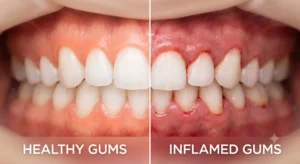
Healthy gums should look pink and firm, not red, puffy or swollen.
Flossing Technique Issues
Sometimes it’s not disease at all, it’s just technique. Flossing too aggressively, snapping the floss down hard, or using a rough sawing motion can irritate and even injure healthy gum tissue.
Starting or Restarting a Flossing Habit
If you’ve just started flossing regularly, or you’re getting back into it after a long break, some initial bleeding is common while your gums adjust. This usually settles within a week or two of consistent, gentle flossing.
Other Contributing Factors
- Certain medications, including blood thinners, can make gums bleed more easily
- Hormonal changes, particularly during pregnancy, can increase gum sensitivity
- Vitamin deficiencies, especially vitamin C, can weaken gum tissue
- Smoking or vaping, which interferes with normal gum healing
Gingivitis vs Periodontitis: Know the Difference
This distinction matters more than most people realise, because one is fully reversible and the other isn’t.
| Feature | Gingivitis | Periodontitis |
| Bleeding | Bleeds easily during brushing or flossing | Heavy bleeding, often with pus or discharge |
| Gum appearance | Red, puffy, tender | Gums pulling away from teeth, receding |
| Bone/tissue damage | None, fully reversible | Bone loss can occur, often permanent |
| Tooth stability | Teeth remain firm | Teeth may loosen or shift |
| Bad breath | Sometimes present | Persistent, doesn’t go away |
| Reversibility | Fully reversible with good care | Requires professional treatment, damage often permanent |
Gingivitis is genuinely good news in disguise. Catch it here, and you can turn things around completely with better habits and a professional clean.
Early Signs of Gum Disease You Shouldn’t Brush Off
Beyond bleeding, there’s a cluster of symptoms worth paying attention to. Catching these early is what makes gingivitis treatment so effective.
- Gums that look redder or darker than their usual pink shade
- Swelling or puffiness along the gum line
- Persistent bad breath or a bad taste that won’t go away, even after brushing
- Gums that feel tender or sore to the touch
- A shiny or unusually smooth appearance to the gum tissue
- Gums that seem to be pulling away from your teeth, sometimes called recession
- Any looseness in your teeth, which is a more advanced warning sign
If you’re noticing more than one of these alongside the bleeding, that’s a fairly clear signal it’s time to book in rather than wait it out.
What Gingivitis Treatment Actually Involves
The good news first: gingivitis doesn’t cause permanent bone loss, and it’s genuinely treatable. Here’s roughly what treatment looks like.
A professional clean removes the plaque and tartar buildup that’s driving the inflammation in the first place. From there, it’s really about consistency at home, brushing properly twice a day, flossing daily, and coming back for regular check-ups every six to twelve months. For most people, gum bleeding noticeably improves within one to two weeks of consistent, correct care.
If gum disease has progressed further into periodontitis, treatment becomes more involved and may include deeper cleaning below the gum line, and in some cases, referral to a periodontal specialist. That’s exactly why catching things early, at the gingivitis stage, saves you a lot of hassle down the track.
How to Floss Properly (Without Hurting Your Gums)
A lot of bleeding actually comes down to technique, so let’s fix that.
Step-by-Step Correct Flossing
- Pull off roughly 30 to 45cm of floss and wind most of it around your middle fingers
- Hold a short length taut between your thumbs and index fingers
- Gently slide the floss between two teeth, don’t force or snap it down
- Curve the floss into a C-shape around each tooth and glide it up and down, tucking slightly under the gum line
- Move to a fresh section of floss for each tooth to avoid spreading bacteria
- Repeat for every tooth, finishing with a rinse
Gentle and consistent beats rough and occasional, every time.
Healthy Gums Tips You Can Start Today
- Brush for two full minutes, twice daily, using a soft-bristled brush
- Floss once a day, even if your gums bleed at first, that’s often part of the healing process
- Book a professional clean every six to twelve months
- Cut back on sugary snacks and drinks, which feed the bacteria behind gum disease
- Avoid smoking or vaping, both interfere with your gums’ ability to heal
- Stay hydrated and eat a balanced diet to support your immune system’s fight against inflammation
None of these are complicated. They’re just habits that need to become routine rather than occasional.
Frequently Asked Questions
Is it normal for gums to bleed when flossing?
A little bleeding when you first start flossing regularly can happen, but ongoing bleeding every time you floss usually points to gingivitis. It’s a sign worth paying attention to rather than ignoring.
How do I stop my gums from bleeding when I floss?
Improve your flossing technique using a gentle C-shape motion, floss daily rather than occasionally, and book a professional clean to remove built-up plaque. Most people see bleeding improve within one to two weeks of consistent care.
What’s the difference between gingivitis and periodontitis?
Gingivitis is an early, fully reversible form of gum disease causing redness and bleeding, while periodontitis is more advanced and can cause permanent bone loss and tooth looseness. Catching gum issues at the gingivitis stage makes treatment far simpler.
Can bleeding gums be a sign of something more serious?
In most cases, bleeding gums point to gingivitis caused by plaque buildup, but persistent bleeding can also relate to certain medications, vitamin deficiencies, or hormonal changes. If bleeding continues despite good oral hygiene, it’s worth getting checked.
How long does it take for gum bleeding to stop after starting to floss?
If the bleeding is from adjusting to a new flossing habit, it typically settles within one to two weeks of consistent, gentle flossing. If it continues beyond that, it’s likely linked to gingivitis and worth a dental check.
Should I stop flossing if my gums bleed?
No, stopping flossing usually makes things worse, since plaque continues to build up without it. Keep flossing gently and consistently, and the bleeding typically improves as your gum health does.
The Bottom Line
Bleeding gums when flossing isn’t something to just accept as normal, but it’s also not something to panic about. Most of the time, it’s early gingivitis, which is completely reversible with better daily habits and a professional clean. Catching it now, rather than waiting, is what keeps it from turning into something more serious like periodontitis.
If your gums have been bleeding for more than a couple of weeks, or you’ve noticed swelling, bad breath, or tenderness alongside it, it’s time to get it looked at properly.
Book your appointment at Sunbury Dental Group today:
Note: This content is general educational information only and doesn’t replace individual diagnosis from a registered dental practitioner. Persistent bleeding, pain, or looseness should always be assessed in person, in line with AHPRA advertising guidelines and Australian Consumer Law.