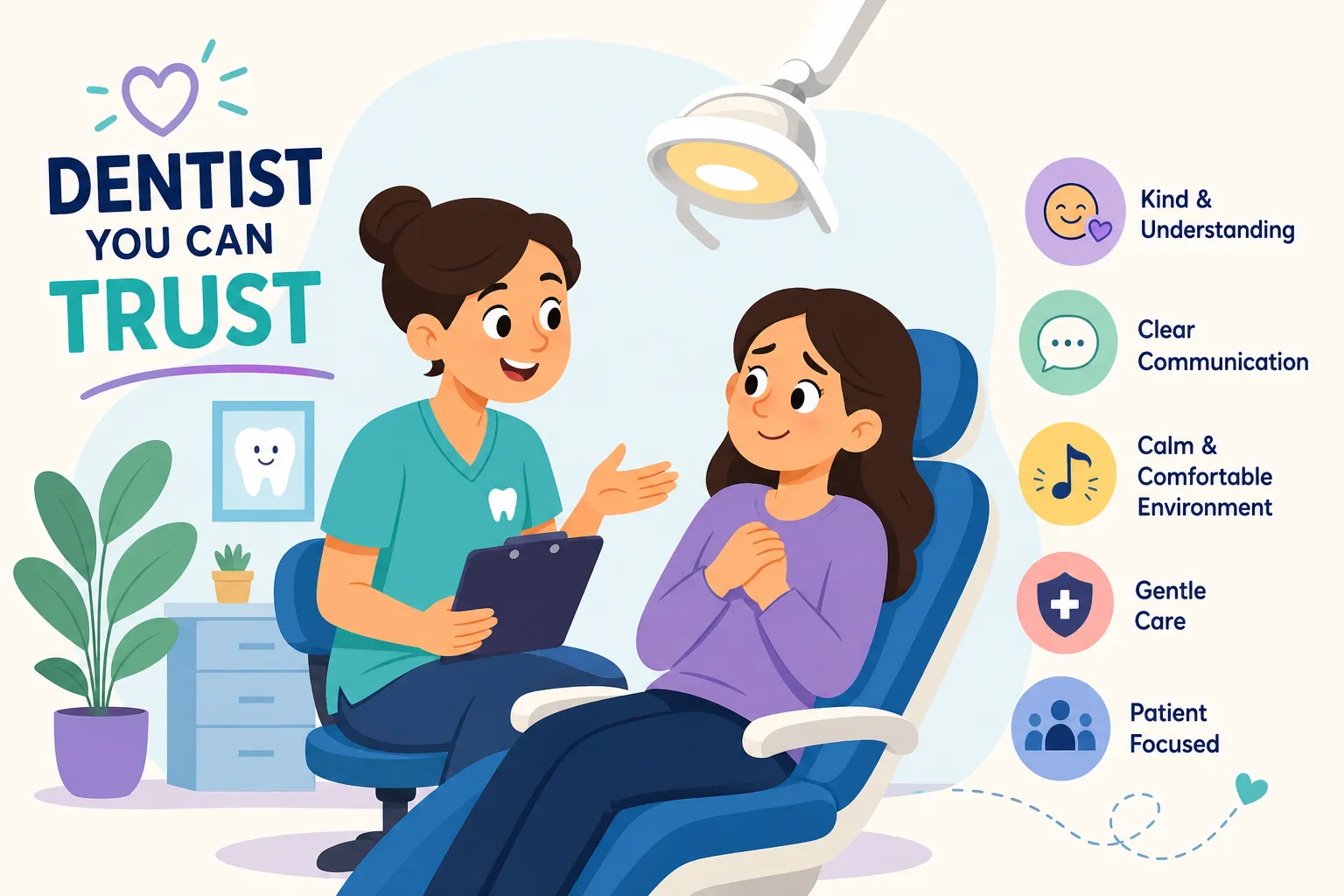
Finding a Dentist for Nervous Patients: What to Look For
Roughly 1 in 6 Australians experience dental anxiety, and nearly 1 in 3 people with high dental fear have not visited a dentist in over 10 years. That statistic is not a reflection of stubbornness or weakness. It is a well-documented, physiological response that affects millions of Australians across every age group and background. If that describes you, you are in extraordinarily common company, and finding the right nervous patient dentist can change everything.
Choosing a nervous patient dentist allows you to feel safe and relaxed during your appointments.
When you seek a nervous patient dentist, consider the comfort options they provide.
Finding a nervous patient dentist is essential for overcoming dental anxiety and ensuring a positive experience.
The challenge is that avoidance creates its own trap. When dental care is delayed, small issues become larger ones. Larger issues require more complex treatment. More complex treatment feels more overwhelming, which deepens the fear and extends the avoidance even further. Breaking that cycle does not require willpower alone. It requires finding the right practice.
Some clinics, including locally owned practices like Sunbury Dental Group in Sunbury VIC, are built specifically around this kind of patient. This guide will walk you through what a genuinely anxiety-friendly dental practice looks like, what calming and sedation options are available, and exactly what to say when you call to book. By the end, you will know how to choose with confidence, not just hope.
What a nervous patient dentist actually looks like
A great nervous patient dentist will prioritize your comfort and understanding throughout the process.
Not every dental clinic is structured, or even motivated, to support nervous patients well. There is a meaningful difference between a practice that tolerates anxious patients and one that has built its entire model around patient comfort. The distinction becomes obvious within the first few minutes of your visit, and sometimes even before you walk through the door.
Look for a nervous patient dentist who has a proven track record of helping others with similar concerns.
A genuinely supportive environment feels different from the moment you arrive. The waiting area is calm rather than clinical. There are no visible instruments on display. The receptionist speaks to you like a person, not a file number. And the dentist explains what they are about to do before doing it, every single time, without needing to be asked.
A supportive nervous patient dentist is critical for a successful dental experience.
The signals that show a clinic takes nervous patients seriously
The most telling indicator is whether the practice asks about anxiety when you book. A patient-centred clinic treats that information as essential, not optional. They use it to prepare the dentist in advance, choose a quieter time slot, and allocate a slightly longer appointment so nothing feels rushed.
Other visible signals include whether the clinic offers a meet-the-dentist consultation before any treatment takes place, whether instruments are kept out of sight until needed, and whether the dentist speaks directly to you throughout the appointment rather than talking around you to the nurse. These are not luxury features. They are the baseline of what genuinely supportive nervous dental patient care looks like, and they are worth seeking out deliberately when you are evaluating a new practice.
Your nervous patient dentist should be able to explain all available options clearly.
Why locally owned practices often do this better
Locally owned, community-based practices have a structural advantage when it comes to anxious patients. When the dentist is also the business owner, they have a direct, personal investment in how every patient feels when they leave. At Sunbury Dental Group, Dr Nita Kumari walks through every step of treatment before beginning, not because a corporate policy requires it, but because patient trust is the foundation of everything the practice is built on.
Many patients find that a locally owned nervous patient dentist offers the best personalized care.
Larger corporate chains operate on tightly scheduled appointment blocks where communication can feel transactional and rushed. A locally owned clinic in your own suburb has both the incentive and the flexibility to do things differently. That matters enormously when anxiety is part of the picture.
Calming techniques a good nervous patient dentist will offer before reaching for sedation
An experienced nervous patient dentist will often explore non-sedation methods first.
Sedation is not the first tool an experienced nervous patient dentist reaches for. Before any medication is discussed, skilled practitioners rely on a range of behavioural and environmental strategies that are effective, safe, and completely within your control to request. Understanding what these are helps you know what to ask for.
Tell-show-do and structured appointment pacing
The tell-show-do method is one of the most consistently effective techniques in clinical use. The dentist describes what they are about to do, demonstrates the action or sensation where possible, and only then proceeds. This approach removes the fear of the unknown, widely recognised in dental phobia research as a primary driver of anxiety. When you know exactly what is coming next, the anticipatory dread that typically spikes your anxiety has far less to work with.
Appointment pacing works hand-in-hand with this approach. Rather than treating the appointment as one long, undifferentiated block of time, your dentist works in short, predictable intervals with built-in breaks so you always know how long each step will last. Asking for shorter appointments or splitting treatment across multiple visits is a completely reasonable and common request. Any dentist experienced with anxious patients will accommodate it without hesitation.
Distraction tools and physical comfort adjustments
Ceiling-mounted TVs and chair-mounted screens are consistently rated by patients as the most effective non-pharmacological distraction strategy, ahead of music, breathing techniques, and most other environmental changes. The combination of visual engagement and something to focus on other than the procedure is genuinely powerful. Noise-cancelling headphones or earbuds that mask the sound of dental tools are a close second, particularly for patients whose anxiety is triggered by auditory cues.
Having a skilled nervous patient dentist can make all the difference in managing dental fears.
Physical comfort adjustments also make a measurable difference: warm blankets, stress balls for physical release, and keeping syringes and instruments concealed until the moment they are needed. That last one costs nothing yet significantly reduces pre-procedure anxiety. These are not optional extras in a patient-first clinic. They are standard practice.
Understanding sedation options available to nervous patients in Australia
Understanding your sedation options with a nervous patient dentist can ease your concerns.
For some patients, behavioural and environmental techniques are not enough, and that is completely valid. Sedation dentistry exists precisely for this reason. Sedation in Australia is regulated, so the type available at any given clinic depends on the dentist’s endorsements and the practice’s setup. Here is a clear, jargon-free overview so you can have an informed conversation before you book.
Nitrous oxide: the most accessible starting point
Talk to your nervous patient dentist about your specific needs and preferences.
Nitrous oxide, commonly known as happy gas or laughing gas, is the most widely available and lowest-barrier sedation option in Australian dental clinics. It is inhaled through a small nose mask, takes effect within a few minutes, and creates a calm, slightly floaty sensation without putting you to sleep. Crucially, it wears off within 10 to 15 minutes, which means you can drive yourself home afterwards.
Typical cost in Australia ranges from $90 to $400 AUD, often charged per 30-minute block. It requires a dentist with a Conscious Sedation Endorsement from the Dental Board of Australia. Nitrous oxide is not suitable for patients with significant nasal congestion or those in their first trimester of pregnancy. For everyone else, it is an excellent starting point if behavioural techniques alone feel insufficient.
A knowledgeable nervous patient dentist will help guide your choices.
Oral sedatives and IV sedation for deeper anxiety
Oral sedatives involve taking a benzodiazepine tablet roughly one hour before your appointment. The medication induces a calm, drowsy state and often causes partial amnesia of the procedure itself. The cost is low, typically just the price of a GP prescription, but patients cannot drive home and need someone to accompany them. It is a practical and effective option for moderate anxiety.
For many patients, a nervous patient dentist provides reassurance and understanding.
IV sedation, sometimes called twilight or sleep dentistry, is suited to moderate to severe anxiety or complex procedures. A specialist administers sedation through a small IV line, producing a deeply relaxed, semi-conscious state where most patients feel as though they slept through the appointment entirely. Cost ranges from $450 to $2,000 AUD per hour depending on the provider and location, and an escort home is required.
When you speak to your prospective dentist, ask which options they offer and which they recommend based on your specific level of anxiety. That conversation alone tells you a great deal about how experienced they are with nervous patients.
Your experience with a nervous patient dentist should be tailored to your needs.
How to tell your dentist about your anxiety, and what happens when you do
Many anxious patients stay quiet about their fear, hoping to get through the appointment on willpower alone. This rarely works, and it actively prevents the dental team from doing anything to help. Disclosing your anxiety is not embarrassing. Experienced dental teams hear it regularly, expect it, and welcome the heads-up.
Communicating with your nervous patient dentist is vital for effective treatment.
What to say when you call to book
When you call to make an appointment, say this directly to the receptionist: “I am a nervous patient and I get anxious about dental appointments.” That single sentence changes everything that follows. It prompts the team to flag your file, select a quieter time slot, allocate a slightly longer appointment, and brief the dentist before you arrive.
Be open with your nervous patient dentist about your feelings and concerns.
You do not need to explain your entire history on the phone. That conversation can happen with the dentist. The goal of that initial call is simply to give the practice enough information to prepare properly for you. A receptionist who responds to that sentence with warmth and a practical plan is a strong indicator that you have found the right place.
Setting control signals and pacing your own appointment
Before any treatment begins, agree with your dentist on a clear stop signal, typically a raised hand, that means “pause immediately.” This gives you genuine, real-time control over what happens to your body, and it is one of the most powerful anxiety-reducing tools available in the clinical setting. Any dentist worth trusting will honour that signal without hesitation or frustration, every single time.
Ask your dentist to narrate each step before doing it, and know that you can request a break at any point during the appointment. You do not need a reason beyond simply needing a moment. These are not inconveniences to a patient-centred practice. They are a completely normal part of how care is delivered.
Establishing a good rapport with your nervous patient dentist can alleviate anxiety.
Questions to ask a nervous patient dentist to find the right fit
Choosing the right nervous patient dentist as an anxious patient comes down to a short conversation, either by phone before booking or during an initial consultation. The quality of how a practice responds to a few direct questions tells you almost everything you need to know about whether they will genuinely support you.
Finding the right nervous patient dentist helps you feel empowered in your care.
Questions about experience, approach, and comfort measures
Use these questions when you call or visit for a consultation:
Questions can help you determine if a nervous patient dentist is right for you.
- “Do you have experience treating nervous patients, and what specific techniques do you use?”
- “Can I have a meet-and-greet appointment before any treatment takes place?”
- “Do you offer nitrous oxide or other sedation options for anxious patients?”
- “Will you walk me through each step before you begin?”
- “Can I use a hand signal to pause treatment if I feel overwhelmed?”
- “Can my appointment be split across shorter visits?”
What strong answers and red flags sound like
A confident, patient-centred practice gives you specific answers. The receptionist already knows the protocol for nervous patients. The dentist offers a no-treatment consultation without needing to be persuaded. The answers are concrete, not vague.
Strong communication with your nervous patient dentist is essential for effective treatment.
Red flags include dismissive reassurances like “don’t worry, everyone gets nervous,” no mention of any calming technique, or any suggestion that you simply need to push through. A dentist who listens, explains clearly, and gives you genuine control over your own appointment is the right dentist for an anxious patient. Anything less is not the right fit, and that is a completely acceptable conclusion to reach.
Taking the first step when you are ready
Dental anxiety is real, it is common, and it does not have to be permanent. The right nervous patient dentist does not minimise your fear or ask you to simply get over it. They work with it, with patience, clear communication, and a genuine commitment to keeping you in control throughout. The oral health consequences of long-term dental phobia and avoidance are serious, but the barrier to breaking that cycle is smaller than it might feel right now.
The most important action you can take today is also the simplest one. Call a clinic, tell them you are nervous, and ask a few of the questions outlined above. A single phone call and one honest sentence is often all it takes, the right practice will handle the rest.
Remember, a supportive nervous patient dentist will prioritize your comfort and needs.
If you are based in or around Sunbury VIC, the team at Sunbury Dental Group, led by Dr Nita Kumari, has extensive experience caring for patients who feel nervous or who have avoided the dentist for years. Whether you need gentle nervous dental patient care, nitrous oxide, or simply a dentist who will take the time to explain every step before proceeding, Sunbury Dental Group offers a calm, welcoming environment designed around your comfort. Reach out to book a consultation and take that first step entirely on your own terms. As a nervous patient dentist in Sunbury, the practice is ready to meet you where you are. Finding a qualified nervous patient dentist can transform your experience with dental care.

FAQ Content
How common is dental anxiety in Australia?
Roughly 1 in 6 Australians experience dental anxiety, and nearly 1 in 3 people with high dental fear haven’t seen a dentist in over 10 years, making it one of the most widespread barriers to oral health care nationwide.
What does a genuinely nervous-patient-friendly dentist look like?
A dentist built for anxious patients asks about your anxiety at booking, offers a meet-the-dentist consultation before treatment, keeps instruments out of sight until needed, and explains every step before doing it, rather than simply tolerating nervous patients.
Why do locally owned dental practices often handle anxious patients better?
Locally owned clinics like Sunbury Dental Group have a direct, personal stake in patient trust, allowing dentists like Dr Nita Kumari to walk through every step at an unhurried pace, unlike corporate chains with tightly scheduled, transactional appointment blocks.
What calming techniques do dentists use before recommending sedation?
Before sedation is considered, dentists use the tell-show-do method, split appointments into short predictable intervals, offer ceiling-mounted TVs or noise-cancelling headphones for distraction, and provide warm blankets or stress balls for physical comfort.
What sedation options are available for nervous dental patients in Australia?
Australian clinics typically offer nitrous oxide (happy gas) for mild anxiety, oral sedative tablets for moderate anxiety, and IV (twilight) sedation for moderate to severe anxiety or complex procedures, each requiring different dentist endorsements and aftercare.
How much does nitrous oxide (happy gas) cost at the dentist?
Nitrous oxide typically costs between 90 and 400 AUD in Australia, often billed per 30-minute block, takes effect within minutes, and wears off within 10 to 15 minutes so patients can drive themselves home afterward.
Who should avoid nitrous oxide sedation?
Nitrous oxide is not suitable for patients with significant nasal congestion or those in their first trimester of pregnancy, since the gas is inhaled through a nasal mask and effectiveness depends on clear airflow.perplexity
How much does IV sedation dentistry cost in Australia?
IV (twilight) sedation costs between 450 and 2,000 AUD per hour depending on the provider and location, requires an escort home, and is generally reserved for moderate to severe anxiety or complex dental procedures.
What should I say when booking an appointment if I’m a nervous patient?
Simply tell the receptionist, “I am a nervous patient and I get anxious about dental appointments,” which prompts the practice to flag your file, choose a quieter time slot, allocate extra appointment time, and brief the dentist before you arrive.w does it help with dental anxiety?
A stop signal is a pre-agreed gesture, usually a raised hand, meaning “pause immediately,” giving anxious patients real-time control over their treatment; any trustworthy dentist will honour it without hesitation.perplexity
What questions should I ask to find the right nervous patient dentist?
Ask whether they have experience treating nervous patients, offer a meet-and-greet before treatment, provide nitrous oxide or other sedation, will narrate each step, allow a stop-signal hand gesture, and can split appointments into shorter visits.
What are red flags that a dentist isn’t suited for anxious patients?
Red flags include dismissive comments like “don’t worry, everyone gets nervous,” no mention of any calming technique, or pressure to simply push through treatment instead of offering genuine control and communication.