
That little click every time you say a word starting with “s” or “f” — you know exactly the sound we mean. It’s embarrassing in conversation, distracting at dinner, and honestly, a bit demoralising when you thought your dentures were sorted for good.
Here’s some genuinely good news: denture clicking is common, and it’s almost always fixable. Let’s walk through exactly why it happens and what a proper denture clicking noise fix actually looks like, so you can get back to talking (and laughing) without thinking twice.
Overview: What This Guide Covers
We’re covering the real reasons dentures click when you talk, from simple fit changes to more specific mechanical issues. You’ll learn how to tell the difference between a minor annoyance and a genuine loose denture problem needing professional attention, plus the full range of denture repair options available, including when a denture reline makes sense. We’ll also answer the most common questions people search when their dentures start making noise unexpectedly.
In This Article, You’ll Discover…
The most common reasons dentures click or clack when talking
How natural gum and bone changes contribute to loose denture problems
The difference between soft relines, hard relines, and other denture repair options
Simple speech techniques that reduce clicking while you wait for an appointment
When denture adhesive helps, and when it’s just a temporary band-aid
Whether implant-supported dentures could solve clicking permanently
Practical steps to take before your next dental appointment

A denture reline is one of the most common and effective denture repair options for loose fit.
Why Do Dentures Click When You Talk?
Let’s start with the basics, because understanding the “why” makes the fix a lot less confusing. A clicking noise happens when your denture shifts or moves slightly inside your mouth, rather than staying firmly seated against your gums.
Unlike natural teeth anchored directly into your jawbone, dentures rely entirely on a close, snug fit against your gum tissue, sometimes helped along by adhesives. When that fit changes, even slightly, movement creates sound, especially during activities involving a lot of muscle movement, like talking, laughing, or chewing.
The Most Common Culprit: Poor Fit or Loose Dentures
This is genuinely the number one cause, and it makes sense once you think it through. Loose denture problems often develop gradually as your gums and underlying jawbone naturally shrink and reshape over time.
Your dentures were moulded to match your mouth at a specific point in time, but your mouth keeps changing subtly for years afterward. That mismatch between an unchanging denture and a slowly shifting mouth is exactly what leads to clicking.
Other Contributing Factors Worth Knowing
Beyond simple fit changes, a few other issues can cause or worsen clicking:
Worn denture teeth, which flatten over time and change how your upper and lower dentures meet
Excessive vertical dimension, where dentures are made slightly too tall, forcing teeth together too hard
Poor suction or adhesion, particularly affecting upper dentures that rely on a vacuum-like seal
Dry mouth, since reduced saliva means less natural cushioning and lubrication between denture and gum
Leftover food debris affecting how the denture surface sits against your gums
Denture Repair Options: What Actually Fixes the Clicking
Here’s where we get into genuinely useful solutions. The right denture clicking noise fix depends heavily on what’s actually causing your specific problem, so a proper dental check-up matters before committing to any one option.
Denture Reline: The Most Common Fix
A denture reline is usually the first solution your dentist will consider, and for good reason. Relining involves resurfacing the inner base of your denture so it matches the current shape of your gums again, essentially restoring that snug fit you started with.
There are a few types of relines worth knowing about:
Soft relines use a flexible material, ideal for sensitive gums, and tend to be quicker and more affordable
Hard relines use a firmer, more permanent material, offering a more durable long-term fix
Temporary relines help when gums are sore or inflamed, giving tissue time to heal before a permanent reline is done
A soft reline can last months to a few years depending on how much your mouth continues to change, making it a genuinely reliable and affordable option for many patients.
Rebasing: When Relining Isn’t Enough
If your denture’s fit has changed more significantly, rebasing might be the better call. This involves taking fresh impressions and remaking the denture base entirely from scratch, rather than simply resurfacing the existing one.
Replacing Worn Denture Teeth
Sometimes the clicking isn’t really about fit at all, it’s about wear. If your denture teeth have flattened over years of use, replacing just the teeth (or the whole denture, depending on extent) can restore proper alignment and stop the noise.
Implant-Supported Dentures: The Long-Term Solution
For people who’ve dealt with recurring loose denture problems despite repeated relines, implant-supported dentures offer a genuinely different level of stability. These attach securely to implants placed directly in the jawbone, essentially eliminating the movement that causes clicking in the first place.[
It’s a bigger commitment, both in cost and treatment time, but for chronic clicking that keeps coming back, it’s worth discussing with your dentist as a long-term fix.
Temporary Tricks While You Wait for Your Appointment
If you’ve got an event coming up before your next dental visit, a few quick tricks can help in the meantime.
Try speaking a little more slowly, since talking quickly tends to make clicking more noticeable and can worsen denture movement
Before speaking, gently bite down and swallow to help settle your denture into position
Use a denture adhesive for extra temporary stability, though this genuinely isn’t a permanent solution
Stay well-hydrated, since dry mouth reduces the natural cushioning that helps prevent clicking
These are stopgaps, not fixes. If clicking persists, book in with your dentist rather than relying on adhesive indefinitely.
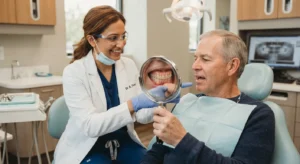
Regular check-ups help catch loose denture problems before they lead to persistent clicking.
FAQ: Denture Clicking Noise Fix
Why do my dentures click every time I talk?
Clicking usually happens because your denture has shifted slightly out of its snug fit against your gums, often due to natural gum and bone changes over time. Worn denture teeth or dry mouth can also contribute to the noise.
Is a denture reline the right fix for loose denture problems?
In many cases, yes. A reline resurfaces the inner base of your denture to match your gums’ current shape, restoring the snug fit that reduces movement and clicking.
How long does a soft denture reline typically last?
A soft reline can last anywhere from several months to a few years, depending on how much your gums and jawbone continue to change. Your dentist can advise on timing based on your specific situation.
Can denture adhesive permanently fix a clicking denture?
No, denture adhesive only provides temporary stability and isn’t a lasting solution for loose denture problems. If clicking persists, a professional adjustment or reline addresses the actual underlying fit issue.
Are implant-supported dentures worth considering for chronic clicking?
They can be, especially if you’ve had recurring looseness despite previous relines. Implant-supported dentures attach to your jawbone directly, offering significantly more stability and largely eliminating movement-related clicking.
Wrapping It Up
A denture clicking noise fix almost always comes back to addressing fit, whether that’s through a straightforward reline, replacing worn teeth, or in more persistent cases, considering implant-supported dentures for lasting stability. Natural gum and bone changes over time are completely normal, so needing an adjustment down the track doesn’t mean anything’s gone wrong. Getting it checked sooner rather than later means less clicking, more confidence, and a lot less thinking about your dentures mid-conversation.
Dealing with loose or clicking dentures? Book your appointment at Sunbury Dental Group today and let’s get your fit sorted properly.