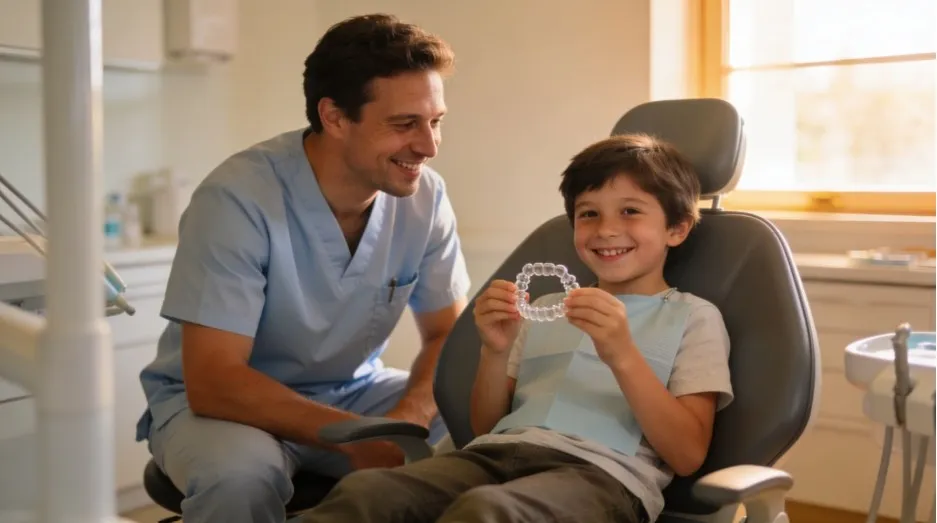
This guide is for Sunbury mums, dads, and caregivers who’ve noticed something a little “off” about their child’s bite, jaw, or breathing. You want real answers before jumping straight to traditional braces. We’ll walk you through what Myobrace actually is, who it’s designed for, how the treatment works, and why early intervention can genuinely change the trajectory of your child’s oral health. No jargon, no pressure — just clear, honest information to help you make the right call for your family. We’ll focus on Myobrace Sunbury as a local solution for effective orthodontic care. The Myobrace Sunbury program emphasizes natural oral development without the need for traditional braces. Myobrace Sunbury can help address your child’s orthodontic needs effectively.
Key Highlights
In this article, you’ll discover:
- What Myobrace is and how it differs from traditional orthodontic braces
- The root causes of crooked teeth in children that braces alone don’t always fix
- Which signs suggest your child may benefit from a Myobrace assessment
- The four stages of Myobrace treatment and what each one involves
- Why starting early — ideally between ages 5 and 10 — can produce better outcomes
- What to expect when you visit a Myobrace provider in Sunbury
Myobrace Sunbury also offers a unique approach to address your child’s orthodontic needs without the discomfort of traditional braces.
For families in the area, Myobrace Sunbury represents a modern, effective alternative to the discomfort of traditional braces.
At Myobrace Sunbury, we prioritize your child’s comfort and well-being throughout the treatment process.
- Honest answers to the questions Sunbury parents ask most
[/vc_column_text]
Your Child’s Teeth Might Be Telling You Something
Identifying issues early can direct you toward solutions like Myobrace Sunbury that can prevent further complications.
You’ve probably noticed it. Maybe their baby teeth looked fine, but the adult teeth started coming in crowded. Or your child sleeps with their mouth open. Or they’ve developed a slight lisp that just won’t go away.
These aren’t random quirks. They’re often signs of underlying habits and developmental patterns that, left unchecked, can lead to significant orthodontic issues down the track.
That’s where Myobrace comes in.
So, What Exactly Is Myobrace?
Myobrace is a pre-orthodontic treatment system designed for children typically between the ages of 3 and 15 that targets the root causes of crooked teeth rather than just the teeth themselves. Instead of wires and brackets, it uses a series of soft, removable intraoral appliances worn for roughly one to two hours each day and overnight while sleeping.
The effectiveness of Myobrace Sunbury can significantly improve your child’s dental health.
For more insights, consider how Myobrace Sunbury provides a unique approach to orthodontics that prioritizes comfort and natural development.
The core idea is simple but powerful. Most orthodontic problems don’t just appear out of nowhere. They develop because of poor oral habits — like mouth breathing, tongue thrusting, thumb sucking, and incorrect swallowing patterns. Myobrace works to correct those habits during childhood. The jaw and facial bones are still growing and most receptive to change.
Think of it less like a brace and more like a training program for your child’s mouth.
Why Crooked Teeth Aren’t Just a Cosmetic Issue
Consider how Myobrace Sunbury not only improves alignment but also your child’s overall confidence.
Here’s something that often surprises parents: orthodontic problems in children are rarely just about appearance.
When a child breathes through their mouth instead of their nose, it changes the way their jaw grows. When their tongue rests in the wrong position, it affects how the dental arch develops. When swallowing patterns are incorrect something called a tongue thrust it applies constant, low-level pressure on the teeth in the wrong direction.
Over time, these habits reshape the jaw and crowd the incoming adult teeth. They can also contribute to snoring, disrupted sleep, speech difficulties, and even posture issues.
This is exactly why Myobrace treatment addresses far more than just tooth alignment.
Signs Your Child May Benefit from a Myobrace Assessment
Recognizing these signs can guide you to seek a Myobrace Sunbury assessment for your child.
Not every child will need Myobrace, but there are some clear signals worth watching for. If you’ve noticed any of these in your child, it’s worth booking an assessment with a children’s dentist in Sunbury:
- Teeth that are visibly crowded, crooked, or misaligned
- Consistent mouth breathing, especially during sleep
- Snoring, restless sleep, or waking frequently at night
- Thumb sucking or dummy use that continued past age three
- A habit of pushing the tongue forward when swallowing
- Difficulty chewing certain foods or frequent dribbling
- Speech issues such as a lisp that hasn’t resolved with age
Some of these signs are subtle. Others are more obvious. Either way, catching them early — ideally before all the adult teeth have erupted — gives treatment the best possible window to work.
The Four Stages of Myobrace Treatment
As you go through this process, remember that Myobrace Sunbury is about more than just correcting teeth.
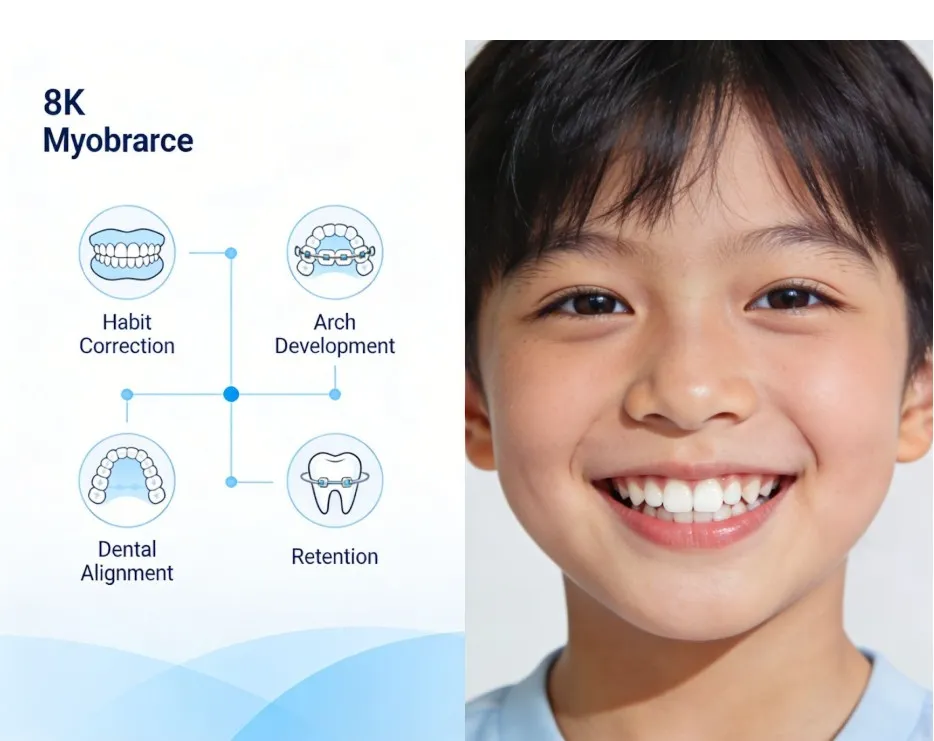
Myobrace treatment isn’t a one-size-fits-all fix. It’s a structured, progressive process that typically moves through four stages:
- Habit Correction — The first and most foundational stage. The appliance and guided exercises train your child to breathe through their nose, position their tongue correctly, and swallow properly. These changes alone can have a significant positive impact on jaw development.
- Arch Development — Once the harmful habits are addressed, the focus shifts to guiding the upper and lower jaw arches to grow with adequate space for the adult teeth. For children with narrow dental arches, this stage can prevent serious crowding later.
- Dental Alignment — As the permanent teeth continue to erupt, the Myobrace appliance gently guides them into better positions. This stage reduces — and in many cases may eliminate — the need for fixed braces.
- Retention and Maintenance — The final stage ensures that the results hold. Progress is monitored regularly, oral habits are reinforced, and the likelihood of relapse is reduced.
Compliance is a big part of how well this treatment works. Children who wear their appliance consistently and complete the associated exercises tend to achieve significantly better results than those who don’t.
What Does the Research Say?
Research indicates that Myobrace Sunbury can lead to improved outcomes in orthodontic treatment.
A 2025 study published in a peer-reviewed journal found that Myobrace produced significant improvements across multiple types of malocclusion in children aged 6–10, with 80% of participants showing measurable improvements in tongue posture and lip seal. The research concluded that Myobrace can be an effective, non-invasive early intervention that may reduce the need for more complex orthodontic treatment later in life
The findings support the effectiveness of Myobrace Sunbury as a proactive approach to orthodontics for children.
In conclusion, Myobrace Sunbury signifies a proactive approach to enhancing your child’s orthodontic journey.
That said, every child is different. Outcomes vary based on factors like age, habit severity, and how consistently the appliance is worn. That’s why an individualised assessment is always the right starting point.
What to Expect at Your First Myobrace Appointment in Sunbury
Starting Myobrace treatment at Sunbury Dental Group is a relaxed, no-pressure process. Here’s roughly what your first visit involves:
- Comprehensive assessment — We examine your child’s teeth, jaw, bite, and oral habits in detail. We want to understand the full picture, not just what’s visible on the surface.
- Discussion of findings — We’ll explain clearly what we’ve noticed, what it means, and whether Myobrace is likely to be appropriate for your child’s specific situation.
- Treatment plan walkthrough — If Myobrace is recommended, we’ll walk you through the appliance options, treatment stages, and realistic timeframes based on your child’s age and development.
- Your questions answered — We genuinely want you to feel confident and informed. There’s no such thing as a question that’s too basic.
Why Early Intervention Changes Everything
Children’s jaws are actively growing. Bones are still forming. Habits are still malleable.
When considering options, don’t overlook Myobrace Sunbury as a potential starting point.
That window — roughly between ages 5 and 10 — is when pre-orthodontic treatment children across Victoria tend to respond best to approaches like Myobrace. By the time a teenager reaches 14 or 15, the window hasn’t closed entirely, but the underlying growth has slowed considerably. This can make correction more involved.
Early action doesn’t guarantee a perfect smile. But it does give your child the best possible foundation for one.
Myobrace vs. Traditional Braces — What’s the Actual Difference?
This is one of the most common questions we hear from families exploring orthodontic treatment without braces in Sunbury. Here’s a straight-up comparison:
| Myobrace | Traditional Braces | |
| Age range | Typically 3–15 (growth phase) | Often 11+ (after adult teeth erupt) |
| How it works | Addresses root causes (habits, jaw growth) | Moves existing teeth with applied force |
| Appliance type | Removable, soft silicone | Fixed metal or ceramic brackets & wires |
| Daily wear | 1–2 hours + overnight | 24/7 (can’t be removed) |
| Target | Habits, jaw development, alignment | Tooth position |
| Dietary restrictions | None | Yes (avoid hard/sticky foods) |
| Oral hygiene | Standard brushing and flossing | Requires extra care around brackets |
Myobrace isn’t a replacement for braces in every case. Some children may still benefit from traditional orthodontics after completing a Myobrace program — but many may need far less of it, or none at all.
Serving Sunbury and Surrounding Communities
Our commitment extends across the region, ensuring families find a reliable Myobrace Sunbury provider.
We work with families from right across the Sunbury area and beyond — including Diggers Rest, Gisborne, Romsey, Macedon, Riddells Creek, Bulla, and other communities within the region. If you’re searching for a Myobrace provider in Sunbury VIC, or a trusted children’s dentist in Sunbury, we’d love to meet your family.
If you’re looking for a Myobrace Sunbury provider, contact us to learn more about our approach.
Our approach is always gentle, evidence-informed, and genuinely centred on your child — not on pushing treatments they don’t need.
Conclusion
As you consider treatment, keep in mind that Myobrace Sunbury can be a key factor in your child’s dental health.
Crooked teeth in children are rarely just about aesthetics. In most cases, they’re the visible result of habits and developmental patterns that began long before the first adult tooth arrived. Myobrace offers families in Sunbury and surrounding communities a proactive, gentle way to address those root causes during the years when it matters most — before the jaw finishes growing and options become more limited.
Myobrace Sunbury is committed to helping families achieve better orthodontic outcomes.
As a parent, understanding the role of Myobrace Sunbury can empower you to make informed choices.
The earlier the intervention, the greater the opportunity to guide healthy development. And while Myobrace isn’t a guaranteed fix for every child, it represents a genuinely evidence-backed, non-invasive first step that’s worth exploring.
Exploring Myobrace Sunbury is a crucial step toward ensuring the best for your child’s oral development.
If you’ve noticed signs that your child may benefit from pre-orthodontic treatment, we’d love to help you find some clarity.
If you’re curious about Myobrace Sunbury and its benefits, don’t hesitate to reach out.
Disclaimer:
The information provided in this blog is for general informational purposes only and should not be interpreted as professional dental advice. Every dental situation is unique, and individual circumstances can vary significantly. Patients should not rely solely on the content provided here to make decisions about their oral health. For personalized assessment, diagnosis, and treatment, you should consult a qualified dentist or healthcare professional. Sunbury Dental Group accepts no responsibility for any loss, damage, or actions taken based on the information contained in this blog.
Related FAQ's
Q1: What age is best to start Myobrace treatment?
Myobrace treatment can begin as soon as poor oral habits are identified, which can be as young as 3–5 years old. That said, the most responsive window is generally between ages 5 and 10, when jaw development is most active and habits are easier to correct. An assessment with a children’s dentist in Sunbury will help determine whether the timing is right for your child.
Q2: Is Myobrace painful?
Myobrace appliances are made from soft, flexible silicone, so they’re generally very comfortable particularly compared to traditional metal braces. Some children experience mild initial discomfort as they adjust to wearing the appliance, which typically settles within a few days. If your child reports ongoing soreness or irritation, it’s always worth flagging with your dentist.
Q3: How long does Myobrace treatment take?
Treatment duration varies from child to child and depends on factors like age, the nature of the oral habits being corrected, and how consistently the appliance is worn. In general, most children wear Myobrace appliances over a period of 12 months to several years. Your Sunbury dentist will give you a more specific estimate after a thorough assessment.
Q4: Does my child still need braces after Myobrace?
Not necessarily but it depends on the individual case. For many children, particularly those who start early and wear their appliance consistently, Myobrace may reduce or even eliminate the need for traditional braces. For others, a shorter or less intensive course of braces may still be recommended after Myobrace to finalise alignment. This will always be discussed openly and honestly at Sunbury Dental Group.
Q5: Is Myobrace covered by private health insurance in Australia?
Coverage varies significantly between health funds and individual policies. Some private health insurers do offer partial rebates for Myobrace under orthodontic extras cover. We recommend checking directly with your health fund before starting treatment. Our team is happy to provide the relevant item codes to help you confirm your entitlements..
Q6: How does mouth breathing cause crooked teeth?
When a child consistently breathes through their mouth instead of their nose, it alters the resting posture of the tongue and changes the pressure balance on the developing jaw and dental arches. Over time, this can cause the upper jaw to narrow and become too small for the incoming adult teeth to erupt properly, leading to crowding and misalignment. Correcting nasal breathing is one of the primary goals of Stage 1 Myobrace treatment.
Q7: Can Myobrace help with my child's speech issues?
Myobrace isn’t specifically a speech therapy tool, and we’d always recommend involving a qualified speech pathologist for diagnosed speech concerns. However, because Myobrace corrects tongue position, lip closure, and swallowing patterns, all of which influence speech some children do notice improvements in certain articulation issues as treatment progresses. Your dentist can advise on whether a referral to another allied health professional may also be beneficial.