Gum Disease Treatment Options Explained by a Dentist
Gum disease treatment is one of the most common services provided in dental clinics across Australia, yet most people have no idea they need it until the condition has already progressed well past the early stage. That’s not because people aren’t paying attention. It’s because gum disease, in its early forms, simply doesn’t hurt. At Sunbury Dental Group, one of the most frequent conversations we have is with patients who’ve just been told their gums need attention and aren’t quite sure what that means for them.
This article answers the questions we hear most often: What stage am I at? What treatment will I need? What does recovery look like? Gum disease treatment isn’t one-size-fits-all. The right approach depends entirely on how far the condition has advanced, and understanding that difference is what will help you make sense of your treatment plan and take the right next step.
How gum disease actually progresses
Gum disease follows a clear clinical path. Knowing which stage you’re at is the first step toward choosing the right gum disease treatment. The term covers a spectrum, from fully reversible inflammation through to serious bone destruction. The two key categories are gingivitis and periodontitis, and the distinction between them matters enormously for treatment.
The difference between gingivitis and periodontitis
Gingivitis is the earliest form of gum disease and, crucially, the only reversible one. At this stage, inflammation is confined entirely to the gum tissue. No bone has been lost. The classic signs are bleeding when you brush, redness, puffiness, and persistent bad breath that doesn’t resolve with better hygiene. The absence of pain is what makes gingivitis so easy to ignore, and so commonly missed. Effective gingivitis treatment at this stage typically involves a professional clean and improved home care, no complex procedures required.
Periodontitis begins when bacteria spread below the gumline and start destroying the bone and ligament structure that holds your teeth in place. This damage is irreversible. Bone lost to periodontitis doesn’t grow back on its own. What periodontal therapy can do is stop the disease from progressing further, which is a meaningful outcome when you understand what’s at stake.
What symptoms look like as the disease advances
Mild periodontitis presents with pocket depths of 4, 5 mm, early bone loss visible on X-ray, and increased bleeding. As the disease progresses to a moderate stage, you’ll start to notice gum recession, increased tooth sensitivity, occasional abscesses, and teeth that feel slightly different when you bite. Advanced periodontitis brings loose teeth, severe bone loss, pain when chewing, and the real possibility of tooth loss.
Pain is rarely the first symptom. By the time discomfort appears, the disease is usually moderate to severe. This is the core reason why so many people are surprised by a gum disease diagnosis: the early warning signs are subtle, and the condition has often been quietly progressing for months or years before it registers.
Why regular probing assessments matter
Gingivitis and early periodontitis are largely painless, and bleeding gums are often dismissed as a sign of brushing too hard rather than a clinical warning. A full periodontal probing assessment during a routine check-up measures the depth of the space between each tooth and the surrounding gum at six specific points per tooth. Healthy pockets sit at 1, 3 mm; readings above that signal disease. This kind of systematic measurement catches gum disease long before you’d feel it yourself, and catching it early is what makes the difference between a straightforward treatment and a complex one.
Scaling and root planing, a key gum disease treatment
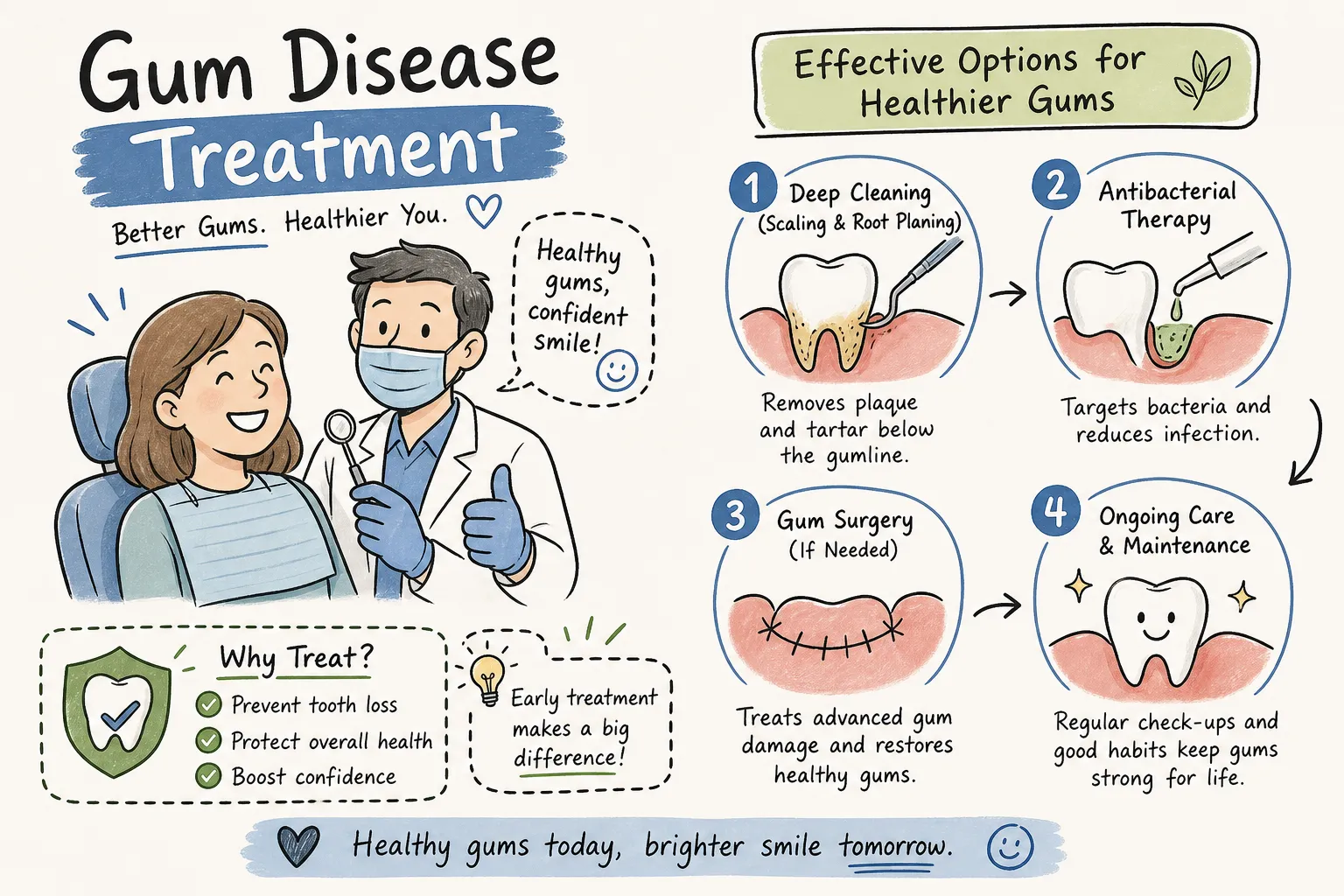
Scaling and root planing (SRP) is the clinically established first-line gum disease treatment for all forms of periodontitis, and it’s the procedure most patients are facing when they arrive at this article looking for answers. It’s a non-surgical deep cleaning performed under local anaesthetic, which means you’re comfortable throughout.
What the procedure actually involves
During SRP, the dentist or dental hygienist removes calculus (hardened tartar) and bacteria from below the gumline using specialised instruments, then smooths the root surfaces. Smoothing the roots removes the rough texture that bacteria cling to and encourages the gum tissue to reattach to the tooth. Treatment is typically staged across two to four appointments, working one or two quadrants at a time, depending on the extent of disease. In Melbourne, full-mouth SRP generally costs between $800 and $2,000, and most private health insurance extras cover a meaningful portion of this under Major Dental.
What to expect during recovery
Mild soreness and tooth sensitivity are common for a few days after each appointment. Most patients resume normal activities within 24, 48 hours. Gum tissue heals over 7, 14 days, but the full clinical improvement in pocket depth takes 1, 3 months to show. A re-evaluation appointment at 6, 8 weeks after treatment allows the dentist to assess how well the gums have responded and whether any further intervention is needed.
Success rates and realistic outcomes
SRP achieves a 75, 85% success rate for mild to moderate periodontitis. Average pocket depth reductions are approximately 1.29 mm for shallower pockets and over 2 mm for deeper pockets. Bleeding on probing typically reduces by 40, 60%. For most patients caught at an early to moderate stage, this single treatment approach is enough to stabilise the disease without surgery. Those are encouraging figures, and they’re the reason SRP is where gum disease treatment always starts.
Gum disease treatment: when surgery or antibiotics are needed
Not every case resolves with SRP alone. Around 45, 60% of very deep pockets (7 mm or more) still require further treatment after non-surgical therapy. This is where adjunctive antibiotics or periodontal surgery come in, and it’s worth understanding both options clearly.
Adjunctive antibiotics: how they support treatment
Antibiotics are never the standalone gum infection treatment for periodontitis. They’re prescribed as an adjunct to SRP for moderate-to-severe or rapidly progressing disease. Sub-antimicrobial dose doxycycline helps suppress bacterial activity during the healing phase. Topical antibiotics placed directly into periodontal pockets are another option for targeted areas. Antibiotics don’t replace mechanical cleaning, they support it, and prescribing them without SRP produces no meaningful improvement in pocket depth.
Periodontal surgery: what the options are
Surgery is considered when deep pockets (6 mm or more) persist after SRP and the re-evaluation period. Flap surgery (pocket reduction surgery) gives the dentist direct access to root surfaces that cleaning instruments can’t reach effectively. Bone grafting and guided tissue regeneration are used where bone loss is significant and reconstruction is clinically viable. Traditional flap surgery carries an 85, 95% success rate but is reserved for cases where non-surgical therapy hasn’t been sufficient. Recovery from periodontal surgery involves 2, 3 weeks for soft tissue healing and 3, 6 months for full bone healing, with most patients returning to normal activity within a week.
What you can do at home to support your treatment
Home care plays a real but specific role in managing gum disease, it supports professional treatment rather than replacing it. Setting that expectation clearly is important, because no amount of brushing and flossing can resolve active periodontitis on its own.
The brushing technique that actually matters
Technique matters as much as frequency. A soft-bristled brush used with a gentle circular or modified Bass technique along the gumline cleans far more effectively than vigorous scrubbing. Daily interdental cleaning, whether with floss, interdental brushes, or a water flosser, removes plaque from the spaces between teeth that a toothbrush simply can’t access. For patients with active periodontitis, an antibacterial mouthwash is often recommended as part of the daily routine.
Where home remedies fit in
Oil pulling has a moderate body of clinical trial evidence supporting its ability to reduce gingival inflammation, with studies showing reductions in gingival index scores comparable to some standard rinses. However, the overall quality of this evidence is rated as low due to small study sizes, and oil pulling cannot cure periodontitis or halt bone loss. Chlorhexidine mouthwash, when specifically recommended by your dentist, remains the most clinically validated home option for managing bacterial load between appointments. Remedies like oil pulling, turmeric, and aloe vera can serve as supportive add-ons to a treatment plan, not as substitutes for professional periodontal therapy.
Periodontal maintenance and long-term disease control
Completing active treatment is not the finish line. It’s the starting point for a maintenance programme that prevents the disease from returning. Without ongoing professional care, research suggests that a significant proportion of treated sites can experience renewed attachment loss within five years.
What periodontal maintenance appointments involve
Once active treatment is complete, patients move into a structured maintenance phase. Appointments are typically scheduled every 3, 4 months in the first year, and every 6 months once disease activity has been stable for an extended period. Each visit involves re-probing to monitor pocket depths, professional cleaning to remove new calculus build-up, and a reassessment of home care technique. The 3, 4 month interval reflects how quickly harmful bacteria re-establish themselves: research indicates that patients attending maintenance quarterly have a meaningfully lower risk of disease recurrence compared to those seen every six months.

Signs it’s time for a periodontist referral
General dental clinics manage the full range of gum disease at early to moderate stages. A referral to a specialist periodontist is appropriate when persistent pockets deeper than 5, 6 mm remain after SRP, when bone loss continues despite treatment, when there is Class II or III tooth mobility, or when aggressive disease appears in younger patients. Cases requiring bone grafting, complex regenerative procedures, or furcation management also benefit from specialist care. A referral isn’t a sign that treatment has failed, it’s a sign that your dentist is being thorough and looking out for your long-term outcome.
Gum disease treatment at Sunbury Dental Group
At Sunbury Dental Group, Dr Nita Kumari and the team provide comprehensive periodontal care across the full treatment pathway: from early detection through thorough periodontal probing assessments, to scaling and root planing, through to structured long-term maintenance. The clinic serves patients across Sunbury, Diggers Rest, Riddells Creek, Gisborne, Bulla, and Lancefield, with a patient-centred approach that prioritises clear communication before any procedure. The goal is always to manage your gum health in-house wherever clinically appropriate, rather than jumping straight to specialist referrals.
If you’ve noticed any of the symptoms described in this article, whether that’s bleeding gums, recession, sensitivity, or gums that don’t look quite right, your next step is a comprehensive gum assessment. Booking is straightforward: visit us at 5/92 Evans Street, Sunbury VIC 3429, call the clinic, or book online to get started with gum disease treatment in Sunbury.
The bottom line on gum disease treatment
Gum disease treatment is effective when it’s started at the right stage, completed properly, and followed with ongoing maintenance. Gingivitis is fully reversible with professional cleaning and improved home care. Even moderate periodontitis can be stabilised long-term with scaling and root planing and a structured maintenance programme.
The single biggest factor in treatment outcomes is timing. The earlier gum disease is identified and addressed, the more straightforward and effective treatment becomes. Waiting for pain to prompt a visit means waiting until the disease has already progressed significantly. A local dentist who knows your history and monitors your gum health consistently at every check-up is your most practical defence against that outcome. Don’t wait for a symptom that may never come. Book a gum assessment at Sunbury Dental Group and know exactly where you stand.

Q1: What is the difference between gingivitis and periodontitis?
Gingivitis is the earliest, reversible stage of gum disease, characterised by red, swollen gums that bleed easily when brushed. It is caused by plaque accumulation along the gumline and can typically be resolved with a professional clean and improved home care. Periodontitis is a more advanced, chronic form of gum disease where inflammation extends below the gumline, damaging the connective tissue and bone that support your teeth. Unlike gingivitis, the bone loss caused by periodontitis is permanent, which is why early detection and treatment matter.
Q2: What does scaling and root planing involve?
Scaling and root planing — also called a deep clean — is a non-surgical procedure performed to treat early to moderate periodontitis. Your dentist or hygienist uses specialist instruments to remove hardened calculus (tartar) from tooth surfaces both above and below the gumline (scaling), then smooths the root surfaces to make it harder for bacteria to reattach (root planing). The procedure may be completed in one or multiple appointments depending on the extent of disease, and a local anaesthetic is often used to keep you comfortable throughout.
Q3: Is scaling and root planing painful?
Most patients find the procedure manageable with local anaesthesia applied to the area being treated. Some tenderness or sensitivity in the gums is normal in the days following treatment, and over-the-counter pain relief is usually sufficient to manage any discomfort. Your dentist will advise you on what to expect based on the severity of your condition and which areas are being treated.
Q4: How effective is non-surgical gum disease treatment?
Scaling and root planing is clinically well-established as an effective first-line treatment for periodontitis. Many patients see meaningful improvements in gum pocket depths, bleeding, and overall gum health following a course of deep cleaning combined with improved home care. However, outcomes vary depending on factors such as disease severity, smoking status, systemic health conditions like diabetes, and how consistently a patient maintains good oral hygiene between appointments. Your dentist will discuss realistic expectations with you based on your specific clinical picture.
Q5: When are antibiotics used in gum disease treatment?
Antibiotics are sometimes used as an adjunctive (supporting) therapy alongside scaling and root planing — not as a standalone treatment. They may be prescribed as a topical agent applied directly into gum pockets, or as a short course of oral antibiotics in specific cases where bacteria are not adequately controlled by mechanical cleaning alone. The decision to use adjunctive antibiotics is made on a case-by-case basis and is not appropriate for all patients.
Q6: What types of periodontal surgery are available?
When non-surgical treatment does not achieve sufficient disease control, surgical options may be considered. Common procedures include flap surgery (pocket reduction surgery), where the gum is folded back to allow thorough cleaning of the root and underlying bone, and bone or tissue grafts, which may be used to restore lost support structures. Periodontal surgery is typically performed by a periodontist — a specialist in gum diseases — to whom your dentist may refer you if needed.
Q7: Can I treat gum disease at home?
Home care plays a critical supporting role in managing gum disease, but it cannot replace professional treatment for established periodontitis. Effective twice-daily brushing using a small-headed toothbrush at a 45-degree angle to the gumline, combined with daily interdental cleaning using floss or interdental brushes, helps control the bacterial plaque that drives gum disease. Some rinses and natural remedies may offer minor adjunctive benefit, but no home treatment is a substitute for clinical care. Your dentist can demonstrate the most effective technique for your situation.
Q8: What happens at a periodontal maintenance appointment?
Periodontal maintenance appointments are scheduled monitoring visits for patients who have been treated for periodontitis. At each visit, your dentist or hygienist will assess gum pocket depths, check for signs of disease activity, remove any plaque or calculus build-up, and reinforce home care advice. The frequency of these appointments is typically every three to four months, though this may be adjusted based on your disease stability. Consistent maintenance is important because periodontitis is a chronic condition that requires ongoing management rather than a one-time fix.
Q9: How do I know if I need a referral to a periodontist?
Your dentist will consider a referral to a periodontist if your gum disease is not responding adequately to initial treatment, if you have advanced or complex disease presentation, or if you require surgical intervention beyond the scope of a general dental practice. Other factors that may prompt a referral include aggressive periodontitis, significant bone loss identified on X-rays, or medical conditions that complicate treatment. A referral does not mean your case is untreatable — periodontists specialise in managing exactly these situations.
Q10: How often should I have my gums checked?
If you have a history of gum disease, your dentist will recommend a review frequency tailored to your level of risk — typically every three to four months for patients in active maintenance, and every six months for those with well-controlled, stable gum health. If you have not had a gum assessment recently, a comprehensive periodontal examination that includes probing measurements at six points around each tooth is recommended to establish your baseline and identify any disease activity early.