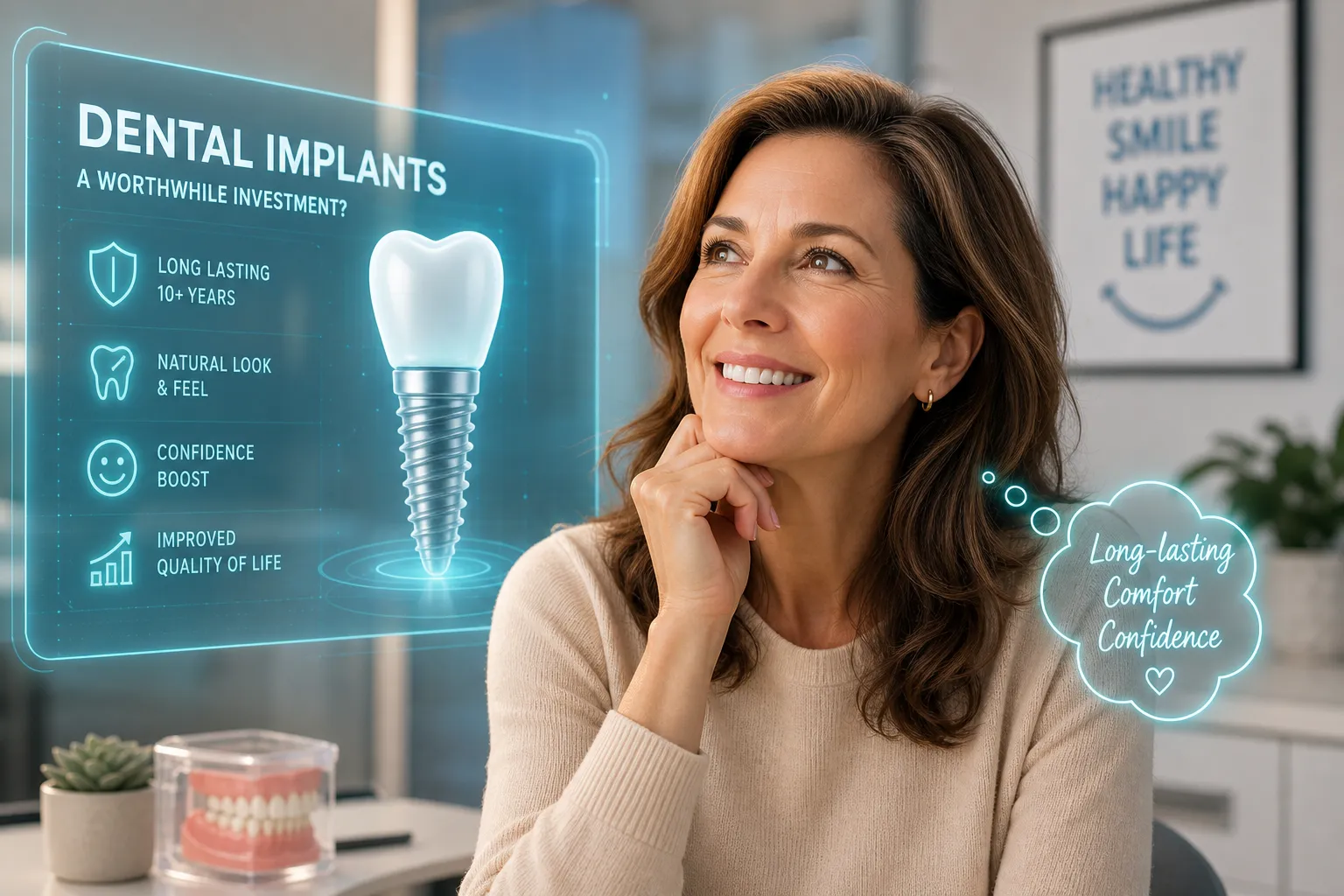
Are Dental Implants Worth It? Are Implants Worth It: An Honest Assessment
Are dental implants worth it? It’s one of the most common questions we hear at Sunbury Dental Group, and the honest answer is that there isn’t a universal yes or no. Dental implants have a well-earned reputation for being expensive, yet ask almost any patient who has had one placed, and the overwhelming response is: “I wish I’d done it sooner.” That tension sits at the heart of the decision, and whether implants make sense depends entirely on your budget, your oral health, and what you’re hoping to achieve long-term. Ultimately, understanding if are implants worth it is crucial for prospective patients, and we aim to explore whether are implants worth it in depth.
This article is a practical cost-benefit breakdown, not a sales pitch. We’ll walk through what implants actually cost in Australia right now, how they stack up against bridges and dentures over time, what the clinical evidence says about longevity, and what recovery genuinely looks like. By the end, you’ll have a clear framework for making an informed decision, and the right questions to bring to your consultation.
This article will also reflect on why many patients believe are implants worth it, considering various factors that influence their decision.
When weighing your options, it’s essential to ask yourself: are implants worth it for your specific situation?
As we delve into the details, keep in mind that understanding if are implants worth it is a personal journey that requires careful consideration.
What dental implants actually cost in Australia
The first thing to understand is that “an implant” is actually three separate components billed together: a titanium post surgically placed into the jawbone, an abutment that connects the post to the tooth, and a ceramic or zirconia crown that sits on top. Quoting just the cost of the post, which some providers do, can make implants appear cheaper than they are. The fully restored total is what matters.
According to the National Dental Fee Survey, the average cost of a single implant in Australia sits at $5,514 per tooth. In practice, most Australians pay between $4,500, $7,500 for a straightforward single-tooth restoration at a general dental practice. Complex cases involving additional procedures can push that figure above $8,500. That range is wide, but it reflects real variables rather than arbitrary pricing.
What the price tag actually includes
A comprehensive implant quote from a reputable practice covers the titanium fixture placement ($1,500, $2,800), the abutment ($500, $800), and the custom crown ($1,200, $2,500). Surgical visits, consultations, and 3D CBCT imaging should also be included in a complete estimate. If a quote seems unusually low, it’s worth asking specifically which components are covered before committing.
When assessing the financial commitment, remember that many find that are implants worth it when compared to alternatives.
The procedures that can increase the total
Bone grafting is the most common reason implant costs escalate. When the jawbone lacks sufficient density or volume to support the post, grafting is required before placement, pushing the total to $6,000, $12,000 depending on the extent of the work. Sinus lifts, needed for certain upper jaw placements, add similar complexity. Material choice also plays a role: a zirconia crown costs more than a standard ceramic option, and prices in New South Wales and Western Australia tend to run higher than in Queensland, based on regional data from the National Dental Fee Survey.
This additional expense might lead you to wonder: are implants worth it? The long-term benefits often outweigh the initial costs.
What private health insurance covers
Medicare does not cover dental treatment, so private extras cover is the main avenue for offsetting costs. Only top-tier Major Dental policies offer any rebate for implants, and coverage is partial. Most top-tier policies rebate roughly $1,000, $2,500 per implant, with the crown the most consistently covered component; the implant post itself is frequently excluded. A standard 12-month waiting period applies, and annual limits (typically $1,500, $2,500) mean that knowing your cover ceiling before you commit is essential to accurate budget planning. Benefit schedules vary between funds, so it’s worth contacting your insurer directly for your specific entitlements.
How implants compare to bridges and dentures
The more useful question isn’t “are implants expensive?”, it’s “expensive compared to what, and over what timeframe?” Placed alongside the two main alternatives, implants tell a very different story once replacement cycles are accounted for.
Function and feel in everyday life
Implants restore full chewing function at approximately 200, 250 psi, which is comparable to natural teeth. That means no dietary restrictions, no slipping during conversation, and no clicking sounds. Dentures, by contrast, deliver only 50, 65% of natural biting force, enough to cause real limitations around harder foods. Bridges perform well functionally, but they don’t feel quite as natural when biting down, and if a single component of a bridge fails, the entire structure typically needs replacing.
The bone loss factor most people overlook
Implants are the only tooth replacement option that stimulates the underlying jawbone, preventing the deterioration that occurs when a tooth root is absent. Without that stimulation, bone quietly resorbs over time, gradually altering facial structure and causing the sunken appearance commonly associated with long-term denture wearers. Bridges and dentures leave the bone unstimulated entirely. That progressive bone loss can, ironically, make future implant placement more complex and expensive, making early treatment a genuine advantage.
The 20-year cost comparison
So, when evaluating your options, you might ask yourself again, are implants worth it in the long run?
Dentures typically need replacing every seven years; bridges around every ten. The implant post, by comparison, can last many decades with proper care and maintenance, with only the crown needing eventual replacement every 15, 25 years depending on material and individual factors. When those replacement cycles are costed out, the picture shifts considerably. Over 20 years, cost-modelling analysis estimates the total cost of ownership at approximately $9,700 for an implant, $12,500 for a bridge, and $14,000 for a partial denture. The upfront cost is higher for implants, but the lifetime cost is lower. That’s a framework worth keeping in mind as you weigh your options.
What the evidence says about how long implants last
Longevity is one of the strongest arguments for implants, and it’s grounded in decades of clinical data rather than marketing claims. Implants are among the most thoroughly researched procedures in modern dentistry, and the survival rates hold up well under scrutiny.
Survival rates at 5, 10 and 20 years
Published systematic reviews consistently show implant survival rates of 97, 99% at five years. At ten years, a large-scale review of over 10,000 implants reported a cumulative survival rate of 96.8%, with a meta-analytic summary estimate of 96.4%. By 20 years, survival ranges from approximately 75, 91% depending on the study population and patient cohort. It’s worth noting the distinction between “survival” (the implant remains in place) and “success” (the implant meets full clinical criteria including minimal bone loss): success rates run slightly lower, around 85, 95% at ten years, but both figures reflect a highly predictable treatment outcome.
The main reasons implants fail and how to reduce the risk
As you consider your own situation, reflect on how these factors play into the question: are implants worth it for you?
Peri-implantitis, an inflammatory condition causing bone loss around the implant, is the leading cause of late failure. Smoking is the single most impactful modifiable risk factor, tripling the rate of implant failure. Eight-year survival rates in smokers drop to 76.5% compared to 94.4% in non-smokers. Poor oral hygiene, bruxism, and a history of periodontal disease also increase risk. The key point is that most of these are manageable risks, not automatic disqualifiers. Honest pre-treatment assessment and consistent aftercare are what make the difference.
Recovery and risks: what to realistically expect
Understanding the healing process can help clarify why many believe that are implants worth it.
Many people delay implant treatment because they expect a long, painful recovery. The reality is more manageable than the reputation suggests. Understanding what’s normal, and what isn’t, helps enormously in planning around treatment and removing unnecessary anxiety from the process.
The healing timeline from surgery to final crown
Swelling and soreness peak within the first 24, 72 hours, typically manageable with over-the-counter ibuprofen or prescribed medication. Most patients feel back to normal by day seven to fourteen, at which point the soft tissue is well on its way to healing. The less visible phase, osseointegration, is where the titanium post fuses with the jawbone. This process takes three to six months and is what delays placement of the permanent crown. Patients who require bone grafting beforehand may need up to nine months in total from start to finish. That extended timeline reflects biology, not ongoing pain.
Complications: how common, how serious
The main complications to be aware of are peri-implantitis, post-surgical infection, osseointegration failure, and temporary nerve sensitivity. Taken together, serious complications occur in fewer than 5% of cases when proper surgical protocols and aftercare are followed, a figure supported by multiple large-scale systematic reviews. The warning signs that warrant prompt contact with your dentist are worsening pain after day three, escalating rather than improving swelling, or persistent throbbing that doesn’t respond to pain relief. These are relatively rare, but knowing them in advance removes the guesswork if something does feel off.
Who is and isn’t a good candidate
Self-assessing before booking a consultation can save time and help you walk in feeling informed rather than overwhelmed. Candidacy isn’t binary. Many people who assume they’re not suitable turn out to be ideal candidates after a proper assessment, and vice versa.
The traits that predict a successful outcome
The ideal candidate is a non-smoker with healthy gums, no active periodontal disease, sufficient jawbone density, and stable overall health. Well-controlled conditions such as diabetes don’t automatically disqualify someone, but they do require careful management. Good oral hygiene habits and a commitment to follow-up appointments are equally important.
If you identify with these traits, you may be more inclined to explore whether are implants worth it.
Age is rarely a barrier. There is no upper age limit for implants provided overall health supports minor oral surgery, adults well into their seventies and eighties can be excellent candidates.
Conditions that need managing rather than automatic disqualifiers
Uncontrolled gum disease, inadequate bone volume, heavy smoking, and poorly controlled diabetes are the most common concerns raised by patients who self-exclude. Several of these can be addressed before implant placement. Bone grafting and sinus lifts resolve volume issues that would otherwise rule someone out. Gum disease can be treated and stabilised. Even a significant smoking history is a planning consideration rather than a permanent barrier if the patient is willing to reduce or quit. The message is straightforward: get a professional assessment rather than deciding for yourself that implants aren’t an option.
So, are implants worth it?
For most people with healthy enough gums and bone, and a clear understanding of the investment involved, the answer leans strongly toward yes. But “most people” isn’t everyone, and whether implants are worth it is genuinely personal rather than universal.
What determines the answer for you
Your budget and long-term cost tolerance matter first. If the upfront figure feels prohibitive, it’s worth modelling the 20-year comparison before assuming implants are out of reach, because over time, they often cost less than the alternatives.
Your clinical candidacy matters just as much. Bone density, gum health, and lifestyle factors such as smoking determine whether an implant is likely to succeed, and some of those factors can be improved before treatment begins.
Finally, consider your quality-of-life priorities. How much do tooth function, facial preservation, and freedom from ongoing maintenance matter to you? Someone who genuinely doesn’t mind dentures and has a straightforward case may find them perfectly adequate. Someone who wants a permanent, low-maintenance solution that feels and functions like a natural tooth will rarely regret the investment. When you weigh it all up, are implants worth it for you? That’s a question a proper clinical assessment can answer far better than any article.
Getting a personalised assessment in Sunbury
A personalized assessment can make it clearer: are implants worth it in the context of your specific needs?
The best next step for anyone seriously weighing up implants is a proper clinical consultation, one where your bone health, dental history, and financial situation can be assessed together. At Sunbury Dental Group, our implant consultations are exactly that: a transparent, no-pressure conversation where you get a clear picture of what treatment would involve for your specific case, with honest guidance on costs, timing, and alternatives.
During your consultation, you’ll gain insights that will aid you in answering the question: are implants worth it for you?
There’s no need to travel into Melbourne to access quality restorative care. If you’re in Sunbury, Diggers Rest, Gisborne, Riddells Creek, or the surrounding areas, we’d love to help you work through the decision properly.
Book a consultation with Dr Nita Kumari at Sunbury Dental Group by calling our practice or booking online. Bring your questions, there’s no such thing as too many when it comes to a decision this significant.
As you prepare for your consultation, consider all the factors involved; this will help you determine if are implants worth it.

FAQ content for the page
Are dental implants worth it?
For most people with healthy gums and adequate jawbone density, dental implants are worth it long-term, despite a higher upfront cost than bridges or dentures. Over a 20-year period, cost-modelling puts total ownership at roughly $9,700 for an implant versus $12,500 for a bridge and $14,000 for a partial denture, meaning implants are often cheaper over a lifetime.
How much does a dental implant cost in Australia?
The average cost of a single dental implant in Australia is $5,514 per tooth, with most Australians paying between $4,500 and $7,500 for a straightforward single-tooth restoration. Complex cases involving bone grafting or sinus lifts can push the total above $8,500.
What does the price of a dental implant actually include?
A complete implant quote covers the titanium fixture ($1,500–$2,800), the abutment ($500–$800), and the custom crown ($1,200–$2,500), plus surgical visits, consultations, and 3D CBCT imaging. If a quote seems unusually low, ask specifically which components are covered.
Does private health insurance cover dental implants?
Medicare does not cover dental implants, and only top-tier Major Dental extras policies offer any rebate, typically $1,000–$2,500 per implant with a 12-month waiting period. The crown is most consistently covered, while the implant post itself is frequently excluded.
How do dental implants compare to bridges and dentures functionally?
Implants restore chewing function at roughly 200–250 psi, comparable to natural teeth, while dentures deliver only 50–65% of natural biting force. Implants are also the only option that stimulates the jawbone, preventing the bone loss that causes a sunken facial appearance in long-term denture wearers.
How long do dental implants last?
Published systematic reviews show implant survival rates of 97–99% at five years and a cumulative 96.4–96.8% at ten years. By 20 years, survival ranges from approximately 75–91% depending on the study population, with the implant post itself often lasting decades.
What causes dental implants to fail?
Peri-implantitis, an inflammatory condition causing bone loss around the implant, is the leading cause of late failure. Smoking is the single most impactful modifiable risk factor, tripling failure rates, with eight-year survival dropping to 76.5% in smokers versus 94.4% in non-smokers.
How long is recovery after getting a dental implant?
Swelling and soreness peak within 24–72 hours and most patients feel back to normal within 7–14 days. Osseointegration, where the titanium post fuses with the jawbone, takes three to six months, or up to nine months total if bone grafting is required first.
How common are dental implant complications?
Serious complications, including peri-implantitis, infection, and osseointegration failure, occur in fewer than 5% of cases when proper surgical protocols and aftercare are followed. Warning signs needing prompt dental review include worsening pain after day three or escalating swelling.
Who is a good candidate for dental implants?
Ideal candidates are non-smokers with healthy gums, no active periodontal disease, sufficient jawbone density, and stable overall health; there is no upper age limit if general health supports minor oral surgery. Conditions like well-managed diabetes, gum disease, or low bone volume are usually manageable rather than automatic disqualifiers.