📌 Overview



When an anxious child needs a filling, it can rattle the whole family. You might be wondering whether to book with your usual family dentist or find a dedicated paediatric dentist instead. This article walks you through how to make that choice, what actually happens during a filling for an anxious child needing filling, and how dental teams can support kids who are scared or overwhelmed. We’ll look at treatment options, anxiety management strategies, and how Sunbury Dental Group approaches care for anxious children in line with Australian healthcare guidelines and your rights as a consumer.
✅ Key highlights
In this article, you’ll discover:
Why an anxious child needs filling doesn’t always mean you must see a specialist paediatric dentist.
The real differences between a paediatric dentist vs family dentist in Australia.
Practical ways dentists manage dental anxiety child treatment, from gentle language to short visits.
Signs your child might be better suited to a specialist kids’ dentist or hospital environment.
How to choose a kids’ dentist who feels right for your child’s temperament and needs.
Questions to ask any dentist before booking your child in for a filling.
How families in and around Sunbury can access gentle, child‑friendly dental care close to home.
Main blog body
When an anxious child needs a filling, where do you start?
If your anxious child needs filling, you’re probably juggling a few different worries at once. You want the tooth fixed, you don’t want your child traumatised, and you don’t want to choose the wrong type of dentist.
When an anxious child needs filling, it’s essential to prepare both emotionally and practically. Preparing your child for the visit can make a significant difference. Explaining the process step-by-step can ease their fears about what to expect when an anxious child needs filling.
Many parents in Sunbury tell us they feel torn. They like the comfort of a familiar family dentist, but worry that a paediatric specialist might “cope better” with severe anxiety. The good news is you don’t have to work this out alone. A good dental team will help you decide what’s safest and kindest for your child, not just what’s most convenient for the practice.
Understanding dental anxiety in children
Not every nervous child has clinical dental anxiety. Some kids are simply unsure because it’s all new. Others have had a difficult experience in the past or are already sensitive to sounds, smells, or bright lights.
Common signs of dental anxiety in children include:
Crying or refusing to get in the car on “dentist day”
Complaining of tummy aches or headaches before appointments
Clinging to you or hiding behind you in the waiting room
Becoming very quiet or unusually chatty when the dentist walks in
Meltdowns when the chair reclines or the light moves closer
If you’re seeing some of these signs and your child now needs a filling, it’s time for a thoughtful plan rather than a rushed “let’s just get it over with” approach.
Family dentist vs paediatric dentist: what’s the real difference?
Parents often search for pediatric dentist vs family dentist and find a lot of marketing language that doesn’t explain much. Let’s keep it simple.
A family dentist (general dentist) treats patients of all ages. Many have a strong interest in treating children and invest in extra training and gentle communication skills. They usually see whole families in one place, which can help kids feel included and less “different”.
A paediatric dentist is a specialist who has completed additional university training focused solely on children’s teeth, growth, development, special needs, and complex behaviour or medical conditions. In Australia, they are registered as specialists with AHPRA and typically see referrals for more complicated cases.
Neither option is automatically “better”. What matters is whether the dentist has the right skills, experience, and environment for your child’s specific situation.
When a family dentist is a good fit
In many cases, a child with mild to moderate anxiety who needs a straightforward filling can be cared for beautifully by a calm, patient family dentist.
If your anxious child needs filling, it’s important to have open conversations with them about their feelings and fears. Validating their emotions can help them feel more secure and understood.
A family dentist may be the best choice when:
Your child already knows the clinic and staff and has had positive or neutral visits.
The cavity is small to moderate and doesn’t require complex treatment.
Your child can sit in the chair for short periods if the pace is gentle.
The practice uses kid‑friendly strategies like “tell‑show‑do” and distraction.
For a lot of Sunbury families, staying with a trusted family dentist means less travel, less disruption to routines, and one team that understands everyone’s dental history. That consistency can make a big difference for anxious kids.
Understanding that an anxious child needs filling can help parents seek the appropriate care that aligns with their child’s emotional needs.

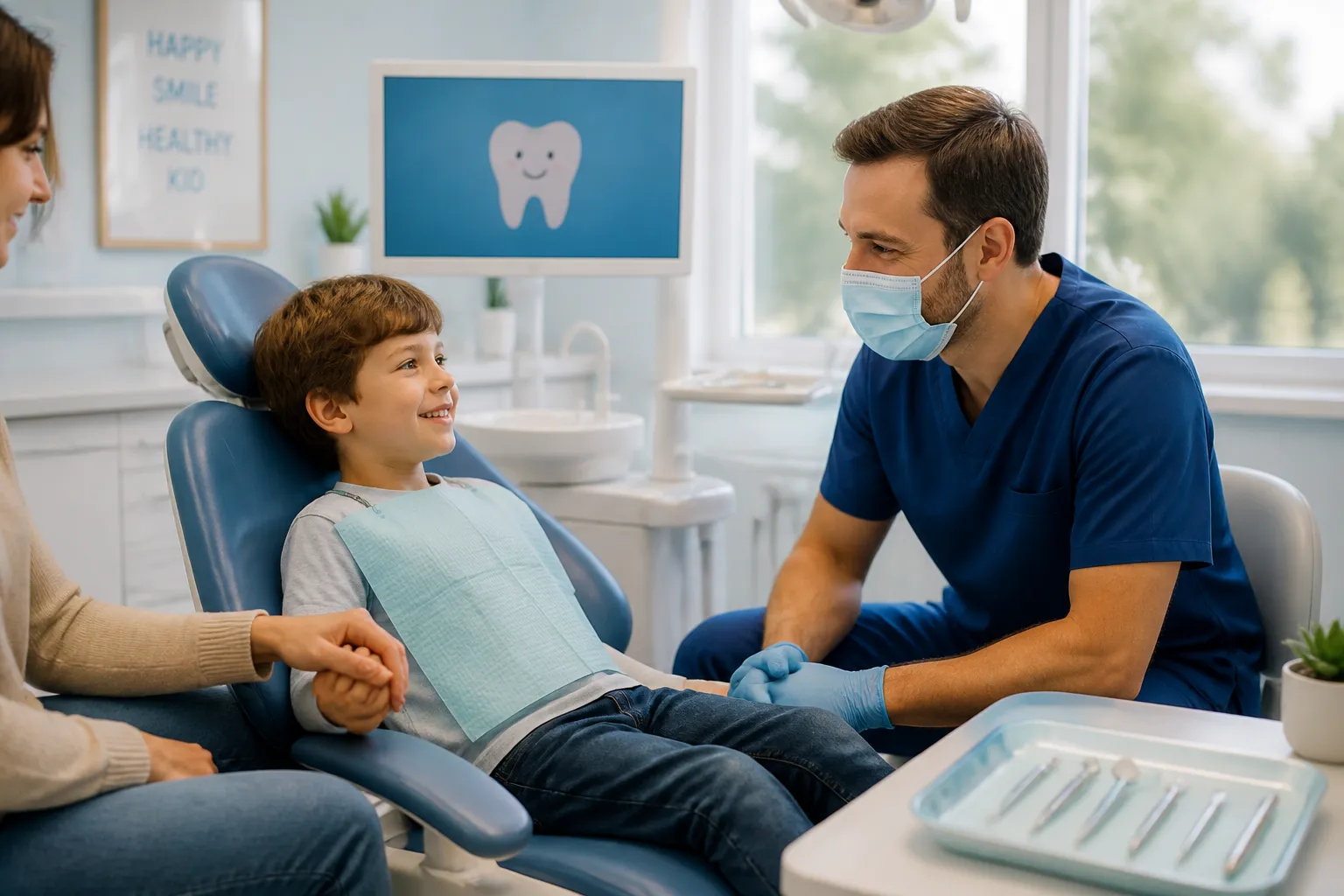
Gentle explanation and “tell‑show‑do” can make dental treatment feel much safer for anxious kids.
When a paediatric dentist might be the better option
There are times when a paediatric specialist is exactly what a child needs. This is especially true if their dental anxiety is intense or if the dental problem is more complicated.
Consider asking for a referral to a paediatric dentist if:
Remember, when an anxious child needs filling, it’s crucial to ensure their comfort throughout the entire treatment process. This can be achieved with proper communication and reassurance.
Your child cannot tolerate an exam even with multiple gentle attempts.
There are several teeth needing fillings or crowns.
Your child has special healthcare needs or developmental conditions.
The dentist recommends treatment under general anaesthetic or in a hospital setting.
Specialist paediatric dentists are trained to handle these higher‑risk, higher‑stress situations. They also work closely with anaesthetists and hospitals when sedation or general anaesthetic is in the child’s best interests.
How dentists treat dental anxiety in children
Before you decide between a pediatric dentist vs family dentist, it helps to know what dental anxiety child treatment can actually look like in the chair.
Many evidence‑based techniques are surprisingly simple:
Tell‑show‑do: the dentist explains what will happen, then shows the mirror or instrument, then gently does the step.
Positive language: avoiding scary words like “needle” and “drill” and using child‑friendly terms instead.
Short, staged visits: starting with a very quick, positive appointment, then building up to treatment.
Distraction: ceiling TVs, music, stories, or asking kids to “help count teeth”.
Control and choice: giving the child a way to pause, like raising their hand or squeezing a stress ball.
Some children also benefit from desensitising visits where no treatment is done at first. These appointments are about building trust, not fixing teeth in a rush.
What actually happens when an anxious child needs a filling?
Every practice is different, but a typical, child‑friendly filling appointment might follow this kind of flow:
Warm welcome and check‑in
Your child is greeted by name. The team checks how they’re feeling and reminds them they can stop any time.Gentle numbing and explanation
A flavoured numbing gel is placed first. Then local anaesthetic is given slowly, with the dentist explaining in simple, calm words.Tooth cleaning and preparation
The dentist removes the soft, decayed part of the tooth using tools suited to the child’s size and comfort.Placing the filling
Tooth‑coloured material is gently placed in layers, then set with a special light.Bite check and polish
The dentist makes sure the tooth feels comfortable when your child bites together and adjusts if needed.Praise and after‑care
The child is praised for their effort, and you’re given clear instructions on what to expect once the numbness wears off.
A filling shouldn’t feel like a punishment. When done well, it can actually increase a child’s confidence about future visits.
It’s also important to note that if an anxious child needs filling, parents can advocate for their child by asking the dentist about strategies to ease anxiety.
Local angle: how Sunbury families can choose the right kids’ dentist
Families within about 20 km of Sunbury often juggle school runs, sports, and long work days. You don’t always have time to drive into the city for every appointment.
As you navigate the decision-making process, remember that an anxious child needs filling and that their emotional well-being is just as important as the dental care they receive.
If your anxious child needs filling, it’s reasonable to start with a thorough assessment at a local clinic that regularly treats children and is transparent about when a specialist referral is safer.
At Sunbury Dental Group, our approach is to:
Book extra time for anxious children so they’re not rushed.
Use simple, age‑appropriate explanations so kids and parents know what’s happening.
Involve parents in planning, while still respecting the child’s right to be heard.
Work within current Australian guidelines for pain control, safety, and consent.
Refer to trusted paediatric dentists or hospital services when that’s genuinely in the child’s best interests.
You’re not just choosing a location; you’re choosing a team and a philosophy of care.
Choosing kids’ dentist: questions to ask before you book
If you’re choosing kids dentist for an anxious child, a few good questions can tell you a lot.
You might like to ask:
How often do you treat anxious children who need fillings?
What strategies do you use to help kids feel calmer?
Can we book a shorter familiarisation visit first?
Will my child be able to stop the procedure if they’re overwhelmed?
When would you recommend a referral to a paediatric specialist?
A dentist who welcomes these questions and answers clearly, without pressure or sales language, is usually a good sign. You should never feel rushed into treatment or made to feel guilty for seeking a second opinion.
Your rights and safety: AHPRA and Australian Consumer Law
Because this is about your child, it’s fair to ask how safety and ethics are handled.
In Australia:
Dentists are registered with the Australian Health Practitioner Regulation Agency (AHPRA) and must meet standards for ongoing competence, professional conduct, and record keeping.
You have the right under Australian Consumer Law to receive clear information about costs, likely outcomes, and any material risks, so you can give informed consent on behalf of your child.
Treatment plans should be tailored, not “one size fits all”, especially when anxiety is involved.
A trustworthy practice will discuss options openly, document conversations, and respect your right to take time to decide. No treatment should ever be represented as guaranteed or “perfect”; dentistry carries some risk, and that needs to be explained in plain language.
For every visit, it helps to remind your child that an anxious child needs filling. This helps normalize the experience and shows them that they are not alone in their feelings.

Gentle explanation and “tell‑show‑do” can make dental treatment feel much safer for anxious kids.
❓ FAQ – Anxious child needs a filling
1. What should I do if my anxious child needs a filling for the first time?
Start by booking a calm assessment rather than jumping straight into treatment. Let the dentist know in advance that your child is anxious so extra time and gentle strategies can be planned, and ask whether a short “get to know the clinic” visit is possible beforehand.
2. Is a paediatric dentist always better than a family dentist for nervous kids?
Not always. A family dentist with strong experience in children’s care and anxiety management can be ideal for many kids, especially if your child already knows and trusts them. A paediatric dentist is usually recommended when anxiety is severe, treatment is complex, or there are additional medical or behavioural needs.
Lastly, discussing the idea that an anxious child needs filling in a supportive manner with the dentist can lead to a better overall experience during treatment.
3. How can I help my child feel less scared before a filling appointment?
Keep explanations simple and honest without adding scary details. You can role‑play a “dental visit” at home, bring a comfort toy, and choose an appointment time when your child is usually well‑rested and not hungry.
4. Will my child be put to sleep for a filling?
Most fillings for children are done safely with local anaesthetic only, using behaviour guidance and gentle techniques. General anaesthetic or sedation is reserved for cases where treatment is more complex, anxiety is very high, or safety would be compromised without deeper support, and is usually provided in a hospital or specialist setting.
5. What if my child refuses to open their mouth at the dentist?
Try not to see this as your child being “difficult”; it’s often a sign they’re overwhelmed. A good dental team will pause, reassess, and may suggest shorter visits, desensitisation appointments, or referral to a paediatric specialist rather than forcing treatment.
6. How do I know if a dentist is genuinely good with kids?
Look for a calm, patient manner, clear explanations, and a willingness to go at your child’s pace. Reading reviews from other families, asking friends in Sunbury for recommendations, and having an initial chat with the practice can all help you gauge whether they’re a good fit for your child.
🏁 Conclusion and next steps
When an anxious child needs filling, you’re not just choosing between a family dentist and a paediatric specialist. You’re choosing a team who will listen, explain, and work with your child’s pace so treatment is as gentle and safe as possible.
In conclusion, when an anxious child needs filling, consider how you can create a positive environment both at home and at the dentist. Together, you can empower your child to face their fears with confidence.
Start with a thorough assessment, ask plenty of questions, and trust your instincts if something doesn’t feel right. With the right plan, many anxious children cope far better than their parents expect.
If your family lives in Sunbury or within a short drive, you can book a calm, child‑focused appointment with Sunbury Dental Group to discuss options before committing to treatment.
Book your appointment at Sunbury Dental Group today
Book a gentle kids’ filling consult